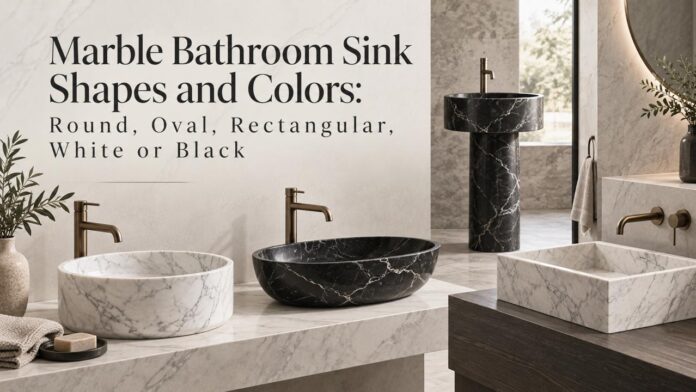

Shape and stone color do more than set the visual tone of a bathroom sink. They also affect how the basin relates to the vanity, wall, faucet and surrounding materials. HM Marble presents round, oval, rectangular and custom forms, together with vessel, floating and pedestal formats. For buyers comparing a marble bathroom sink , these choices are best considered together rather than as separate style decisions.
HM Marble works with natural marble and travertine in Afyonkarahisar, Turkey, where its sinks are produced from single solid blocks. The process combines precision CNC cutting with hand-finishing, while U.S. sales operate through HM Marble LLC. Because natural stone varies in veining and tone, the material itself becomes part of the design rather than a uniform surface treatment.
How Shape Changes the Look of a Stone Basin
A round basin creates a compact focal point and emphasizes the center of a vanity or countertop. It can work especially well when the surrounding geometry is straight because the curved outline introduces contrast without adding visual complexity.
An oval form keeps the softness of a round basin but extends it horizontally. That can make the sink feel more integrated with a longer vanity surface. An oval natural stone bathroom sink can also echo curved mirrors, arched niches or rounded fittings.
Rectangular sinks create stronger horizontal and vertical lines. In a contemporary bathroom, that geometry can align with wall tiles, cabinetry and architectural details. HM Marble also lists custom designs, which can suit projects that need a form adapted to a particular countertop, wall span or design concept.
| Shape | Visual Character | Useful Design Context |
| Round | Compact and sculptural | Countertops and centered compositions |
| Oval | Soft and elongated | Longer vanity surfaces and curved details |
| Rectangular | Architectural and linear | Modern layouts with strong geometry |
| Custom | Project-specific | Bespoke dimensions or unusual design concepts |
White Marble or Black Marble
White marble creates a lighter visual field and allows veining to become part of the surface pattern. HM Marble’s guide refers to classic white Carrara, using the correct Carrara spelling. Its white background and gray veining can fit bathrooms built around pale stone, white cabinetry or neutral finishes.
Black marble moves in the opposite direction. A dark basin can create clear contrast against light walls and counters or become part of a darker monochrome scheme. HM Marble also lists black stone options within its sink range, including Nero Marquina on product pages.
The choice is not limited to white or black. Calacatta Viola, described by HM Marble as Italian marble, combines a light background with violet and burgundy veining. A more expressive stone can make the basin itself a stronger visual feature and influence the surrounding material palette.
Vessel Floating or Pedestal
A marble wash basin changes character depending on how it is installed. A vessel sink sits above the countertop, so the basin reads as a distinct object. This makes the bowl or block shape especially visible and keeps a clear visual separation between sink and counter.
A floating sink is wall-mounted and removes the need for a conventional floor-standing cabinet beneath the basin. HM Marble’s guide presents this format as a way to create a cleaner and more open composition. A floating marble vanity or sink can therefore suit bathrooms where the wall-mounted form is intended to define the layout.
A pedestal sink places the basin on a stone base and creates a more self-contained architectural presence. Because the pedestal contributes to the overall silhouette, the fixture is read from floor level upward rather than only at countertop height.
Choosing Shape Color and Installation Together
The strongest design logic comes from treating shape, color and installation as one system. A round white vessel basin feels very different from a rectangular black wall-mounted sink even though both use natural stone. The first emphasizes softness and the distinction between bowl and counter, while the second emphasizes line, mass and wall alignment.
Stone pattern also matters. Natural veining can run across a wide rectangular front, wrap around an oval form or become concentrated in a smaller round basin. Since each block varies, one finished piece will not exactly duplicate another cut from a different section of stone.
HM Marble’s range brings these variables together through multiple shapes, stone choices and installation types rather than presenting one format as suitable for every bathroom. The practical decision is therefore to match the basin to the room’s proportions, surfaces and visual hierarchy.
A Practical Way to Narrow the Options
Start with installation type because it determines how the sink relates to the wall, countertop and floor. Next choose the shape that best follows the room’s geometry. Finally select the stone color and veining character as part of the wider material palette.
For a quieter composition, Carrara and other light stones can connect the basin with pale finishes. For stronger contrast, black marble can define the sink more clearly. More expressive stones such as Calacatta Viola can shift attention toward natural pattern. The aim is to make form, color and installation work together as one architectural element within the bathroom.