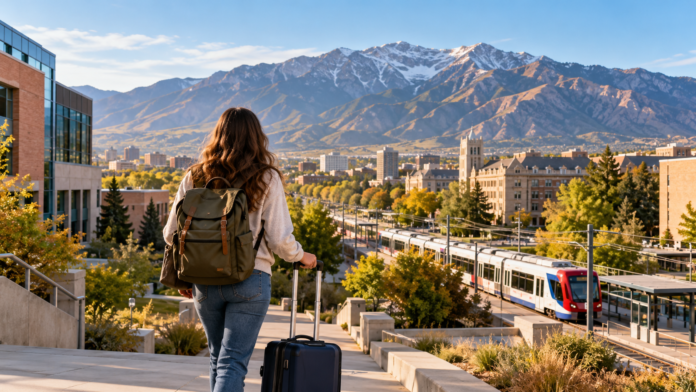

Relocating for a new academic post, graduate program, or university position is an exciting milestone. Utah is home to a thriving higher education ecosystem along the Wasatch Front and beyond, featuring major institutions like the University of Utah in Salt Lake City, Brigham Young University in Provo, Utah Valley University in Orem, Weber State University in Ogden, and Utah State University in Logan.
However, moving to a college community in Utah comes with distinct geographic, seasonal, and logistical considerations. From navigating unique lease calendars to leveraging regional transit, executing a smooth move requires localized knowledge. This Utah university relocation guide walks you through everything you need to know to settle in seamlessly.
1. Understanding Utah’s Higher Education Corridors
Quick Answer: Utah’s major universities are clustered along the Wasatch Front urban corridor and Cache Valley, connected by Interstate 15 and regional commuter rail.
The geography of Utah’s university system is uniquely structured along natural mountain valleys. Salt Lake County houses the University of Utah and Westminster University, while Utah County to the south forms a massive academic hub driven by BYU and UVU. Further north, Weber State serves Weber County, and Utah State University sits in scenic Cache Valley.
Understanding these distinct corridors helps you map out potential residential areas:
- Salt Lake Metro Area: Urban and near-suburban neighborhoods like Sugar House, East Bench, and South Salt Lake provide direct access to the University of Utah.
- Utah Valley Corridor: Cities like Orem, Provo, Vineyard, and American Fork offer extensive housing inventory serving UVU and BYU faculty, staff, and students.
- Northern Utah Hubs: Logan and Ogden offer traditional university-town settings with close-knit community atmospheres.
2. Navigating Local Lease Cycles and Contract Types
Quick Answer: College communities in Utah feature rigid semester-based lease calendars and “by-the-bed” contract structures that differ from standard residential leases.
Securing higher education housing near Utah campuses requires paying close attention to local contract terms. In student-dense neighborhoods, leasing calendars revolve strictly around university academic schedules.
Be aware of these local housing contract nuances:
- August-to-August Lease Cycles: Most rental properties near campus align with the fall semester start, making late summer the peak competition window for available units.
- By-the-Bed vs. Joint Leases: Student-focused apartment complexes frequently lease individual bedrooms on separate contracts. If you are moving with a family or prefer private housing, seek out traditional single-family rentals, townhomes, or standard joint leases.
- BYU-Contracted Housing Rules: In Provo, single undergraduate students at BYU are required to live in university-approved housing, which impacts the distribution of open-market rentals in surrounding neighborhoods.
3. Leveraging Utah’s Public Transit Network: TRAX and FrontRunner
Quick Answer: The Utah Transit Authority (UTA) operates light rail (TRAX), commuter rail (FrontRunner), and bus routes that connect suburban communities directly to major university campuses.
One of the biggest advantages of living along the Wasatch Front is the integrated public transportation system. University of Utah students and employees often receive free access to UTA transit via their university ID cards, allowing them to commute effortlessly without buying expensive campus parking permits.
Key transit links to consider when choosing a home location include:
- TRAX Light Rail: The Red Line connects Salt Lake’s southern suburbs directly to the University of Utah campus, stopping right in front of academic halls and Rice-Eccles Stadium.
- FrontRunner Commuter Rail: Runs from Ogden down through Salt Lake City to Provo, featuring dedicated stops near UVU in Orem and easy bus connections to other campuses.
- UVX Bus Rapid Transit: Offers frequent, dedicated bus lane service connecting downtown Provo, BYU, UVU, and the Orem FrontRunner station.
4. Timing Your Move Around Weather and Fall Surges
Quick Answer: Schedule move-in dates in early August or late spring to avoid mid-August campus congestion and winter snowstorms along mountain passes.
Timing is everything during a Utah college town relocation. The middle of August sees tens of thousands of students and academic staff moving into university valleys simultaneously. Local moving truck rentals book up months in advance, and hardware stores experience heavy crowds.
Planning your moving logistics requires accounting for seasonal factors:
- Avoid Mid-August Rush: If possible, finalize lease or purchase start dates for late July or early August to beat the peak student move-in weekend.
- Winter Weather Preparation: If relocating mid-year during the spring semester (January), ensure your moving vehicle is equipped for icy mountain passes along I-80 or I-15.
- Utility Setup Ahead of Time: Contact local municipal utility providers (electricity, natural gas, water, and fiber internet) at least two weeks prior to move-in day to ensure seamless activation.
5. Transitioning from Campus Rentals to Long-Term Homeownership
Quick Answer: Purchasing a townhome or single-family home near university transit corridors builds equity while offering long-term stability for faculty, staff, and graduate families.
While renting offers short-term flexibility during your first semester, many academic professionals and relocating families quickly look to transition into homeownership. High demand in university towns creates strong historical property appreciation and resilient resale value.
Navigating Utah’s competitive real estate market as a newcomer is much easier when working with experienced local builders and lenders. If you are buying your first residence in the area, taking advantage of builder incentives, quick move-in homes, and specialized financing options available to a first-time home buyer in Utah provides a clear path to locking in housing costs and building long-term equity near major employment hubs.
Myth vs. Fact: Relocating to Utah College Towns
Clearing up common misconceptions helps newcomers settle in with confidence:
- Myth:“You must live within walking distance of campus to have a short commute.”
- Fact: Thanks to FrontRunner rail and express highway corridors, living 15 to 20 minutes away in neighboring suburbs often yields a faster, less congested daily drive.
- Myth:“All rentals in university towns require student-specific contracts.”
- Fact: While areas directly bordering campus cater to students, surrounding suburban neighborhoods offer standard residential leases and master-planned housing.
- Myth:“Utah university towns shut down completely during summer breaks.”
- Fact: While undergraduate density decreases in summer, campus research centers, summer term courses, and outdoor recreation keep local communities vibrant year-round.
The Academic Relocation Master Checklist
Use this step-by-step checklist to guide your relocation process:
[ ] Map Your Transit: Identify nearby TRAX or FrontRunner stations relative to your department building.
[ ] Confirm Lease Structure: Verify whether rental quotes are per-person (by-the-bed) or for the entire unit.
[ ] Book Moving Services Early: Reserve moving vans or professional movers at least 60 days in advance if arriving in August.
[ ] Set Up Utilities: Schedule gas, electric, culinary water, and high-speed internet connections prior to arrival.
[ ] Register Vehicles: Update driver’s licenses and vehicle registrations with the Utah DMV within 60 days of establishing residency.
[ ] Explore Housing Options: Evaluate nearby suburban neighborhoods for long-term purchasing opportunities to stabilize housing expenses.
Relocating to settle near one of Utah’s premier universities opens the door to exceptional career opportunities, vibrant campus culture, and world-class outdoor recreation. By understanding local transportation networks, timing your move strategically, and exploring housing options that fit your long-term goals, you can navigate your transition smoothly and feel right at home in the Beehive State.
Also Read: