
Key Takeaways
- Plan a pollinator garden around the yard’s existing sunlight, soil, drainage, moisture, and available space.
- Use plants with different bloom periods to provide flowers and food sources from spring through fall.
- Include flowers, shrubs, grasses, and host plants to provide both food and shelter for pollinators.
- Choose native plants when they are suitable for the specific site, while avoiding invasive species.
- Repeat groups of reliable plants to create a more organized and intentional garden layout.
- Leave selected stems, seed heads, grasses, and some leaf litter in place during winter for habitat and shelter.
- Use pollinator-friendly maintenance practices, including careful watering, weed control, limited pesticide use, and delayed spring cleanup.
- Start with a manageable garden bed and adjust plant choices, spacing, and maintenance as the garden matures.
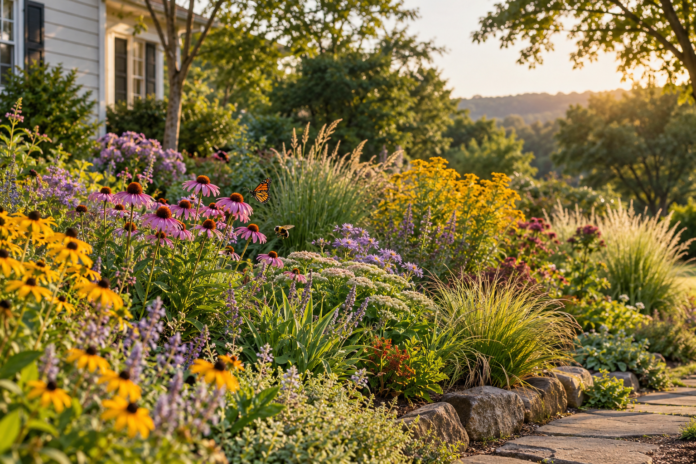
A four-season pollinator garden gives a Northern Virginia yard purpose beyond a short burst of spring color. By combining flowers, shrubs, grasses, and protected resting places, it can provide changing interest from early spring through winter. A plan that pairs habitat planting with reliable lawn care can also create a clear transition between a naturalistic garden bed and a tidy surrounding landscape. The goal is not to fill every open space with flowers. A successful pollinator garden matches plants to the conditions already present, spreads bloom times across the growing season, and leaves selected stems, seed heads, and leaf litter in place when winter arrives.
Why a Four-Season Garden Works Better
A garden that blooms only in May or June can leave long periods with few floral resources. Planning for early, middle, and late bloom periods helps create a steadier supply of nectar and pollen. Winter also matters. Standing stems, seed heads, evergreen foliage, and modest leaf cover add texture to the garden while providing places where insects and other wildlife can shelter. Flowers open from April through October in Cornell Cooperative Extension’s demonstration garden offer a useful example of seasonal planning paired with winter interest.
Step 1: Check the Yard Before Planting
Observe the proposed bed before choosing plants. Track direct sunlight for a full day, noting whether the site receives full sun, morning sun, dappled light, or mostly shade. After rain, look for puddling or fast drainage. Feel the soil for compaction, identify dry areas near foundations or under trees, and measure the bed so mature plants have room. Also consider wind exposure and how new plants will receive water during dry spells.
Step 2: Plan a Relay of Seasonal Blooms
Choose plants by bloom window first, then refine the list by color and appearance. In early spring, bulbs, flowering shrubs, and woodland plants can provide food before many summer perennials emerge. Late spring plants bridge the gap, while summer brings the greatest range of flower forms. Late-blooming asters, goldenrods, and sedums can keep the garden active into fall.
- Early spring: Include flowering shrubs, spring bulbs, and shade-tolerant woodland plants where appropriate.
- Late spring: Add columbine, penstemon, or other plants that bloom before peak summer heat.
- Summer: Use varied heights and flower shapes, such as coneflowers, bee balm, mountain mint, and native grasses.
- Late summer and fall: Reserve space for asters, goldenrods, and stonecrop-type sedums.
- Winter: Keep selected stems, grasses, and seed heads standing until spring cleanup.
Keep a simple plant list with each plant’s bloom period, mature height, sun requirement, and moisture preference. This makes it easier to spot seasonal gaps before buying plants.
Step 3: Choose Plants for Food and Shelter
Flowers are only one part of habitat. Foliage can feed caterpillars, clumping plants can create cover, and shrubs add useful structure. Favor plants adapted to the actual site rather than forcing a sun-loving perennial into shade or a moisture-loving plant into dry soil. The guidance to put the right plant in the right place is central to incorporating native plants into a landscape successfully. Native plants are often valuable additions, but native does not automatically mean suitable for every corner of the yard. Check light, moisture, soil, and mature size. When space allows, plant several of the same species together. Repeated groups are easier for visitors to notice and give the bed a more intentional appearance. Include shrubs or small trees for height, and leave room for host plants that support butterfly and moth larvae.
Step 4: Build a Simple Garden Layout
Arrange plants in layers. Place the tallest selections at the back of a border or in the center of an island bed. Use medium-height perennials through the middle, then edge paths with lower flowers or ground covers. Repeat a few reliable plants instead of placing one of everything. Small open patches of lightly covered soil can remain available to ground-nesting insects, while a shallow water dish with stones offers safer landing spots than a deep container.
Step 5: Use Pollinator-Friendly Maintenance
Pollinator-friendly gardening is still active gardening, but the timing matters. Water new plants deeply while they establish roots, pull invasive weeds before they set seed, and use mulch lightly without burying plant crowns. Avoid routine pesticide use, especially on plants in flower. In autumn, leave some stalks and seed heads intact. In spring, wait for consistently warm conditions before completing major cutbacks, then remove material gradually rather than stripping the entire bed at once.
Common Planning Mistakes to Avoid
- Buying plants for color alone without checking bloom time or mature size.
- Planting every selection in a single spring or summer bloom window.
- Using only annuals in a garden intended to provide long-term structure.
- Removing every leaf and stem during fall cleanup.
- Ignoring shade from mature trees, fences, and nearby buildings.
- Adding too many single plants instead of repeating key groups.
A Sample Small-Yard Planting Plan
A 50-square-foot bed is enough space to begin. Use one small flowering shrub or compact native tree as a back-layer anchor. Add three repeated groups of summer-blooming perennials through the middle, then edge the bed with lower plants. Tuck spring bulbs among emerging perennials, reserve a section for fall asters, and leave ornamental grasses or sturdy seed heads for winter texture. Starting with one well-planned bed is easier than trying to transform the entire yard at once.
Common Questions About Pollinator Gardens
Should Every Plant Be Native?
No. Native plants can be a strong foundation, particularly when they suit the site, but a useful garden also depends on responsible choices about size, light, moisture, and maintenance. Avoid invasive plants and prioritize healthy, diverse plantings.
How Much Sun Does a Pollinator Garden Need?
Many flowering pollinator gardens perform best in full sun, but part-shade and shade gardens can still support insects when planted with species suited to those conditions. Match the plant list to the light the yard actually receives.
Can a Pollinator Garden Look Neat?
Yes. Defined bed edges, paths, repeated plant groups, and a clear height progression make a wildlife-friendly garden look cared for. A small sign identifying the space can also help visitors understand its purpose.
How Long Does It Take to Establish?
Perennials often spend their first season developing roots. A garden commonly becomes fuller over the next two or three growing seasons as plants settle in and the gardener adjusts spacing, mulch, and plant choices.
Final Thoughts
A four-season pollinator garden begins with observation, not a long shopping list. Start by noting the amount of sunlight, soil conditions, drainage, available space, and existing plants in the yard before choosing new additions. Match plants to the garden’s conditions, create bloom succession from spring through fall, and preserve selected winter habitat for insects and other beneficial wildlife. Including a mix of flowering plants with different bloom periods can help provide more consistent food sources throughout the growing season. Start small, repeat plants with confidence, and leave enough room for plants to mature without overcrowding the garden. As the landscape develops, observe which plants perform well, which areas need adjustment, and where pollinators are most active. This makes it easier to refine the plan over time and build a garden that remains practical, attractive, and supportive of pollinators across the seasons.