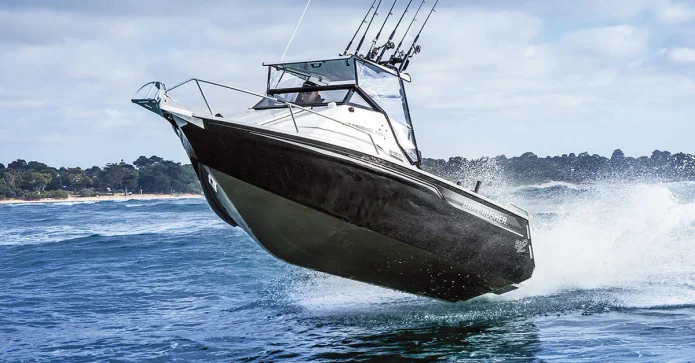

Summary: Plate aluminium is the construction method behind some of the most capable and long-lasting fishing boats in the Australian market, but not all aluminium boats are built the same way. Understanding what plate aluminium construction involves, how it differs from pressed aluminium, and what to look for in build quality gives buyers the knowledge to make a genuinely informed decision before committing to a purchase.
What Is Plate Aluminium Boat Construction and Why Does It Matter?
Plate aluminium construction refers to a boat-building method where flat sheets of marine-grade aluminium alloy are cut to shape, formed using bending and pressing techniques, and then fully welded together by skilled fabricators to create the finished hull. This is a fundamentally different process from mass-produced pressed aluminium construction, and the difference has direct consequences for hull strength, longevity, repairability, and performance.
For buyers investing in a fishing boat intended for serious use in coastal or offshore Australian waters, understanding plate aluminium construction is essential context for evaluating whether a boat justifies its price and will deliver on its performance claims over a realistic ownership period.
How Plate Aluminium Construction Differs from Pressed Aluminium
The distinction between plate and pressed aluminium is the most important construction comparison in the Australian aluminium boat market, and it’s one that many first-time buyers don’t fully understand until after they’ve made a purchase.
1. Plate aluminium construction uses thicker gauge sheet that is individually cut, formed, and welded into a custom hull structure. Each panel is shaped to the design geometry of the specific hull, and the joins between panels are fully welded, creating a continuous, watertight structural bond across the entire hull envelope. This method allows builders to:
- Vary material thickness across the hull based on structural requirements, heavier gauge where impact loads are highest.
- Engineer purpose-specific hull geometries including complex deadrise angles and chine profiles
- Create a fully welded hull with no mechanical fasteners at structural joins.
- Produce hulls with superior stiffness and impact resistance relative to their weight.
2. Pressed aluminium construction uses thinner gauge aluminium, often 1.5–2.5 mm, that is stamped into pre-designed shapes using hydraulic moulds on a production line. The pressed panels are typically assembled using rivets or spot welds rather than continuous structural welds. This method produces boats that are:
- Significantly cheaper to manufacture at volume
- Consistent in shape but limited in hull geometry options
- Lighter overall, which suits calm-water and inland applications
- Less structurally rigid under sustained impact loads
The practical consequence of this difference is significant: a pressed aluminium boat that is adequate for sheltered rivers and lakes may be genuinely inadequate and potentially unsafe in the coastal or offshore conditions that plate aluminium boats are designed to handle.
What Makes a Well-Built Plate Aluminium Hull? Key Construction Features to Assess
Not all plate aluminium boats are built to the same standard. The quality of a plate aluminium hull depends on several specific construction features that buyers should assess directly, not just accept on the basis of manufacturer marketing claims.
1. Hull plate thickness is the starting point. For coastal and offshore use, a minimum of 4mm on the hull bottom and 3mm on the sides is the practical threshold. Boats operating regularly in exposed conditions benefit from 5–6mm hull bottoms. Ask for specific plate thickness specifications before purchasing; a reputable builder will provide them without hesitation.
2. Weld quality is the structural heart of any plate aluminium hull. Quality welds should be:
- Continuous along all structural joins, not intermittent or skip-welded
- Fully penetrated through the parent material without porosity, undercut, or overlap defects
- Consistent in width and profile, indicating controlled welding technique
- Applied to properly prepared, clean aluminium surfaces
3. Internal framing and stringer design determines how efficiently the hull distributes wave impact loads. A well-engineered plate aluminium hull uses full-length longitudinal stringers and transverse frames to create a three-dimensional structural grid beneath the deck, spreading load across the hull rather than concentrating it at individual points. This structural approach directly reduces hull flexing, extends weld life, and maintains hull stiffness under the sustained loads of rough-water use.
4. Sub-floor construction is a construction feature that buyers frequently overlook because it’s invisible in a finished boat. A sealed, engineered sub-floor eliminates the void space beneath the deck where water can collect, stagnate, and accelerate corrosion from the inside. In lower-quality builds, water ingress under the floor adds dead weight over time and creates a corrosion environment that is difficult to inspect and address without major disassembly.
Why Aluminium Alloy Grade Matters for Saltwater Performance
The specific aluminium alloy used in a boat’s construction has a direct bearing on its corrosion resistance, weldability, and long-term performance in saltwater environments.
1. Marine-grade 5083 alloy is widely regarded as the benchmark for saltwater boat construction. It offers excellent corrosion resistance to seawater and salt spray, good weldability without significant strength loss at the weld heat-affected zone, and high structural strength relative to weight. It is the alloy of choice for quality offshore-grade plate aluminium boats.
2. 5052 alloy offers similar corrosion resistance and is commonly used for hull sides and internal structural components where slightly lower strength requirements allow for a more cost-effective material choice.
Buyers should confirm that the marine-grade alloy used in any boat they’re considering is appropriate for their intended use environment. Using non-marine aluminium alloys in saltwater construction is a false economy that leads to accelerated corrosion, particularly around welds.
How to Evaluate Plate Aluminium Build Quality Before Buying
Evaluating the build quality of a plate aluminium boat requires looking beyond the cosmetic finish and asking specific questions about construction specifications and processes.
Questions to ask any builder or dealer:
- What plate thickness is used on the hull bottom, hull sides, and deck?
- What aluminium alloy specification is used throughout the hull?
- Are all structural joins continuously welded or are any joins riveted or mechanically fastened?
- Is the sub-floor sealed, and how is water ingress under the deck prevented?
- What internal framing system is used and how are load paths managed across the hull?
- What quality control processes are applied during construction?
A builder who cannot answer these questions specifically and confidently is a builder whose construction standards deserve scrutiny. Quality plate aluminium construction is not a mystery — reputable builders are transparent about their specifications because those specifications are a genuine competitive advantage.
Physical inspection points:
- Inspect visible welds for consistency, profile regularity, and absence of porosity
- Look inside the bilge for evidence of water pooling or staining under the floor
- Press on hull panels and note whether they feel rigid or flex under hand pressure
- Check all fittings and hardware mounting points for weld quality and anode placement
What Plate Aluminium Construction Means for Long-Term Ownership Costs
The higher upfront cost of a quality plate aluminium boats over a pressed alternative is justified by a meaningfully different ownership experience over the boat’s working life.
- Longer service life is the primary financial argument. A quality plate aluminium boat maintained properly can remain structurally sound and high-performing for 20–30 years. A pressed aluminium boat subjected to regular coastal or offshore use may show structural fatigue, weld cracking, and rivet loosening within 5–10 years.
- Lower repair costs follow from thicker hull construction. When plate aluminium is damaged by impact with a submerged rock or debris, the damage is typically localised and repairable by welding. The thickness of the parent material provides sufficient structure for a weld repair that restores full strength. Thinner pressed panels often deform more extensively on impact and may require panel replacement rather than weld repair.
- Higher resale value is a consistent characteristic of quality plate aluminium boats. The secondhand market recognises the difference between a well-built plate hull and a pressed alternative and prices reflect it. A plate aluminium boat from a reputable builder holds its value substantially better than a pressed equivalent of the same age and usage.
Bar Crusher’s Plate Aluminium Construction Is the Right Foundation for Serious Australian Fishing
For anglers intending to fish Australian coastal and offshore waters seriously and to own a boat that lasts and holds its value, plate aluminium construction from Bar Crusher is the right starting point. The combination of marine-grade alloy, adequate plate thickness, fully welded construction, and engineered internal framing produces a hull that is genuinely suited to the demands of Australian offshore fishing in a way that pressed alternatives are not.
Understanding these construction principles gives buyers the tools to evaluate any plate aluminium boat on its actual merits rather than accepting marketing claims or making decisions based on price alone. The investment in a quality-built plate hull pays dividends across every season of ownership.