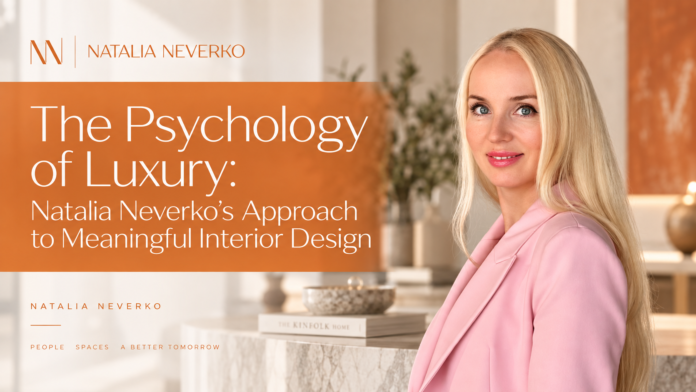

Luxury interior design is about much more than expensive furniture, premium materials, or impressive architecture. True luxury is deeply connected to emotion, comfort, lifestyle, and the way people experience a space every day.
For Natalia Neverko, meaningful interior design begins with understanding the people who will live inside the space.
As the creative force behind Natalia Neverko Design, her approach combines architecture, interior design, psychology, functionality, and artistic expression to create spaces that feel as exceptional as they look.
Rather than designing purely around trends, Natalia focuses on creating interiors that reflect the personality, lifestyle, and aspirations of each client.
This philosophy has helped define her distinctive approach to luxury residential and commercial design.
Luxury Is About Experience
Many people associate luxury with expensive materials, designer furniture, marble surfaces, custom lighting, or exclusive artwork.
While these elements can contribute to a luxury interior, they do not define luxury on their own.
A truly luxurious home should create an experience.
The way a person feels when entering a room is just as important as what they see.
A carefully designed space can create feelings of calm, privacy, comfort, energy, sophistication, or inspiration.
This emotional connection is one of the central ideas behind Natalia Neverko’s design philosophy.
Every detail has a purpose.
From the placement of furniture to the selection of materials, lighting, textures, colors, and architectural elements, each decision contributes to the overall experience of the interior.
Understanding the Psychology of Interior Design
Interior design can have a significant influence on how people feel.
Natural light can make a space feel more open and uplifting.
Warm materials can create comfort.
Soft textures can make a room feel more relaxing.
Open layouts can encourage interaction, while more intimate spaces can create privacy and calm.
Even ceiling heights, furniture proportions, artwork, and color choices can change the way people experience a room.
Natalia Neverko considers these psychological factors when developing a design concept.
Instead of focusing only on decoration, she looks at the relationship between architecture and human behavior.
This approach creates interiors that are visually sophisticated while also supporting the emotional and practical needs of the people who live there.
Creating Spaces Around the Client
Every person has a different idea of luxury.
For one homeowner, luxury might mean having a peaceful private retreat.
For another, it might mean creating an impressive entertaining area for family and guests.
Some clients value art, while others focus on wellness, technology, privacy, or functionality.
Understanding these differences is essential.
Natalia Neverko’s approach starts with learning how her clients live.
How do they use their home?
Which rooms are most important?
How often do they entertain?
What type of atmosphere makes them feel comfortable?
What colors, materials, and environments are they naturally drawn to?
By understanding these details, Natalia can develop interiors that feel personal rather than generic.
The objective is not simply to create a beautiful house.
It is to create a home that reflects the people living inside it.
The Importance of Space and Proportion
Proportion is one of the most powerful elements of luxury interior design.
Even the most expensive furniture can feel wrong if it does not work with the scale of the room.
Likewise, an oversized space can feel cold and empty without the correct balance of furniture, lighting, art, and architectural details.
Natalia Neverko approaches interior design with a strong understanding of architectural composition.
Furniture placement, circulation, ceiling design, custom millwork, lighting, and decorative elements are carefully considered as part of one complete environment.
This creates a natural visual flow throughout the space.
It also allows each room to feel balanced and connected to the overall architecture of the property.
Materials and the Psychology of Luxury
Materials play an important role in how people experience an interior.
Natural stone can create a feeling of permanence and strength.
Wood can add warmth.
Soft fabrics can make a room feel inviting.
Glass can create openness, while metal can introduce elegance and precision.
The combination of different textures can also make a space feel richer and more layered.
For Natalia Neverko, material selection is not simply about appearance.
It is about creating a sensory experience.
The way something feels when touched can be just as important as the way it looks.
Luxury often exists in these small details.
Custom cabinetry, carefully selected stone, handcrafted furniture, refined fabrics, and high-quality finishes create a sense of quality that can be experienced throughout the home.
Lighting Creates Emotion
Lighting is another essential part of meaningful interior design.
It can completely change the atmosphere of a space.
Bright natural light can make an interior feel energetic and open, while softer lighting can create warmth and intimacy.
Luxury interiors often use multiple layers of lighting.
These may include decorative fixtures, architectural lighting, accent lighting, task lighting, and concealed lighting.
Each layer serves a different purpose.
Natalia uses lighting as part of the overall architecture of the space rather than treating it as an afterthought.
Lighting can highlight artwork, emphasize architectural details, reveal textures, and help create the desired mood in each room.
Designing Beyond Trends
Design trends change constantly.
Colors become popular and disappear.
Furniture styles evolve.
Materials move in and out of fashion.
However, meaningful luxury should last much longer than a trend.
Natalia Neverko focuses on creating interiors that feel sophisticated today while remaining relevant in the future.
Timeless design is often based on strong architecture, balanced proportions, quality materials, craftsmanship, and personalization.
This does not mean avoiding modern ideas.
Technology, innovative materials, contemporary furniture, and new design concepts can all play an important role.
The difference is that these elements should support the overall design instead of dominating it.
Natalia Neverko’s Approach to Modern Luxury
Natalia Neverko’s work represents a more thoughtful interpretation of luxury.
Her interiors combine functionality, architecture, art, and emotional experience.
The result is a space that feels refined without feeling excessive.
This balance is particularly important in luxury residential design.
A home should be impressive, but it should also be comfortable.
It should reflect sophistication without losing personality.
It should incorporate modern technology without allowing technology to overwhelm the architecture.
This approach helps create interiors that feel natural, elegant, and deeply personal.
People interested in exploring Natalia’s work can discover her projects and creative vision through Instagram, Facebook, LinkedIn, YouTube, and Houzz.
Clients can also visit Natalia Neverko Design’s official website to explore luxury interior design projects, architectural services, design philosophy, completed spaces, and more information about the firm.
These platforms provide different perspectives on Natalia Neverko’s creative process and the distinctive interiors developed by Natalia Neverko Design.
Creating Meaningful Luxury
Ultimately, meaningful luxury is not determined by how much something costs.
It is determined by how thoughtfully a space has been created.
A successful interior should make daily life more enjoyable.
A bedroom can create a sense of calm.
A living room can encourage connection.
A dining space can bring people together.
A carefully designed kitchen can improve everyday routines.
Lighting can influence mood, while materials and textures can create comfort and emotional connection.
This is where psychology and interior design come together.Natalia Neverko approaches luxury as something that should be experienced rather than simply observed.
Through Natalia Neverko Design, she creates interiors that combine architectural sophistication with individuality, comfort, craftsmanship, and emotion.The result is not simply a beautiful space.
It is an environment designed around the people who live within it.That is the psychology of meaningful luxury—and the philosophy that continues to shape Natalia Neverko’s approach to exceptional interior design.