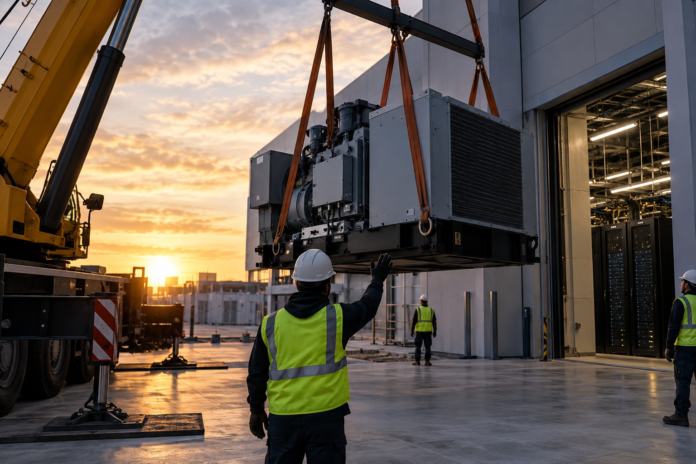

The digital world seems light and effortless. Data travels instantly, apps run in the cloud, and millions of people use information without considering the physical systems behind it. But keeping everything running depends on huge equipment like generators, cooling systems, electrical gear, and server components. Getting these systems in place is a real challenge that takes planning, special tools, and teamwork long before anything is switched on. When a single part is heavy, valuable, and hard to replace, moving it safely is central to building digital infrastructure.
Data Infrastructure Is More Physical Than It Looks
A modern data center needs more than just rows of servers. Electrical systems must deliver power reliably, cooling equipment keeps everything at the right temperature, and backup systems help keep things running if the main systems fail.
Many of these parts are so big that regular moving methods won’t work. Their size and weight can change how they are transported, where they can go in a building, how floors are loaded, and the order in which equipment is brought in.
This means you can’t just figure out how to move equipment when the truck arrives. You have to plan it ahead of time as part of the project.
The Route Matters as Much as the Destination
Getting a large piece of equipment from the loading area to its final spot can be harder than it looks. Doorways, ceilings, hallways, ramps, elevators, floor types, and tight corners can all affect whether the planned path will work.
Sometimes a few inches make a big difference when space is tight. Teams often have to measure carefully and spot any obstacles before moving equipment, especially if the parts can’t be taken apart easily.
Outside factors also matter. Road rules, delivery times, site access, where cranes can go, and coordination with other contractors all affect when and how equipment is delivered.
Rigging Is About Control, Not Just Strength
It’s easy to think that moving heavy equipment just means using a bigger crane or a stronger machine. But in reality, controlling the movement matters as much as how much weight you can lift.
Factors like the equipment’s weight, size, balance, lifting points, the surrounding area, and the final placement all affect how the move is planned. Special rigging tools and methods might be needed to lift, turn, lower, or place parts in tight spaces.
Companies such as ProLift Rigging operate in this specialized part of industrial logistics, where planning the move can be as important as executing it. The objective isn’t simply getting equipment off a truck, but controlling each stage of the move while accounting for the equipment, facility, and people working around it.
Coordination Can Prevent Expensive Delays
Large infrastructure projects involve many teams working toward the same completion date. Construction crews, electricians, equipment suppliers, transportation providers, engineers, and installation specialists may all depend on one another’s schedules.
If equipment shows up before the site is ready, it might need to be stored or the schedule changed. If it arrives late, other teams might not be able to finish their work. Missing a delivery window can affect more than just the moving company.
Planning matters even more when several major parts must arrive in a specific order. The equipment you need first shouldn’t get stuck behind something that’s supposed to be installed later.
Data Center Growth Raises the Logistics Stakes
As digital services expand, the physical infrastructure supporting them has become increasingly important. Building and expanding data centers can require moving generators, transformers, cooling equipment, electrical systems, and other substantial components into facilities where space and schedules may already be tightly controlled.
Expansion projects can be even more complicated because teams might have to work around equipment that’s already there. Moving new equipment may need to happen without disrupting nearby systems or ongoing construction.
The challenge isn’t limited to weight. Precision, sequencing, access, communication, and site conditions can all influence whether an installation progresses as planned.
Specialized Equipment Needs Specialized Planning
Not every heavy part can be moved the same way. A transformer has different challenges than a generator, and cooling equipment might have its own size and lifting needs.
Teams need the right information before they start moving anything. Details like equipment specs, site plans, access limits, lifting needs, and where things will go all help decide what tools and people are needed.
This preparation can also identify problems while they are still relatively easy to address. Discovering that a component won’t fit through an access point during planning is inconvenient, but discovering it while the equipment is already on-site can be considerably more disruptive.
Precision Matters at the Final Few Feet
Moving equipment over long distances might seem like the hard part, but getting it into its final spot often takes the most precision.
Big parts sometimes have to line up exactly with foundations, electrical hookups, pipes, or other systems. Tight spaces can make even small adjustments tough, especially if the rest of the construction is already finished.
This is where good planning turns into action. The final placement has to work for both the equipment and the systems that will connect to it later.
The Cloud Still Depends on Heavy Machinery
People often talk about digital infrastructure in terms of computing power, connections, and software, but none of these work without the physical world. Every digital service relies on equipment that had to be built, shipped, installed, connected, and kept running.
Moving that infrastructure requires more than raw lifting capacity. It depends on route planning, specialized equipment, communication, sequencing, and an understanding of how each component fits into the larger project.
The digital world might seem easy from the user’s side of the screen, but building the places that make it work is far from simple. Before any server handles data, a lot of important work goes into putting huge pieces of equipment in just the right spot.