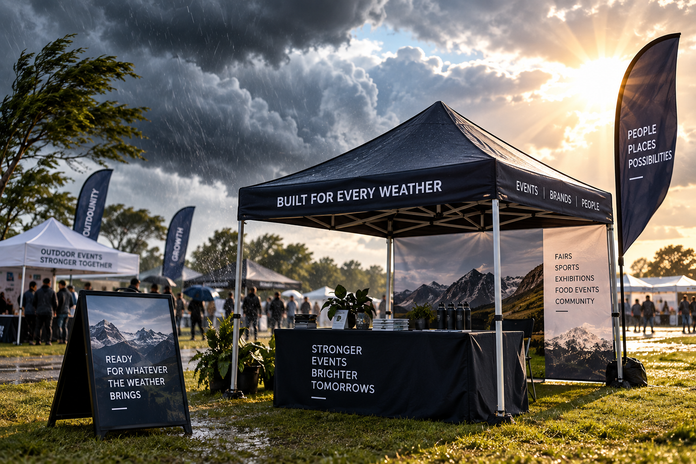

Outside gatherings shift rapidly. One bright morning might become a wet afternoon, whereas a quiet site could face sudden high gusts. When your shelter guards individuals, goods, gear, or a logo stand, selecting the proper frame counts.
An exterior tent needs performance beyond mere aesthetics. Materials, support structures, ground anchors, and total assembly determine resistance to shifting conditions. Custom tents are built for exactly this purpose: companies deploying bespoke canopies for fairs, athletic competitions, commercial exhibitions, culinary functions, and similar open-air assemblies must know specific evaluation criteria prior to acquisition.
Some offer commercial-grade custom tents utilizing 600 denier polyester material, which resists UV rays and water, plus commercial-level frame choices. Below are key attributes worth reviewing when getting ready for uncertain outdoor conditions.
6 Key Factors for Choosing a Weather-Ready Outdoor Tent
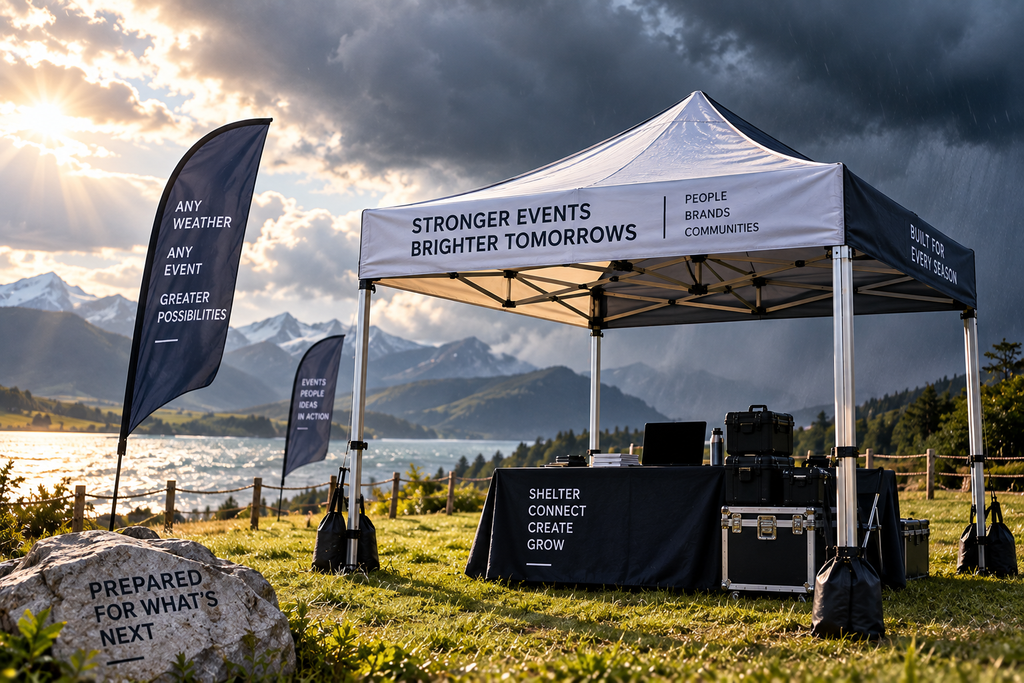
- Start With Weather-Resistant Fabric
The outer covering serves as the initial barrier shielding occupants from variable external weather patterns.
Look for materials that can withstand rain and sun without failing quickly. Water-resistant fabric can block light showers from entering the cover, while UV stability helps protect the material when left outside for long periods.
Reputable brands use 600 denier polyester to build their bespoke tent canopies, giving the material resistance to ultraviolet radiation, water, and fire. Furthermore, the organization observes that this specific textile is engineered to withstand multiple cycles of professional application.
However, weather resistance does not imply that a tent fits all atmospheric conditions. Intense precipitation, high-force gusts, electrical storms, and other harsh environments may require you to take the shelter down.
- Choose a Strong and Suitable Frame
The framework determines whether a shelter remains standing when conditions become challenging.
Aluminum represents a frequently selected material offering a favorable balance between weight and durability. Steel provides greater mass yet may deliver superior rigidity for larger configurations and offers commercial aluminum options alongside heavy-duty steel frames, characterizing them as appropriate for professional deployment.
Frame geometry matters as well. Hex frames provide improved resistance against lateral wind pressure compared to standard rectangular configurations. Leg bracing and cross-support structures add another layer of stability that proves especially valuable during gusty conditions.
A structural collapse during a live event creates safety risks. Selecting frames rated for commercial use rather than consumer-grade equivalents reduces that possibility considerably.
- Anchor Every Leg Properly
Even the most robust frame becomes unreliable without proper anchoring.
Ground stakes work on grass and soft earth. On paved or hard surfaces such as asphalt or concrete, weight bags offer a dependable anchoring alternative. Supplies weight bags specifically designed for use alongside their tent systems, enabling deployment on varied surface types.
Each leg needs individual anchoring. A partially anchored shelter may tip unpredictably when wind direction shifts. Checking anchors periodically throughout a long event provides added assurance, particularly if conditions worsen as hours pass.
- Think About Canopy Venting
Canopy venting reduces upward pressure during windy conditions.
A solid canopy traps air beneath its surface, creating lift when gusts hit from certain angles. Vented canopy designs allow air to escape through the upper portion of the structure, reducing the pressure differential that would otherwise force the shelter upward.
This design feature becomes especially relevant for larger tent configurations deployed in open spaces where wind exposure is unavoidable. Canopy venting can improve overall structural stability in breezy outdoor conditions.
- Match Tent Size to the Deployment Environment
Larger shelters capture more wind surface area and require proportionally stronger anchoring and frames.
A compact tent intended for a single operator works differently from a large structure covering multiple staff and product displays. Selecting a tent sized appropriately for its actual purpose reduces unnecessary exposure to wind forces the structure was not designed to manage.
A 10×10 custom pop-up tent setup at culinary events and festivals, matching tent dimensions to the operational footprint, helps maintain both stability and functional flow within the workspace beneath the shelter.
It offers a range of sizes to accommodate varied event footprints, letting you choose based on actual space needs rather than default sizing preferences.
- Inspect Equipment Before Every Event
The condition deteriorates gradually through repeated use and storage cycles.
Connectors loosen, fabric develops minor tears, and frame joints accumulate stress over time. Inspecting tent components before each deployment helps you identify weaknesses before they become failures during an event.
Check fabric seams and surfaces for visible damage. Examine frame joints and locking mechanisms. Verify that all anchoring hardware is present and functional. Replace worn components before deploying the shelter into demanding outdoor conditions.
Final Thoughts
If you’re planning an outdoor event where people will need protection from the elements, then your shelters must be able to perform well no matter what Mother Nature throws at them on any given day. This means considering fabric choices, frame constructions, anchoring strategies, canopy venting options, and proper sizing; all play a part in how effective your shelters are under various conditions.
When companies invest in commercial-grade custom tents, they get shelters built to meet the high demand for professional deployments throughout multiple events. So, reviewing each criterion discussed here prior to purchasing your next one can help make sure the structure you pick up meets all needs during tough situations.