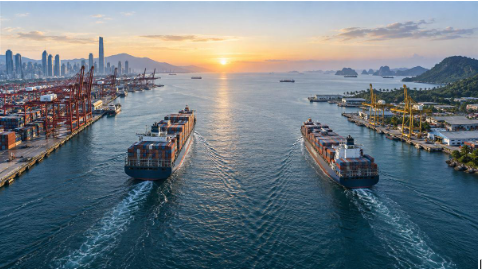

A China Plus One strategy keeps manufacturing in China while adding production in another country. This reduces dependence on one country, but the transport networks will not match. Each origin has different carrier services, customs rules, and lead times. Before promising delivery dates, map how goods move from each factory to your warehouse.
How Routes Change with a Second Sourcing Origin
Adding a plant in Southeast Asia creates a separate shipping lane. Route quality depends on the factory’s access to container terminals and the ocean services available at nearby ports.
Direct Sailings Versus Transshipment
Some ports have direct sailings to North America or Europe. Others use feeder vessels to hubs such as Singapore, Port Klang, or Busan. Check carrier schedules and connection windows. For transshipment cargo, ask what happens when a late feeder misses the main vessel.
Compare weekly sailing frequency as well as transit days. Fewer departures leave less room to recover when a carrier rolls a booking.
Drayage and Departure Frequency
Sailing frequency may matter more than distance. A shorter voyage saves little time if origin drayage takes three days or the port has one weekly sailing. Check local gate-in cutoffs and departure frequency together.
Shared Supply Chain Dependencies
Two sourcing countries may still share one chokepoint. A Vietnamese factory that imports components from Guangdong remains exposed to a South China disruption. Check whether both vendors use the same upstream suppliers or transshipment hubs.
Book China and Vietnam shipments separately when both serve one destination warehouse. Combining them at an intermediate hub can add cross-border filings and bonded storage costs.
How to Recalculate Delivery Lead Times
Ocean transit is only one part of order turnaround. Calculate door-to-door lead time from cargo readiness through final warehouse receiving.
Include booking lead time and warehouse receiving windows when either one affects the delivery promise.
Upstream Materials and Cargo Readiness
Base the schedule on realistic cargo-ready dates. If a factory imports fabrics, chips, or hardware, late materials can delay production before freight booking begins.
Treat each origin separately. Benchmarks for Alibaba shipping time can inform China-origin planning, but do not apply them to another country.
Modeling Each Transport Leg
Use recent carrier records to map:
- Origin pickup and export clearance
- Port dwell before departure
- Ocean transit and transshipment stops
- Destination clearance, drayage, and warehouse delivery
For a transshipment route, model the effect of a rolled container. A standard two-day buffer may not cover a missed weekly feeder.
Setting Supplier Release Dates
Work backward from the required warehouse arrival date. Each origin needs its own purchase order release date and safety stock target because transit and sailing intervals differ.
Reviewing Origin Paperwork and Landed Costs
Each origin has its own trade documents, tariff treatment, and port charges, even when both shipments go to the same warehouse.
Origin Compliance and Trade Rules
Check commercial invoices, packing lists, and export permits for consistent descriptions, values, unit counts, and HS codes.
Shipping a product from Vietnam or Thailand does not automatically make that country the origin. The product must meet the applicable origin rule, which may include a substantial transformation test. Ask a licensed customs broker to review the bill of materials and production steps before including tariff savings in landed cost.
Incoterms and Quote Scope
Compare vendor Incoterms before comparing freight prices. A China supplier may quote FOB Shenzhen while another factory quotes EXW Penang. Under EXW, the buyer usually takes on origin transport and export arrangements that are outside an FOB quote. Compare pickup, export clearance, terminal handling, ocean freight, and destination delivery on the same basis.
Split Shipment Expenses
Splitting volume between two countries may reduce container utilization. Replacing one 40-foot container with two LCL shipments can create duplicate documentation, customs entry, and destination handling charges. Include those costs and confirm that cargo insurance covers both routes.
Record each charge by origin, currency, payer, and due date.
Coordinating Multi-Origin Shipments
Parallel supply chains need shared milestone definitions and clear ownership.
Shared Milestone Tracking
Use one dashboard for purchase orders, cargo-ready dates, booking confirmations, departures, and arrival estimates. Standard status terms help procurement and warehouse teams read each milestone the same way.
When choosing a global freight forwarder, confirm it can support both origins. One forwarder can then coordinate bookings, document checks, and destination clearance under one process. Agree in advance who handles customs delays, rolled bookings, and missed departures.
Component Arrival Planning and Trial Runs
If the second origin supplies parts for goods made in China, coordinate arrival windows so complete kits reach the warehouse together. Mismatched arrivals use storage space and hold working capital.
Test the new lane with a small order before shifting major volume. Record actual transit time, terminal charges, and customs handoffs. Use those results to reset release dates, safety stock, and delivery promises.