
IT today needs more than just computing power. Companies need to cope with huge volumes of data, software, virtual machines, and services at the same time while considering energy consumption and costs of the IT infrastructure. If hardware cannot cope with that, it may lead to decreased performance, inefficiency, and lack of scalability.
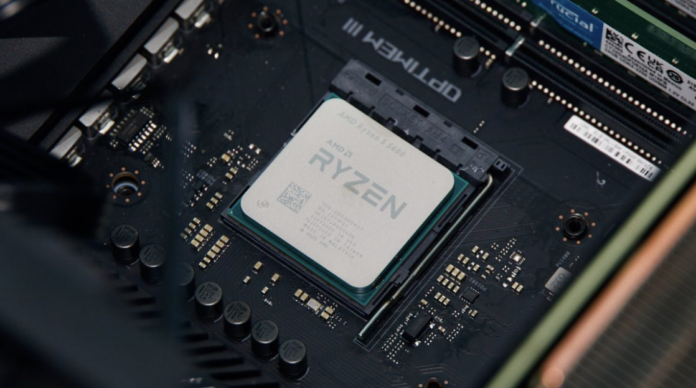
AMD’s Ryzen processors are great performers when it comes to performance, efficiency, and scalability. A big core count allows you to process several tasks simultaneously, and the new architecture provides good performance in demanding applications. This makes Ryzen-based solutions very useful for companies trying to enhance IT performance without creating excessive IT infrastructure.
1. High Core Counts Increase Processing Capacity
One can get a lot of processing power from an AMD Ryzen server with a large number of CPU cores because each one of these cores will be able to deal with its own instruction stream, so they will be able to handle multiple processes simultaneously.
This can be especially helpful in cases where it comes to virtualization, cloud computing, and any programs that can split tasks into multiple threads. There will be no need to use only a few cores that are very powerful for handling all the processes.
Having a large number of cores will allow you to use a lot of virtual environments on a single server if you have enough CPU power.
2. Modern Architecture Handles Demanding Tasks
The AMD Ryzen processors incorporate an advanced architecture that is based on the Zen technology and that guarantees excellent performance on various computing activities. It has been designed to allow for parallel processing and hence its suitability in the processing of massive volumes of data by applications.
Examples of such applications include data analytics, virtualization, content processing, and cloud applications. Fast processing will help to enable applications to perform complex processes with ease.
Finally, the architecture provides the best foundation for meeting the evolving demands of applications. The demands of applications are becoming increasingly challenging, and efficient processor designs are needed to meet them.
3. High Clock Speeds Improve Responsiveness
The number of cores is significant, but there is also an impact of clock speed on the speed of performing processing jobs. A higher clock speed will allow better performance for applications that rely more on the performance of a single core.
It will help with database queries, operations in applications, and other processing jobs where the instructions cannot be distributed equally among multiple cores. Having fast individual cores will result in lower delays in processing jobs and faster application response.
The Ryzen processor is balanced in the sense that it has good multi-core performance and decent clock speeds.
4. Better Efficiency Can Lower IT Costs
Performance is not the only consideration when measuring server value. Another critical factor that impacts the total expense of running IT infrastructure over time is the amount of energy consumed. Modern-day AMD processors offer great performance while consuming energy efficiently.
Lower power consumption can reduce the electricity required to operate servers. It can also reduce the amount of heat generated, which can influence cooling requirements in data center environments.
For organizations running multiple systems, even modest efficiency improvements can become significant when multiplied across an entire infrastructure. Better performance per unit of power can therefore support both operational efficiency and cost control.
5. Higher Performance Can Reduce Hardware Footprint
When a server can handle more computing tasks, fewer physical systems may be needed to deliver the required level of performance. High core density makes it possible to consolidate applications and virtual machines onto fewer machines when the workload allows it.
A smaller hardware footprint can simplify infrastructure management. It may also reduce requirements for rack space, power connections, networking equipment, and cooling capacity.
This does not mean every business should replace multiple servers with a single system. Instead, the processing capacity of modern Ryzen platforms gives IT teams more flexibility when deciding how workloads should be distributed across physical infrastructure.
6. PCIe Support Expands Server Capabilities
Many modern servers use not just the CPU and system memory. Fast storage, network cards, graphics co-processors, and other peripheral devices need the PCIe interface to work with the computer.
Good PCIe support enables the computer platform to connect to modern high-speed peripheral devices. This can improve data transfer between storage and processing components while providing more flexibility when configuring the system.
For businesses planning performance-focused infrastructure, expansion capability is important because future requirements may involve additional storage, faster networking, or specialized acceleration hardware.
7. Memory Bandwidth Keeps Data Moving
When evaluating AMD CPU-Based Servers, memory bandwidth is an important part of overall system performance. Fast memory and sufficient bandwidth help maintain a steady flow of information between system memory and the processor.
AMD Ryzen systems are able to handle the latest memory types that offer sufficient bandwidth for such applications. This is especially important when it comes to applications that involve large data sets, virtualization, analytics, and applications that access the system memory often.
RAM capacity is also important. A server needs enough memory for its applications and virtual machines, while adequate bandwidth helps prevent memory access from becoming a major performance bottleneck.
8. Security Supports Modern IT Environments
The factors of performance and efficiency are not sufficient when servers process confidential corporate data. The processors provided by AMD feature built-in security measures that are supposed to contribute to protecting corporate data and environments.
These security measures could potentially contribute to improving the safety of workloads, virtual machines, and confidential data. Built-in processor security could complement the existing security measures of operating systems, applications, and networks.
The processor security measures are especially valuable for corporations working within virtualized or cloud-based infrastructures since multiple workloads could potentially use one physical infrastructure.
9. Performance Creates Room for Growth
It becomes important that, with the addition of more applications, more users, more data, and more digital services, there is scaling of infrastructure without causing unnecessary complexity. A high level of processing density enables IT professionals to have the capacity to grow their business without having a physical infrastructure that is too large.
Extra memory, storage, networking capabilities, and other hardware may be installed on the server hardware system in order to enable the system to do more. It is essential for you to select the configuration that is realistic with respect to your expectations of growth, not the maximum capacity available without the need for it.
Turning Processing Power Into Long-Term Value
The AMD Ryzen server is able to support contemporary IT environments because of its features such as core density, processor performance, efficiency, modern connectivity, and hardware security. All these features help solve problems encountered by companies when they require more power but do not want their infrastructure to expand.
The real advantage comes from matching these capabilities to actual requirements. A server configured around virtualization, analytics, databases, cloud applications, or other demanding tasks can deliver greater value when its processing, memory, expansion, and security capabilities work together.
For businesses comparing server options, Cloud Ninjas can be considered when evaluating configurations built around modern AMD processing technology.
The strongest infrastructure strategy is not simply about adding more computing power. It is about creating a platform that can handle present demands efficiently while providing enough capacity to support the next stage of business growth.