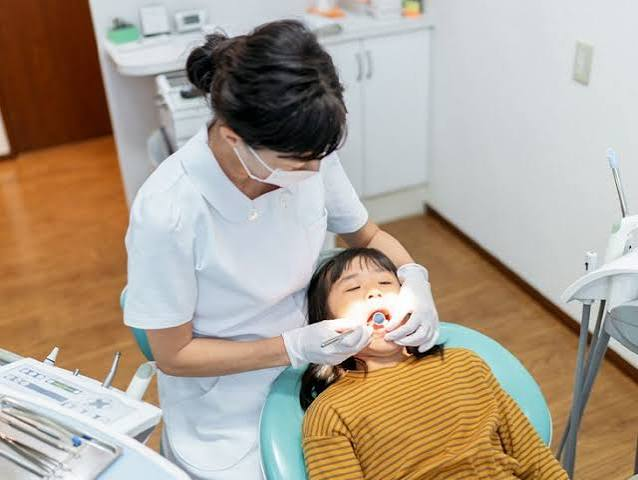

Here are five practical ways parents can include dental care in the family budget.
1. Look at Dental Membership Plans and Other Payment Options
Dental insurance is not the only way families can plan for dental costs.
Many dental clinics provide membership programs where the selected dental services are included within the monthly fee structure. This way, the cost of regular dental services becomes predictable for those individuals who don’t have dental insurance.
For example, Desert Kids Dental offers a dental membership plan for children that includes services such as regular exams, cleanings, fluoride treatments, routine X-rays, and an emergency exam. Different plans are available based on a child’s age.
Parents considering any membership program should look carefully at what is included and what is not. Ask questions such as:
- Are cleanings and routine exams included?
- Does the plan include X-rays and fluoride treatments?
- Are there discounts on additional procedures?
- Are emergency visits included?
- Does the plan renew automatically?
- Can the membership be combined with dental insurance?
The membership program is not the same thing as dental insurance coverage. However, in some households, being aware of how much money will be spent on preventative care throughout the year makes budgeting easier.
It is important to consider the total cost of the plan compared to the amount of service that will be used.
2. Budget for Preventive Care Before Problems Develop
While it is easy to view dental costs as only being applicable when there is a problem with your child’s teeth, it is worth recognizing the role of prevention in planning as well.
Proper dental visits allow the dentist to look at your child’s teeth and recognize any problems that need to be fixed. Parents are able to plan these visits without having to view each trip as an unexpected cost.
The Center for Disease Control and Prevention points out that tooth decay is one of the most prevalent chronic diseases in the country among children. The Center for Disease Control and Prevention provides a number of ways to prevent tooth decay, such as brushing your teeth with fluoride toothpaste.
Parents can review the CDC’s oral health tips for children for additional guidance.
A simple budgeting approach is to estimate the family’s expected dental spending for the year and divide it by 12.
For example, if you expect to spend $600 on routine dental care during the year, putting $50 per month into a dedicated dental or healthcare fund makes the expense more manageable than finding $600 at once.
The exact amount will vary depending on insurance coverage, the number of children, and each child’s dental needs.
3. Understand What Your Dental Coverage Actually Pays For
Having dental insurance does not necessarily mean that everything you will need to do will be fully covered.
Parents should look into their insurance plan before the need for treatment arises. Consider what your deductible is, how much your copay will be, annual maximums, waiting periods, coverage provided, and in-network versus out-of-network dentists.
Furthermore, parents should see whether there is a distinction in how preventive care and restorative care is covered by your insurance.
Families who qualify for Medicaid or the Children’s Health Insurance Program may have additional options. InsureKidsNow.gov states that Medicaid and CHIP provide children’s dental coverage that can include checkups, X-rays, fluoride treatments, sealants, fillings, and other services. Parents can use the site’s dentist locator and information about children’s dental coverage to explore options in their state.
When planning your budget, focus on the amount your family may actually have to pay rather than simply assuming that insurance will handle the entire bill.
4. Build a Small Emergency Dental Fund
Children run, jump, engage in sports, and get into accidents now and then. Dental emergencies are never really foreseeable.
It could be that your child breaks his tooth while playing or feels severe tooth pain or any condition which cannot be postponed until the next dental visit.
That is why a small emergency fund will come in handy at such times.
There is no need to open a special account for teeth because dental expenses can be a part of your overall medical or emergency fund.
The main thing is to have some funds at your disposal whenever you have some unforeseen healthcare expenses.
Even relatively small monthly payments can accumulate to form a decent emergency fund. You can set aside $20, $30, or $50 every month and soon enough you will have accumulated the money which will help you cover your deductible, copay, prescription costs, emergency dental visits, etc.
You also need to know who you will be turning to in case there arises a need for a dental emergency. It would be better to save your dentist’s contact details.
5. Make Low-Cost Daily Prevention Part of the Financial Plan
Some of the most useful steps parents can take for their children’s teeth happen at home and cost relatively little.
The American Dental Association recommends brushing twice daily with fluoride toothpaste, cleaning between the teeth daily, limiting sugar as part of a healthy diet, and seeing a dentist regularly. Parents can find additional recommendations through the ADA’s oral health guidance.
Parents should integrate routine oral care into their household purchasing budget. The costs associated with items such as toothbrushes, fluoride toothpaste, floss, and other recommended products are minor relative to the cost of raising children in many other respects.
Routines are equally important.
Assist younger children when brushing and assume that they are cleaning each and every tooth thoroughly. Keep sweets in moderation and encourage children to drink water.
Parents could consult their child’s dentist about whether there is a need for any preventative measures such as fluoride or dental sealants. The CDC states that sealants placed on the chewing surfaces of molars are effective in protecting teeth from cavities for many years.
It does not mean that children will never have the need for dental intervention as genetics, accidents, tooth development, dietary choices, and other factors also influence oral health. Nevertheless, preventive care continues to be a vital component of caring for children’s teeth.
Make Dental Care a Regular Part of the Family Budget
When parents cease regarding their children’s dental care needs as surprises, planning for them becomes much simpler.
Begin with calculating your expected expenses. Research your insurance coverage and/or membership benefits, allocate funds for regular checkups and understand what potential costs can be incurred out-of-pocket, while having a reserve in case of an emergency.
Next, complement your financial plan with excellent dental care habits at home.
No one can accurately anticipate all the costs involved in dental care. However, setting aside a small amount each month will allow you to better deal with regular and unexpected expenses.
After all, dental care is not just about health; it is also about household expenses. Along with grocery shopping, school expenses, insurance, and other necessities of family life, planning for dental care may become one less headache for parents.