
Maintaining tall trees and overgrown shrubs often leaves homeowners balancing precariously on unstable ladders. A pole saw eliminates this dangerous balancing act by allowing you to cut high branches while keeping your feet firmly planted on the ground. This comprehensive guide explains how these extended cutting tools work, breaks down the available power options, and offers practical advice to help you choose and safely use the right model for your yard maintenance needs.
What Is a Pole Saw?
Breaking the tool down into its individual components helps you understand exactly how it functions in your yard.
Main Parts of a Pole Saw
A pole saw consists of a long extended shaft attached to a compact cutting head. The cutting mechanism is essentially a miniature chainsaw featuring a small guide bar and a sharp cutting chain. The handle at the base houses the power controls and throttle, giving you complete command over the tool from several feet away.
How Does a Pole Saw Work?
The internal motor spins a drive sprocket that pulls the sharp chain rapidly around the metal guide bar. When you press the spinning chain against a high branch, the small metal teeth slice through the wood fibers. The extended shaft transfers your physical leverage up to the cutting head, allowing you to guide the blade through thick wood from a safe distance.
Benefits of Using Pole Saw
The primary advantage of this equipment is absolute safety. You completely eliminate the need for dangerous ladders on uneven ground. Additionally, the extended reach allows you to trim multiple trees in a fraction of the time it would take to constantly reposition a heavy ladder around your property.
Types of Pole Saws
Manufacturers offer several distinct variations to accommodate different property sizes and maintenance requirements.
Manual Pole Saws
A manual version relies entirely on your physical strength. It features a curved pruning blade mounted on a telescoping fiberglass or aluminum pole. These are highly affordable and require zero maintenance, but they demand significant physical stamina if you have dozens of thick branches to remove.
Corded Electric Pole Saws
Corded electric models provide consistent and reliable power without the hassle of engine maintenance. You simply plug the equipment into a standard outdoor extension cord and start cutting immediately. They are incredibly lightweight, but your operational range is strictly limited by the length of your power cable.
Battery Pole Saws
Battery-powered options offer the ultimate combination of portability and convenience. Modern lithium batteries deliver impressive torque that rivals traditional gas engines without the loud noise or toxic exhaust fumes. They allow you to roam freely across massive properties and are perfect for residential neighborhoods with strict noise ordinances.
Gas Pole Saws
Gas-powered engines remain the top choice for professional landscapers and massive rural properties. They offer unmatched raw cutting power for incredibly thick hardwood branches. However, they are significantly heavier than electric models and require constant engine maintenance, including mixing fuel and replacing spark plugs.
What Is a Pole Saw Used For?
These tools are specifically engineered for elevated canopy management and precise landscaping duties.
Prune High Tree Branches
The most common application is thinning out dense tree canopies. Removing excess upper branches allows vital sunlight and fresh air to reach the grass and plants growing below. This routine pruning promotes healthier growth for the entire garden ecosystem.
Remove Dead or Damaged Limbs
Heavy storms frequently leave broken branches hanging dangerously in your trees. A pole saw allows you to safely amputate these damaged limbs before they fall unexpectedly on your vehicles or family members. Removing diseased wood also prevents rot from spreading into the main trunk.
Clear Branches Near Structures
Trees planted too close to a house will eventually scrape against the roof shingles and tear off the gutters during high winds. You can use an extended saw to push the canopy back and create a safe clearance zone between the heavy limbs and your expensive home exterior.
Maintain Trees and Large Shrubs
Beyond heavy trees, you can use this equipment to shape massive overgrown hedges and tall decorative shrubs. The extended reach lets you trim the very top of a ten foot tall privacy hedge evenly without ever leaving the ground.
How to Choose the Right Pole Saw
Pay close attention to these critical specifications to ensure you purchase a tool that you can operate comfortably.
Measure the Required Reach
Look at the trees on your property and estimate how high the lowest branches sit. Most telescoping poles extend between eight and fifteen feet. Remember that your own physical height adds to the total reach, meaning a ten foot pole easily allows a tall adult to cut branches sitting fifteen feet in the air.
Estimate the Branch Size
The length of the cutting bar determines how thick of a branch you can tackle. An eight inch bar easily handles standard pruning duties and cuts through limbs up to six inches thick. If you plan to cut massive oak limbs, you will need a heavier model with a ten or twelve-inch guide bar.
Consider the Amount of Work
Think about your seasonal workload. If you only trim one small maple tree every spring, a basic manual or corded model is perfectly adequate. If you manage a large wooded lot with dozens of mature trees, investing in a powerful battery or gas machine will save you countless hours of physical labor.
Choose a Suitable Power Source
Your property size dictates your power needs. Small suburban yards are perfect for corded electric units. Large rural estates require the untethered freedom of gas or battery power. Battery models are rapidly becoming the preferred choice for homeowners due to their zero maintenance appeal and instant startup capabilities.
Check the Weight and Balance
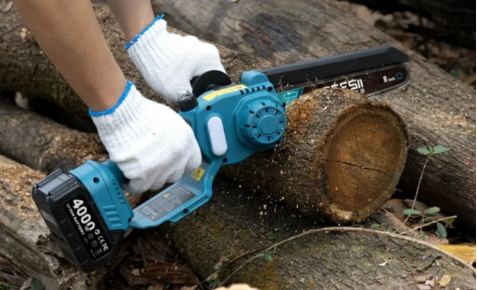
Holding a spinning chainsaw ten feet in the air requires significant upper body strength. A poorly balanced tool will quickly strain your shoulders and lower back. You must look for lightweight designs that keep the heavy motor components closer to your hands rather than at the very end of the stick. Choosing a highly versatile and ergonomic option like the Seesii 2 in 1 Pole Saw and Mini Chainsaw provides excellent balance and allows you to detach the cutting head for detailed ground work without straining your muscles.
How to Use a Pole Saw Safely
Following established forestry safety protocols ensures you finish your yard chores without visiting the emergency room.
Inspect the Tree and Work Area
Before making a single cut, scan the canopy for hidden power lines. Touching a live electrical wire with an aluminum pole is instantly fatal. You must also check the ground for tripping hazards like exposed roots or slippery mud so you have a solid stance while working.
Check the Saw and Chain
Inspect your equipment thoroughly before plugging it in or attaching the battery. Ensure the chain tension is tight and the bar oil reservoir is completely full. A dry chain will overheat and snap, while a loose chain can easily derail and fly off the metal guide bar.
Wear Protective Equipment
Debris will inevitably fall directly toward your face while you look upward. You must wear protective safety glasses and a hard hat to shield your head from falling wood. Heavy leather gloves and steel toe boots are also mandatory to protect your extremities from sharp branches.
Clear the Drop Zone
Calculate exactly where the heavy limb will land and clear that area completely. Keep pets, children, and neighbors far away from the working radius. You should never stand directly underneath the branch you are cutting. Always stand at a safe angle so the wood falls safely away from your body.
Make Controlled Cuts
Never try to slice through a massive, heavy limb in one single pass. The weight of the wood will pinch the blade and trap your tool in the tree. Make a small undercut on the bottom of the branch first, then cut from the top down. This technique relieves the pressure and allows the wood to snap off cleanly.
Clean and Store the Saw
After your work is finished, remove the battery or unplug the cord. Wipe the metal bar down to remove sticky tree sap and wet sawdust. Store the equipment in a dry garage or shed to prevent the chain from rusting and ensure it is ready for your next pruning session.
Conclusions
A pole saw is a valuable addition to any landscaping arsenal, turning a dangerous aerial chore into a safe, manageable ground-level task. By understanding the different power options available and evaluating your specific property needs, you can select a tool that provides the perfect balance of reach and cutting power. Always prioritize proper safety gear, respect the weight of falling branches, and maintain your equipment diligently. With the right technique and a reliable tool in your hands, you can keep your property safe and beautiful all year round.