
A backyard pool should be a place to relax, but keeping one comfortable, clean, and ready to use requires the right equipment behind the scenes.
Pumps circulate thousands of gallons of water. Filters remove debris and contaminants. Heaters determine whether the pool remains comfortable outside the hottest part of summer, while cleaners and automation systems can significantly reduce the amount of routine work required from the homeowner.
Choosing the right equipment therefore isn’t simply about buying the most expensive products available.
Different manufacturers have different strengths. Some offer complete equipment ecosystems covering almost every part of pool ownership, while others specialize in particular categories such as heating.
For homeowners upgrading an existing pool or planning a new backyard setup, here are five pool equipment brands worth considering in 2026.
1. Hayward
Best for: Complete residential pool equipment systems
Hayward takes our first position because of the breadth of its residential pool equipment range.
The company offers products across many of the categories required to operate a modern swimming pool, including pumps, filters, heaters, cleaners, sanitization systems, and automation.
That makes Hayward particularly useful for homeowners who want several major components from the same broader equipment ecosystem.
Its pump selection is one example.
Modern variable-speed pool pumps can adjust operation according to circulation requirements rather than continuously running at a single speed. This flexibility can help create a more efficient pool system when the equipment is properly sized and configured.
Hayward also provides multiple filtration options, allowing homeowners and pool professionals to select systems according to pool size, maintenance preferences, and the overall installation.
Automation adds another layer of convenience.
Instead of manually controlling individual components throughout the week, compatible pool systems can bring multiple functions into a more centralized setup.
Pros
- Extensive residential pool equipment selection
- Pumps and filters
- Heating systems
- Pool cleaners
- Sanitization products
- Automation technology
- Established pool-industry brand
Cons
- Complete systems can become expensive
- Advanced installations may require professional setup
Why We Like It
Hayward is particularly strong for homeowners who want a complete pool-equipment ecosystem rather than shopping for one specialized component.
2. FibroPool
Best for: Energy-efficient residential pool heating
FibroPool takes our second position and is particularly compelling for homeowners whose main priority is getting more use from their pool throughout the year.
While some of the larger brands in this list compete across almost every equipment category, FibroPool has a more focused strength in residential pool heating.
Its heat-pump lineup includes models for both above-ground and in-ground pools, with different capacities designed to accommodate pools of different sizes.
There are also both 120V and 240V options.
That distinction can be useful because someone heating a relatively modest above-ground pool doesn’t necessarily need the same installation or heating capacity as someone managing a substantially larger in-ground pool.
FibroPool’s range also includes traditional fixed-speed heat pumps alongside full-inverter models.
For homeowners interested in more advanced operation, the inverter range adds variable performance and convenient smart features, including app-based control on compatible models.
The underlying attraction of heat-pump technology is efficiency.
Rather than generating all of the required heat directly, a pool heat pump transfers available warmth from the surrounding air into the water.
For homeowners who regularly maintain a comfortable swimming temperature, this approach can be particularly attractive compared with heating methods focused primarily on rapid temperature increases.
FibroPool also provides supporting installation products, including bypass kits, valves, fittings, and other components that can help integrate compatible heat pumps into existing pool systems.
Pros
- Strong residential heat-pump selection
- Options for above-ground and in-ground pools
- 120V and 240V models
- Multiple heating capacities
- Fixed-speed and inverter technology
- Smart control on compatible models
- Installation accessories available
- Particularly suitable for extending the swimming season
Cons
- More specialized than complete pool-equipment brands
- Correct heater sizing requires consideration of pool and climate conditions
Why We Like It
FibroPool earns the #2 position because it does one particularly important job well. For homeowners whose biggest pool problem is cold water rather than circulation or filtration, its specialized heating range can be more relevant than a huge general equipment catalog.
3. Pentair
Best for: Premium pool equipment and automation
Pentair is one of the strongest choices for homeowners looking for an integrated pool system.
Its residential product portfolio spans pumps, filtration, heating, sanitization, automation, and other important equipment categories.
The company is particularly notable for its circulation and automation technologies.
For larger in-ground pools, having pumps, heating, and other equipment integrated into a coordinated control system can make day-to-day ownership much easier.
Instead of repeatedly adjusting equipment manually, homeowners can automate routine operating schedules.
Pentair’s broad ecosystem also makes it attractive during complete pool renovations or new installations where several components need to be selected at once.
The downside is that homeowners replacing only one relatively simple component may not need the full capabilities of a premium integrated system.
Pros
- Broad equipment ecosystem
- Variable-speed pumps
- Filtration products
- Heating systems
- Automation
- Suitable for sophisticated pool installations
Cons
- Premium products can increase project cost
- May provide more functionality than simple pools require
Why We Like It
Pentair is particularly appealing when homeowners want several major pool systems to work together as part of a more sophisticated installation.
4. Polaris
Best for: Automatic pool cleaning
Not every pool equipment company needs to manufacture everything.
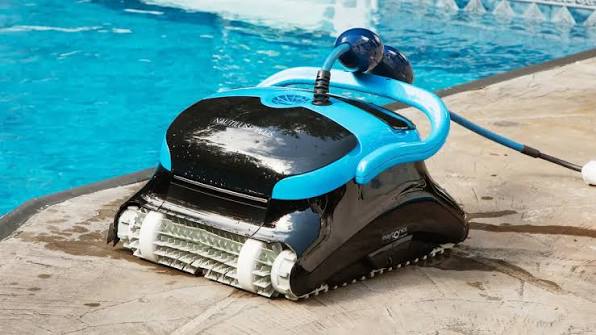
Polaris is particularly well known for pool-cleaning equipment, making it an interesting example of category specialization.
Automatic pool cleaners can reduce one of the most repetitive parts of pool maintenance.
Outdoor pools inevitably collect leaves, dirt, insects, and other debris. While filtration handles material suspended in circulating water, surfaces still require attention.
A suitable automatic cleaner can reduce the amount of manual vacuuming required.
Polaris offers different cleaning technologies and models intended for varying pool requirements.
For homeowners who are satisfied with their existing pump, filter, and heater but want to spend less time manually cleaning the pool, upgrading the cleaner can therefore be a logical next step.
Pros
- Strong specialization in pool cleaning
- Multiple cleaner formats
- Reduces manual cleaning workload
- Options for different pool requirements
- Established name in the category
Cons
- Much narrower focus than full equipment brands
- Doesn’t solve heating or broader circulation requirements
Why We Like It
Polaris demonstrates why specialist brands can be valuable. If cleaning is the problem you’re trying to solve, choosing a company particularly associated with that category can make more sense than focusing on who has the biggest overall catalog.
5. Intex
Best for: Above-ground pools and accessible equipment
Intex serves a different part of the pool market.
Rather than focusing primarily on large permanent in-ground installations, the company is strongly associated with accessible above-ground pools and supporting equipment.
Its range includes filtration systems, pumps, maintenance products, and other accessories that can help homeowners operate seasonal backyard pools without building a complex equipment setup.
This simplicity is one of the main advantages.
A relatively small above-ground pool doesn’t necessarily need the same pump, automation system, or infrastructure as a large custom in-ground pool.
Intex provides products more closely aligned with that type of ownership.
For more demanding permanent pools, however, homeowners will generally want to look toward equipment designed for larger installations.
Pros
- Strong above-ground pool selection
- Accessible equipment
- Pumps and filtration products
- Large accessory ecosystem
- Suitable for seasonal pool ownership
Cons
- Less appropriate for demanding in-ground installations
- Limited compared with premium integrated equipment ecosystems
Why We Like It
Intex provides practical equipment for homeowners who want a straightforward above-ground pool setup without unnecessarily complicated systems.
What Pool Equipment Matters Most?
The answer depends on what problem you’re trying to solve.
A homeowner struggling with cloudy water has a different priority from someone whose pool is perfectly clean but too cold to use comfortably.
Before upgrading anything, identify the weakest part of the current setup.
In most residential pools, four areas deserve particular attention:
- Circulation
- Filtration
- Heating
- Cleaning
Automation can then make those systems easier to manage once the fundamentals are working properly.
Start With Circulation
The pool pump is effectively responsible for keeping water moving through the broader system.
Without adequate circulation, filtration and other equipment can’t operate as intended.
This doesn’t mean homeowners should simply purchase the most powerful pump available.
Pool size, plumbing, filtration requirements, and flow rates all need to be considered.
Variable-speed technology has become particularly attractive because it allows compatible pumps to operate differently according to the task rather than remaining at one constant speed.
Brands such as Hayward and Pentair provide extensive pump options for homeowners building or upgrading circulation systems.
Filtration Is Equally Important
Moving water around isn’t enough.
The filtration system needs to remove unwanted material from that circulating water.
Residential pools commonly use cartridge, sand, or diatomaceous earth filtration systems.
Each comes with different maintenance considerations.
The best choice depends on factors such as pool size, desired filtration performance, maintenance preferences, and the existing circulation setup.
Correct sizing matters here too.
An expensive filter won’t automatically solve water-quality problems if the rest of the pool system isn’t operating correctly.
Heating Can Transform How Often You Use the Pool
Heating occupies a slightly different position from pumps and filters.
You can technically operate a pool without heating.
The question is how often you’ll actually want to swim in it.
Even when daytime weather feels warm, pool water can remain uncomfortable, particularly early or late in the swimming season.
Cool nights can also remove much of the warmth accumulated during the day.
This is where a heat pump can make a substantial difference.
FibroPool’s residential systems are designed to transfer warmth from the surrounding air into the pool water, allowing homeowners to maintain more comfortable temperatures without relying exclusively on the hottest weather.
For families who already have functional circulation and filtration, heating may therefore be the upgrade that changes the pool experience most noticeably.
How Does a Pool Heat Pump Work?
A heat pump doesn’t operate like a conventional resistance heater.
Instead of using electricity primarily to create heat directly, it uses a refrigeration cycle to collect available heat from the surrounding air and transfer it into the pool water.
That fundamental difference is why heat pumps are associated with efficient ongoing pool heating.
They’re particularly well suited to situations where homeowners want to maintain a target temperature over time rather than rapidly heat cold water immediately before swimming.
Environmental conditions still matter.
Because the system draws heat from the surrounding air, climate and ambient temperature influence performance.
That’s one reason choosing the correct unit requires more than simply comparing prices.
How Should You Size a Pool Heater?
Pool volume is an obvious starting point, but it isn’t the only consideration.
Heater sizing can also be affected by:
- Local climate
- Desired water temperature
- Length of swimming season
- Pool surface area
- Exposure to wind
- Overnight temperatures
- Whether a pool cover is used
- Heating expectations
Two identical pools located in different climates may therefore have very different heating requirements.
FibroPool offers multiple capacities across its heat-pump range so homeowners can choose a model more closely aligned with their setup.
The goal should be appropriate capacity rather than maximum capacity.
120V vs. 240V Pool Heat Pumps
Electrical requirements can have a significant impact on installation.
FibroPool offers both 120V and 240V heat-pump options.
The 120V category can be particularly attractive for smaller residential pools where straightforward electrical requirements are a priority.
Larger pools typically require greater heating capacity, making the more powerful 240V range relevant.
Before purchasing, homeowners should confirm both the heating requirements and electrical requirements of the specific model.
If electrical work is required, it should be handled in accordance with the manufacturer’s instructions and applicable local requirements.
Fixed-Speed vs. Inverter Technology
Another decision is whether to choose a conventional fixed-speed heat pump or an inverter model.
Fixed-speed systems provide a relatively straightforward approach to pool heating.
Inverter technology adds the ability to vary operation according to heating demand.
Instead of treating every heating situation exactly the same, a full-inverter system can adjust its output as conditions change.
FibroPool provides both options, which allows homeowners to choose according to budget, desired features, and expected usage.
For someone who values smart control and variable operation, an inverter model may be attractive.
For someone primarily interested in straightforward heating performance, a conventional model can remain a sensible choice.
Don’t Ignore Heat Loss
Buying a heater is only part of creating an efficient heated pool.
Keeping that heat in the water matters too.
Outdoor pools lose heat through several mechanisms, with evaporation playing an especially important role.
This is why a pool cover can be such a useful companion to a heating system.
Covering the pool when it isn’t being used can reduce evaporation and help retain more of the heat already added to the water.
That can reduce the workload placed on the heater.
Before assuming you need substantially more heating capacity, consider whether improving heat retention could help the existing system perform more effectively.
Pool Cleaning Can Be Automated Too
Heating improves comfort.
Automatic cleaning improves convenience.
For many homeowners, vacuuming the bottom of the pool is one of the least enjoyable parts of ownership.
Automatic cleaners from specialist manufacturers such as Polaris can reduce that workload.
Depending on the cleaner, different technologies may address pool floors, walls, waterlines, or specific debris types.
However, a cleaner shouldn’t be expected to replace the complete maintenance routine.
Water chemistry, filtration, skimming, and equipment maintenance remain important.
The goal is to reduce repetitive manual work rather than eliminate pool care entirely.
When Is Automation Worth It?
Automation becomes more valuable as the pool becomes more complicated.
A basic above-ground setup with a pump and filter may require relatively little centralized control.
A larger in-ground pool could include:
- Variable-speed circulation
- Heating
- Lighting
- Water features
- Cleaning
- Sanitization
- Scheduled operation
Managing each function individually can become inconvenient.
That’s where broader ecosystems from brands such as Hayward and Pentair become particularly attractive.
Compatible automation can bring several pool functions into a more manageable control environment.
For homeowners planning a new high-end pool, considering automation during the initial design stage can be easier than adding it later.
Specialist Brand or Complete Equipment Ecosystem?
There’s no rule saying every component needs to come from the same manufacturer.
Complete ecosystems offer convenience.
Hayward and Pentair, for example, can supply several major equipment categories, making them particularly relevant for complete installations.
Specialist brands offer a different advantage.
FibroPool can be selected specifically for heating, while Polaris can be chosen specifically for cleaning.
This approach allows homeowners to select products according to the strengths of individual manufacturers.
Compatibility remains essential.
Before combining equipment from different brands, confirm plumbing, electrical, flow, and control requirements.
Think About Installation Before Buying
Online product pages make it easy to focus entirely on specifications.
Installation deserves just as much attention.
Before ordering major pool equipment, check:
- Available equipment-pad space
- Existing plumbing
- Pipe dimensions
- Electrical supply
- Water-flow requirements
- Required clearances
- Compatibility with existing equipment
- Local installation requirements
Heating equipment deserves particular attention because both water flow and electrical requirements can affect installation.
FibroPool also offers compatible bypass kits and installation accessories, which can help integrate appropriate heat pumps into existing circulation systems.
Planning these details before purchasing can prevent expensive changes later.
Don’t Replace Equipment That Already Works Well
Upgrading a pool doesn’t require replacing everything.
If the existing filtration system keeps the water consistently clear, there may be little reason to replace it simply because a newer model exists.
The same applies to pumps, cleaners, and automation.
Instead, identify the upgrade that would make the biggest practical difference.
For some homeowners, that’s a more efficient pump.
For others, it’s an automatic cleaner.
And for families who stop swimming every year because the water becomes too cold, a heat pump may deliver considerably more value than replacing equipment that’s already performing adequately.
Why FibroPool Earns the #2 Position
Hayward takes the top overall position because its extensive catalog can support almost an entire residential pool system.
But that doesn’t make it the strongest choice for every individual purchase.
FibroPool earns our #2 spot because pool heating is a category where specialization can be particularly valuable.
Its range covers different residential pool sizes, electrical configurations, and heating technologies without requiring shoppers to navigate a huge catalog of unrelated commercial and residential equipment.
Homeowners can choose between smaller and larger heat pumps, 120V and 240V configurations, and conventional or full-inverter technology.
For someone whose primary objective is extending the swimming season, that focused approach can make FibroPool one of the most relevant brands on the list even without taking the overall #1 position.
Final Verdict
The best pool equipment brand depends on the job.
Hayward takes our overall #1 position for homeowners who want access to a broad ecosystem of pumps, filtration, heating, cleaning, sanitization, and automation products.
FibroPool comes in at #2 and is our specialist choice for homeowners particularly focused on efficient residential pool heating and extending their swimming season.
Pentair is another excellent option for sophisticated integrated pool systems, while Polaris stands out in automatic cleaning. Intex remains particularly relevant for straightforward above-ground pool equipment.
Instead of choosing one manufacturer simply because it has the largest catalog, consider what your pool actually needs.
Sometimes a complete equipment ecosystem is the right answer. Other times, choosing a specialist for one of the most important parts of the pool can produce the better upgrade.