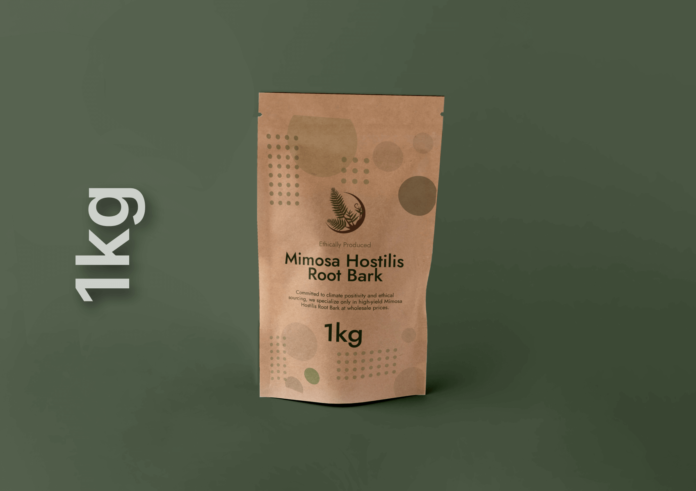

Mimosa hostilis is a tree native to parts of South America. It is also known by the botanical name Mimosa tenuiflora. The tree has been used in traditional settings for many years, particularly in regions where it naturally grows.
Today, its root bark is often discussed because it is available in several physical forms. These may include whole bark pieces, shredded bark, coarse material, and fine powder. Each form has different characteristics that can affect appearance, texture, storage, and handling.
For beginners, understanding these differences is useful before trying to identify or describe the material. It also helps explain why the same botanical product can look quite different depending on how it has been processed.
What Is Mimosa Hostilis Root Bark?
Mimosa hostilis root bark refers to the outer bark collected from the roots of the tree. The bark contains various naturally occurring plant compounds, tannins, fibers, pigments, and other botanical components.
The material can vary considerably in color and texture. Factors such as the age of the plant, growing conditions, drying methods, and processing can all influence its appearance.
Because botanical products can vary naturally, color alone should not be treated as proof of identity or quality. Proper botanical identification requires more than simply looking at a photograph or comparing shades.
The term MHRB is also commonly used as a shortened form of “Mimosa hostilis root bark.” Beginners may encounter this abbreviation when reading product descriptions, discussions, or educational material.
Common Physical Forms of Root Bark
Root bark can appear in several forms depending on how much physical processing has taken place.
Whole or larger bark pieces are among the least processed forms. These pieces may have irregular shapes and rough surfaces. Their size can differ depending on how the bark was separated and prepared.
Shredded bark consists of smaller pieces created by cutting or breaking larger sections. The pieces are usually easier to handle than large bark sections while still retaining a relatively coarse structure.
Coarse bark material falls between shredded pieces and powder. It contains smaller fragments but does not have the fine texture associated with ground material.
Powdered root bark is processed further until the material becomes much finer. It generally has a more consistent texture, although some variation in particle size can remain.
Why Processing Changes the Appearance
Processing changes the physical structure of plant material without necessarily changing its botanical identity.
A large piece of bark has visible fibers and an uneven surface. When the same material is cut into smaller pieces, those features become less noticeable.
Grinding creates an even finer texture. The increased surface area can also make the material appear denser or darker than larger pieces.
This is why two samples from the same type of plant may look different when one is shredded and the other is powdered.
Processing can also affect how the material behaves during storage. Fine particles may settle differently from larger pieces, while coarse material tends to retain more visible structure.
Understanding Powdered Root Bark
Powdered root bark is simply root bark that has undergone additional physical processing. The final texture can range from relatively coarse powder to a much finer material.
Fine powder often feels soft and dry when handled. It may also have a relatively uniform appearance when properly processed.
However, natural plant material does not always produce perfectly identical particles. Small differences in color, texture, and particle size can occur.
A beginner should therefore avoid assuming that one exact shade or texture represents every sample of Mimosa hostilis root bark.
The term “powder” also does not always describe one standardized particle size. Different suppliers and processors may use the word for materials with noticeably different textures.
What Does 1kg of MHRB Mean?
Quantity is another area that can cause confusion for people who are new to botanical materials.
When someone refers to 1kg of MHRB, they are describing a total weight of one kilogram. The measurement does not automatically describe the size of the bark pieces or the level of processing.
For example, one kilogram of shredded material can occupy a different amount of physical space than one kilogram of fine powder. This happens because particle size and density influence how plant material settles.
Packaging can also affect how the material looks. A compressed package may appear smaller than a loosely packed quantity of the same weight.
Therefore, weight and physical volume should not be treated as identical measurements.
Color, Texture, and Natural Variation
Mimosa hostilis root bark can show natural differences in color. Depending on the material, it may appear reddish, brown, tan, or contain darker areas.
These differences can result from several factors, including the plant itself, drying conditions, age, and storage.
Texture can vary in a similar way. Larger bark pieces tend to have visible fibers and rough surfaces. Shredded material has a more fragmented appearance, while powder usually looks more uniform.
Natural variation is important when evaluating botanical material. A single visual characteristic should not be used as the only method of identification.
If accurate botanical identification is important, reliable botanical references or professional identification methods are more appropriate than visual comparison alone.
How Storage Can Affect Root Bark
Storage conditions can influence the physical condition of dried plant material.
Moisture is one of the main concerns. Exposure to humidity can cause dry material to become less free-flowing and may encourage unwanted changes over time.
A suitable storage environment should therefore be clean, dry, and protected from excessive humidity. Keeping dried botanical material away from direct sunlight can also help maintain its appearance.
Packaging should protect the contents from unnecessary exposure to air and moisture. Labels can also help distinguish different forms or batches.
People researching the subject may encounter websites described as a mimosa hostilis shop when searching for information about available forms. A website name alone, however, does not confirm the botanical identity, composition, or quality of its products.
Shredded Versus Powdered Material
The biggest difference between shredded and powdered root bark is particle size.
Shredded material retains more of the original bark structure. Individual pieces are easier to see, and the overall texture is coarse.
Powdered material has undergone additional grinding. The particles are much smaller, and the original bark structure becomes less obvious.
Neither appearance should automatically be considered a universal indicator of quality. The preferred form depends on the intended legitimate botanical or research context.
Understanding this distinction also makes product descriptions easier to interpret. Terms such as shredded, coarse, ground, and powdered generally describe physical characteristics rather than different species.
Reading Botanical Product Descriptions
Descriptions of root bark can contain unfamiliar terminology. Beginners may see references to weight, particle size, botanical names, origin, drying, or processing.
The botanical name is particularly useful because common names can sometimes refer to different plants in different regions.
It is also worth separating factual descriptions from marketing language. Statements about appearance or processing can be evaluated more easily than broad claims about purity or quality.
When researching online, comparing information from multiple reliable botanical sources can provide a clearer understanding of the plant and its characteristics.
Final Thoughts
Mimosa hostilis root bark can appear in several forms, from larger bark pieces to shredded material and fine powder. Processing mainly changes the physical structure, texture, and appearance of the bark.
Weight, such as one kilogram, describes quantity rather than particle size. Color and texture can also vary naturally, so they should not be treated as definitive identification methods.
For beginners, learning the basic terminology makes it easier to understand descriptions and distinguish between the common physical forms of this botanical material.
FAQs
What is Mimosa hostilis root bark?
It is bark taken from the roots of the Mimosa hostilis tree, also known botanically as Mimosa tenuiflora.
What does MHRB stand for?
MHRB commonly stands for Mimosa hostilis root bark.
What is the difference between shredded and powdered bark?
Shredded bark contains larger pieces, while powdered bark has been processed into much smaller particles.
Does one kilogram describe the bark’s form?
No. One kilogram describes weight. The material can be shredded, coarse, or powdered at the same weight.
Can root bark naturally vary in color?
Yes. Color can vary because of plant characteristics, drying, processing, and storage conditions.
Is powder always the same texture?
No. Different processing methods can produce powders with different particle sizes and textures.
Does color confirm botanical identity?
No. Color alone is not a reliable method for confirming the identity of a plant material.
Why does powdered bark look different from larger pieces?
Grinding reduces the particle size and exposes more of the material’s internal surface, changing its overall appearance.