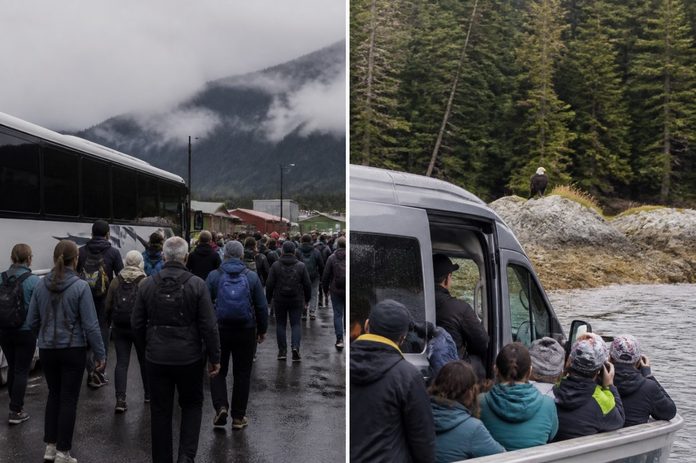

My grandfather used to say an eagle never wastes a wingbeat — it watches, it waits, then it moves with a purpose you can’t rush. Forty years guiding these waters taught me the same thing applies to how you tour them. Pack ten strangers onto a big bus and you’ll drive right past the exact bend in the river where a mature bald eagle is stripping a pink salmon apart on a gravel bar. That’s not a guess. That’s what happens, tour after tour, when the vehicle’s too big to stop on a whim.
A small-van icy strait hoonah ak bald eagle tour works differently, and not because someone dreamed up a marketing angle. It works because six or eight people can lean toward one window without rocking the whole rig, and a guide who grew up on this island can pull over the second he spots a flash of white in the cottonwoods. Bus tours can’t do that. Vans can — and that difference shapes everything else in this comparison.
Why Van Size Changes What You See Along the Water
Picture a stream mouth at low tide, three eagles working the shallows for pink salmon carcasses, one perched dead-still on a hemlock snag forty feet up. A forty-seat bus rolls past, brakes hiss — by the time everyone’s craned toward the right-side windows, two of those birds have already lifted off. That’s not bad luck — that’s physics. Big rigs can’t stop on a gravel pullout, and eagles spook fast when diesel engines idle nearby.
Sightlines from a Ten-Seat Van Versus a Forty-Seat Bus
In a ten-seat van, every passenger sits within a row or two of a window with a clear line to the water. On a bus, half the group is stuck behind seatbacks and glare, watching the backs of other people’s phones instead of the bird itself. An icy strait hoonah ak Bald Eagle Tour built around a small van means the guide can angle the vehicle, cut the engine, and let quiet do the work.
How Group Size Affects Stops at Salmon Streams and Eagle Perches
Smaller groups mean faster decisions. A guide spots movement near a stream and pulls over in seconds — no radio calls, no waiting on forty opinions. That flexibility, more than any gear or lens, is what separates a real eagle sighting from a story about the one that got away.
What Bald Eagles Actually Do Around Chichagof Island’s Shoreline
Eagles aren’t decoration up there in the treetops. They’re working birds, and they work the same edges every single day — river mouths, muskeg flats, low tide lines where salmon carcasses wash up after a run. My grandfather used to say an eagle’s nest tells you more about a river than any map does. He wasn’t wrong. On a small-van route through the wilderness of Chichagof Island, guides know which spruce snags hold generational nests, some used for 20-plus years, and that matters more than a bus schedule ever will.
Feeding Patterns Near Rivers, Old-Growth Forest, and Muskeg Edges
Eagles cluster where three things meet: moving water, old-growth cover for perching, and open muskeg for scanning. During salmon season, they’ll sit for hours on a single branch, barely moving, waiting. That patience is the whole trick to finding them.
Why Guides Trained on the Land Spot Birds Buses Miss
A 40-passenger bus can’t stop on a gravel pullout by a salmon creek. A small van can — and does, sometimes for ten minutes at a time. That’s the difference between driving past wildlife and actually watching it.
Timing, Terrain, and Access: Where Small Groups Reach That Buses Can’t
Ever wonder why a forty-seat bus always stops at the same three pullouts? It’s simple — that’s all the road allows. A passenger van isn’t bound by that. My grandfather used to say the eagles pick the quiet spots, not the loud ones, and forty years of guiding has proven him right.
Remote Road Systems Around the Island’s Coastal Points
Chichagof’s gravel routes wind past old-growth stands, muskeg flats, and narrow points where the coastline juts out — terrain a full-size bus simply can’t turn around on. Small vans thread these access roads with room to spare, reaching river mouths and shoreline overlooks miles past where the bigger rigs give up. That’s not a gimmick. It’s the difference between watching an eagle from a distance and watching one lift a salmon out of shallow water thirty feet from the van door.
Weather, Tide, and Season: When Eagle Activity Peaks
Rain or shine, eagles fish — but low tide brings exposed flats where they hunt easiest, and July through September salmon runs pull them in by the dozens. Guides who’ve watched these tides their whole lives know which hour to show up. Bus schedules don’t bend for tide charts. Small groups do.
Choosing the Right Format for Your Time in Port
Four hours. That’s the average dock window for a lot of cruise itineraries stopping near Hoonah, and it changes everything about how you plan a bald eagle-focused van outing. Some ships give you six or seven hours in port. Others barely give you enough time to eat lunch. Know your window before you book anything.
Two-Hour Versus Three-Hour Options for Limited Port Windows
A two-hour route covers the essentials — eagle perches near salmon streams, a stretch of shoreline, maybe a village drive-through. A three-hour version adds depth: more stops, slower pacing, time for berry picking if it’s the season, and a longer look at the old-growth forest edge where eagles nest. If your ship’s in port past 1 p.m., the longer option gives guides room to wait out a slow wildlife stretch instead of rushing past it.
What to Bring and What to Expect on a Guided Van Ride
Pack layers — Southeast Alaska weather flips fast, even in July. Bring:
- A rain jacket, always
- Binoculars if you’ve got them
- A charged camera with a zoom lens
- Closed-toe shoes for short walks
Expect a small van, ten passengers or fewer, with real conversation instead of a scripted loudspeaker. That’s the whole point.
My grandfather used to say an eagle chooses its perch for a reason — you just have to be quiet enough, and close enough, to understand why. That’s the whole argument for going small. Ten seats let a guide cut the engine at a salmon stream and wait. Forty seats can’t. That difference shows up again and again, whether it’s reading feeding patterns near a muskeg edge or catching a bird as buses roll right past.
A well-run bald eagle tour near Hoonah isn’t about checking a box — it’s about giving the birds, and the guide’s knowledge, room to actually show themselves. Pick the format that fits your port window, two hours or three, but pick the one that gets you off the main road and onto the water’s edge. That’s where the eagles live, not where the buses stop.
Before your ship docks, look up a small-group option and book it early — spots fill fast, and once you’ve watched an eagle drop onto a stream from thirty feet away, you won’t wonder why locals never bothered with the big buses.