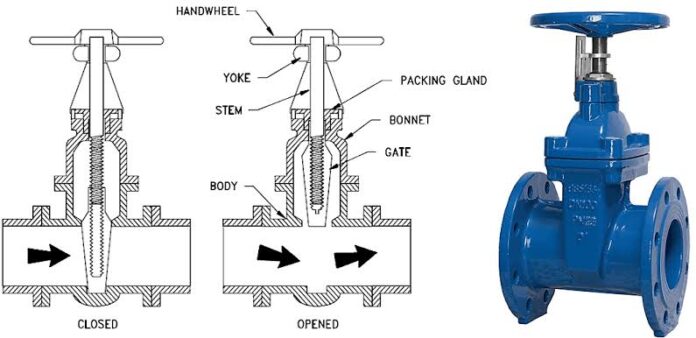

Gate valves are utilized in a large number of industrial piping systems. They control and regulate the movement of water, oil, gas, and other substances. A good gate valve can be used for a long time. However, it will require maintenance on a regular basis.
A gate valve may leak if it is not properly maintained. It may also be difficult to open or close. In some instances, the valve may become totally inoperative.
Regular inspections can help identify any minor issues before they become major. This guide helps you check, clean, repair, and maintain a gate valve in simple ways. View more.
What Is a Gate Valve?
A gate valve is a valve that is employed to regulate flow in a pipe. Has a gate within the valve body. When the valve is operated, the gate slides up and down.
When the gate is completely raised, the fluid may flow through the pipe. If the gates are closed, they prevent the flow of a substance.
Gate Valves are primarily used in fully open or closed applications. They are found in water systems, oil/gas systems, chemical plants, etc in industrial systems.
Why Is Gate Valve Maintenance Important?
The valve is properly maintained on a regular basis. It can also prolong the life of the valve.
A leak that’s not that big might appear harmless at first glance. However, it can get worse over time. It may also lead to loss of fluid and cost increases.
If a valve is difficult to operate, this may also be a red flag. Dirt, rust, or damage within the valve may cause it. It can be caused by dirt, rust, or damage inside the valve.
These issues can be minimized with proper maintenance. It also aids in enhancing the safety of the system.
Check the Valve for Leaks
The first step in valve maintenance is to check for leaks.
Inspect the valve body, stem, and connections. If any water, oil, gas, or other fluid is present around the valve, there could be a problem.
Some leaks are caused by the looseness of connections. Others can be from worn seals or broken components.
Don’t forget to attend to small leaks. Determine and fix the cause of failure in the valve as soon as possible.
Check the Valve Stem
A valve stem is a vital element of a gate valve. Serves to raise and lower the gate.
Inspect the stem for rust, dirt, or damage. If the stem is dirty or damaged, it can be hard to work the valve.
Do not let the stem become soiled. Use the proper lubricant on the stem, if the manufacturer permits.
Never use any oils or lubricants that are not specified. Applying the wrong product can cause some of the parts in the valve to be damaged.
Clean the Valve
Dirt and dust can collect around a valve. Rust can also accrue over time.
Regularly clean the outside of the valve. Clean off dust from moving parts and stem.
The valve might require further examination if dirt has gotten into the valve. In this instance, the system needs to be safely turned off prior to opening the valve.
Always follow the manufacturer’s instructions when cleaning the inside of a valve.
Check the Handwheel
Many gate valves are opened and closed by means of a handwheel. It should run smoothly.
Do not push or pull too hard if the handwheel is difficult to turn. Do not force the handwheel; it could damage the stem or other internal parts.
Start by inspecting for dirt, rust, or other obvious issues. If the problem persists, the valve might require repair.
If there is any damage to the internal parts, the valve should be inspected by a professional.
Inspect the Seals and Packing
Fluid loss is prevented by seals and packing. As time goes on, these components can get old or damaged.
Worn packing can cause a leak around the valve stem. In this instance, the packing might require adjustment or replacement.
Avoid overpacking. If there is too much pressure, the valve will be hard to operate.
Replace the valve model with the appropriate replacement parts.
Common Gate Valve Problems
Gate valves may experience a number of issues. One issue is leaking. A third is a valve that is hard to open or close.
Another reason for a valve to get stuck is if it gets rust or dirt. The gate or seat may be damaged in some instances.
A broken handwheel or any damage to the stem may make the valve inoperative.
It is critical to determine the cause before beginning a repair. After installing the incorrect part, the issue will not be corrected.
When Should a Gate Valve Be Repaired?
A gate valve is meant to be fixed when it is damaged or not working properly.
Common signs include:
Fluid leaking from the valve
A wheel that is difficult to operate by hand.
If the valve is not completely open, it will not be able to handle this amount of water.
The pressure that will be created by the fluid inside the balloon
Rust or visible damage is an issue.
An unusual sound while running.An unusual sound while operating.
When these indications are observed, check the valve immediately.
Replace Damaged Parts
There are some issues with gate valves that can be repaired by exchanging out broken components. These can be packing, seals, handwheels, or other parts inside the wheel.
When using parts, always use items that are the same as the valve. Leakage or poor performance can occur from incorrect parts.
If the repair is significant, it is best to call a professional service. This is particularly important for valves in high-pressure or hazardous systems.
Follow a Regular Maintenance Plan
Never delay checking your gate valves until a problem arises. Develop a basic maintenance plan.
Regularly inspect check valves for use and type of system. Depending on the environment, valves may require more frequent inspections.
Make a log of inspections and repairs. This will make it easier to know when a valve has been last checked.
Choose Quality Valves and Parts
The first step to good maintenance is a good quality valve! Problems are less likely to occur if valves are installed properly.
Always purchase from a reputable supplier when replacing valves or purchasing valves new. For more information on valve products and solutions, see zfavalves.com.
Another benefit is that it is feasible to view product information before acquiring it. Should you have additional information or details about a product or solution, you can view more and compare options.
Final Thoughts
Gate valves are a vital component of piping systems that need to be repaired and maintained for safety and reliability. Frequent checking can detect leaks, rust, dirt, and broken components at an early stage.
Maintain the cleanliness of the valve and inspect the stem, handwheel, seals, and connections. Do not push or force a valve that is hard to operate.
If it is serious, use the services of a professional. An appropriately installed and properly maintained gate valve will serve for many years.