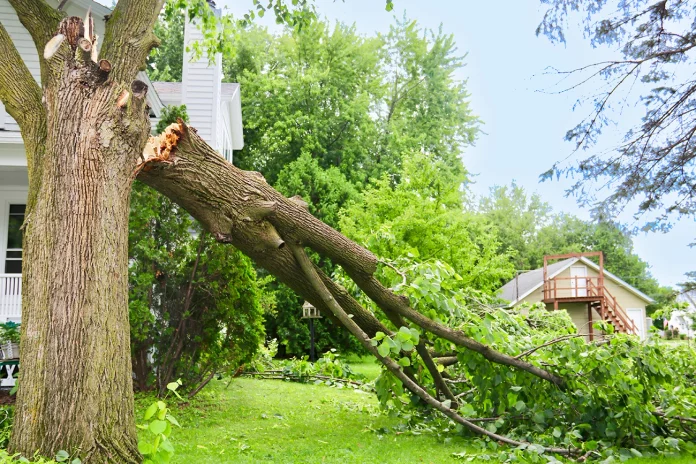

Storms can turn a healthy landscape into a hazard zone in minutes. Uprooted trunks, splitting leaders, and broken branches create risks that are easy to underestimate, especially when they involve power lines, roofs, and roadways. The first 24 hours after damage set the tone for safety, insurance recovery, and what you can salvage. This guide focuses on immediate triage: recognizing dangerous conditions, deciding whom to call first, stabilizing damage without cutting, documenting losses for claims, and understanding when a tree can be preserved versus when removal is the safer choice.
- Identify Immediate Hazards Before You Approach
Scan the entire area before stepping closer. Any contact with electrical infrastructure is an emergency: a fallen service drop draped over a limb, a sparking secondary line on a driveway, or a conductive fence touching a downed wire all require you to keep your distance and call the utility. If you need a reference for what qualified crews can address during an emergency, providers often outline capabilities online, such as https://lufkinlogisticsinc.com/emergency-tree-services/. Treat unknown wires as energized. Avoid metal ladders, wet ground near lines, and standing water that may carry current.
Next, look for tree-specific dangers. Hanging branches, often called widowmakers, can drop without warning. A sprung sapling bent into a bow, a spring pole, stores energy that can whip back violently when cut. Soil heaving and a lifted root plate indicate root failure; if the lean increases or the ground cracks widen, the tree can continue to topple. A split trunk or a torn main leader concentrates weight on compromised wood fibers, increasing the chance of sudden failure. As a basic rule, keep people and pets out of an exclusion zone equal to at least the tree’s height.
- Make the Call: Who to Contact and In What Order
Address life safety first. Call the power company for any line involvement, then emergency services if roads are blocked or a tree has entered a living space. Contact your insurer’s claims line early to ask what documentation they need and whether temporary mitigation like tarping is covered. Contact an emergency tree crew for hazards such as lean corrections, crane-assisted removals, or rigging work over structures. When you call, share clear details: the tree species if you know it, estimated trunk diameter at chest height, whether a root plate has lifted, gate widths for equipment access, and nearby obstacles like septic tanks or overhead cables. That information helps crews triage and arrive with the right gear.
- Stabilize the Scene: Practical Steps You Can Take Without Cutting
While you wait for help, make the area safer without using a chainsaw. Establish a visible perimeter with cones, tape, or bins around the drop zone under damaged canopies. Redirect foot traffic away from sidewalks under hangers. If it is safe and there are no wires, move vehicles out from under damaged limbs to reduce additional losses. If the electrical service mast has been pulled or the gas meter is struck, shut power or gas off at the main if you can do so without approaching hazards.
Limit water intrusion. For roof punctures, lay a tarp from ridge to eave and weight the edges from the ground with sandbags or filled totes rather than climbing near broken decking. Place buckets under ceiling drips and move furniture away from bulging drywall. Do not stand on storm-damaged roofs or lean ladders against split trunks. Use flashlights instead of candles if you smell gas. Avoid staking or winching a leaning tree; makeshift guy lines and anchors can fail, and shifting load paths can create unpredictable movement.
- Document Damage for Insurers and Municipal Rules
Photograph everything before conditions change. Take wide shots showing the full tree, the lean angle, and the root plate relative to the house, plus close-ups of trunk splits, bark tears, crushed gutters, and fence breaks. Include a recognizable object for scale, such as a trash bin, and capture intersections or street signs when documenting curbside hazards. Record short video clips of active hazards, such as creaking fibers or moving soil. Save receipts for mitigation supplies, and ask the tree crew for an itemized work summary listing the tree location, approximate diameter, and equipment used (for example, crane, loader, rigging lines). Check local rules before leaving debris at the curb; some municipalities separate brush, logs, and construction waste, and street trees can require city permits.
Decide: Remove Now or Preserve With Expert Care
Not every storm-damaged tree must be removed. An otherwise healthy oak that lost a heavy lateral over a driveway may be a candidate for crown reduction pruning and structural cabling. An arborist can reduce end weight, install through bolts or dynamic cables to redistribute load, and monitor for developing cracks. The trade off is long term maintenance and periodic inspections versus the immediate finality of removal. Preservation can maintain shade and property character, but it requires an honest assessment of decay, previous pruning wounds, and included bark that might predispose the tree to future failures.
Some conditions leave little room for compromise. A pine with more than a third of its root plate exposed and a new 20 degree lean toward a neighbor’s fence is likely unstable, even if winched upright. Torn anchoring roots rarely regain strength, and saturated soils reduce friction that resists windthrow. In such cases, crews may recommend crane assisted removal to control the fall path and protect structures. Expect rigging lines, lowering devices, and a chipper for brush, with ground protection mats placed to prevent ruts from skid steers or trucks. Plan access in advance by clearing a path and noting soft lawns, septic fields, or paver driveways that require extra care.
Two examples illustrate these decisions. After an ice storm, a maple’s main leader may splinter above a garage. If the trunk wood remains sound and the crown can be rebalanced, selective pruning plus cabling could retain the tree. In another yard, a shallow rooted spruce might overturn onto a patio, lifting a mound of soil. Even if the canopy still looks green, severed roots and a shifted root plate usually mean removal is the safer path.
The first day after storm damage is about keeping people safe and protecting property while setting up a smoother recovery. Stay clear of energized lines and tensioned wood, establish a visible perimeter, and document conditions thoroughly before cleanup changes the scene. Contact the right parties in the right order and be ready with access details when help arrives. Once hazards are neutralized, schedule a full assessment of remaining trees for deadwood, decay columns, or weak unions, and consider preventive pruning that reduces wind sail. Having emergency numbers saved and supplies ready before the next storm will make these decisions faster and safer.