
Key Takeaways
- Choose a mattress based on your usual sleep position, body type, and comfort needs.
- Consider firmness and support separately, since a softer mattress can still provide adequate support.
- Compare memory foam, latex, and hybrid designs based on responsiveness, contouring, airflow, and motion isolation.
- Pay attention to pressure relief around the shoulders, hips, knees, and lower back.
- Consider temperature preferences, bedding, and bedroom conditions when evaluating cooling features.
- Couples should account for motion isolation, edge support, and differences in firmness preferences.
- Check trial periods, return policies, warranties, construction, and mattress thickness before buying.
- Avoid choosing a mattress based only on popularity, marketing claims, or firmness labels.
A mattress should do more than feel pleasant for a few minutes in a showroom. It should support your usual sleep position, reduce uncomfortable pressure, allow you to move naturally, and help you maintain a comfortable sleep environment. Comparing top mattresses is easier when you begin with your own needs rather than a brand name or a single popularity ranking. The best fit is personal. A side sleeper may need more cushioning at the shoulders and hips, while a stomach sleeper may need a steadier surface through the midsection. Your body shape, temperature preferences, sleep partner, and any recurring morning stiffness also belong in the decision.
Start With Sleep Style
Sleep position is the most useful first filter because it affects where your body needs cushioning and where it needs resistance. Choose primarily for the position you use most often, then make sure the mattress still feels manageable when you change positions.
- Side sleepers: Usually benefit from contouring near the shoulders and hips, plus a stable support layer underneath.
- Back sleepers: Often look for even support through the shoulders, lower back, and hips without a deep sag at the waist.
- Stomach sleepers: Often prefer stronger support beneath the torso and hips so the middle does not sink excessively.
- Combination sleepers: May value responsive materials that make turning and repositioning easier.
What Neutral Alignment Feels Like
A supportive mattress should help your spine rest in a relaxed, natural-looking line for your position. It should not force your shoulders upward, let your hips drop too deeply, or leave a noticeable unsupported gap beneath your lower back.
Compare Firmness and Support
Firmness is the immediate surface feel, from soft to firm. Support is how effectively the mattress holds your body in a balanced position over time. A soft mattress can still be supportive if it has a capable core, while a very firm mattress can feel uncomfortable if it creates pressure points.
- Soft: More initial cushioning and contouring.
- Medium: A balanced feel for sleepers who want cushioning without a deep cradle.
- Medium-firm: A common middle ground with noticeable stability.
- Firm: Less sink and a flatter, sturdier surface feel.
Firmness labels are not standardized across every manufacturer. Construction, foam density, coil design, body weight, and sleep position can all make two mattresses labeled “medium” feel different.
Know the Main Mattress Materials
Memory Foam
Memory foam is known for close contouring and motion isolation. It can be appealing when pressure relief matters, though slower-response foam may feel less convenient for sleepers who change position frequently.
Latex
Latex generally has a buoyant, responsive feel. It tends to let sleepers move more easily than deeply contouring foam, making it a practical option for people who want pressure relief with less of a “stuck in the bed” sensation.
Hybrid Designs
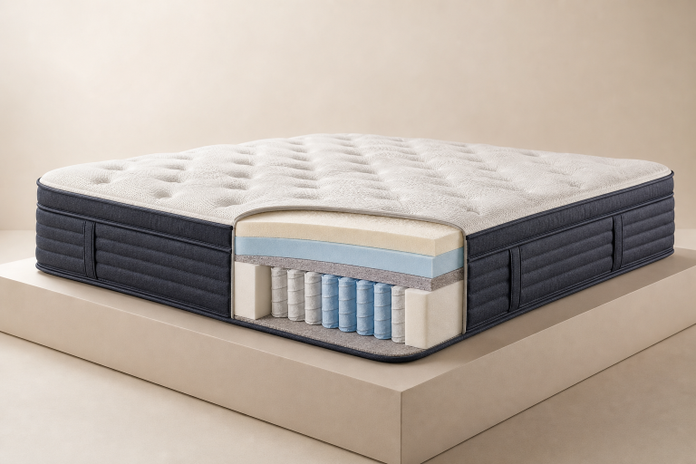
Hybrids pair foam or latex comfort layers with a coil support system. This design can combine contouring with airflow, edge stability, and responsiveness, although the result depends on the specific materials and build.
Check Pressure Relief
Pressure relief means cushioning body areas that bear more force against the mattress, often including the shoulders, hips, knees, and lower back. Good pressure relief does not mean sinking as far as possible. It means distributing contact comfortably while the support layers keep your posture from collapsing. During a trial period, lie in your normal position for at least several minutes. Notice whether a shoulder becomes numb, a hip feels sharply pressed, or your lower back feels strained. If possible, have someone observe whether your body appears level rather than bowed or tilted.
Plan for Temperature Control
Nighttime warmth is shaped by the full setup: mattress materials, sheets, blankets, pajamas, room conditions, and your own body temperature. Coils can provide space for airflow, while latex and ventilated foams may feel less heat-retentive than denser, less breathable designs. Covers, wool layers, and phase-change materials can also influence surface comfort. Cooling claims are not a guarantee that every sleeper will feel cool. The way a warm bedroom can affect sleep is a useful reminder to assess bedding and room conditions alongside the mattress itself.
Factor In Body Type and Weight Distribution
Body weight and shape affect how deeply you compress comfort layers. A lighter sleeper may not sink far enough into a firm mattress to feel its cushioning, while a heavier sleeper may need a more substantial support system to avoid excessive sink. Mattress thickness, material durability, and edge support are especially relevant when more of the body weight is concentrated around the hips or torso.
Choose a Mattress for Two Sleepers
For couples, motion isolation and edge support can be as important as comfort level. Foam often limits the spread of movement, while responsive coils may move more easily but can vary widely in how much motion they transfer. Strong edges can create more usable space when both people sleep near the perimeter.
- Does either person wake easily when the other moves?
- Does either person sleep noticeably warm?
- Do both people prefer a similar firmness?
- Would split firmness, separate comfort layers, or an adjustable base solve a clear comfort conflict?
Consider Pain and Spinal Alignment
Initial softness is not always the same as all-night comfort. The goal is balanced support for the shoulders, lower back, and hips, tailored to your sleep position and body shape. A review of orthopedic mattress research discusses how sleep position, body characteristics, spinal alignment, and thermal comfort can influence mattress selection. A mattress is not a treatment for an injury or medical condition. Anyone with severe, persistent, or worsening pain should discuss symptoms with a qualified healthcare professional.
Use a Simple Mattress Shopping Checklist
- Write down your most common sleep position.
- Note whether you wake hot, sore, stiff, or disturbed by movement.
- Set a spending range before comparing options.
- Test two or three suitable material types.
- Check thickness, support construction, trial terms, return rules, and warranty details.
- Lie down in your usual position instead of judging only while sitting.
- Reassess after several nights when a sleep trial is available.
Avoid Common Mattress-Buying Mistakes
- Buying solely because a model is popular or heavily promoted.
- Assuming firmer automatically means more supportive.
- Ignoring heat buildup, bedding, and room conditions.
- Forgetting a partner’s motion, temperature, and firmness needs.
- Skipping the trial period and return-policy details.
Make the Final Choice
The right mattress is the one that fits your sleep position, desired firmness, pressure-relief needs, temperature preferences, and support requirements. Narrow the field to a few well-matched options instead of trying to compare every available bed. A strong choice should feel comfortable at bedtime, remain supportive through the night, and continue to suit the habits you bring to sleep every day.
Conclusion
Choosing a mattress is a personal decision that depends on sleep position, body shape, firmness preference, pressure relief, temperature comfort, and support needs. Rather than relying on popularity or a single firmness rating, compare mattresses based on how their materials and construction align with your usual sleeping habits. Memory foam, latex, and hybrid designs can provide different combinations of contouring, responsiveness, airflow, and motion isolation. Couples should also consider movement transfer, edge support, and differences in comfort preferences. Before making a purchase, review the mattress thickness, support construction, trial period, return policy, and warranty terms. Testing a mattress in your normal sleeping position can provide useful information, while a sleep trial may offer a better assessment over several nights. A thoughtful comparison can help narrow the choices and identify a mattress that provides comfortable, consistent support for everyday sleep.