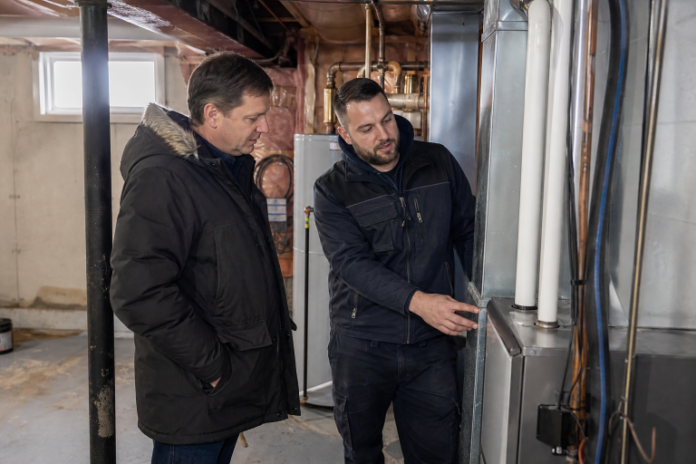

London, Ontario homeowners need heating equipment that can handle long heating seasons, damp cold, changing temperatures, and the occasional sharp winter cold snap. Whether you are replacing aging equipment or planning a renovation, the right system starts with an honest look at your house, utility access, and comfort priorities. Homeowners considering when to install a new furnace in London should look beyond the price printed on an initial quote.
A dependable heating plan considers the local climate, insulation, ductwork, equipment capacity, installation quality, maintenance needs, and future operating costs. A system that works well in one London home may be a poor fit for another, especially when one property has leaky ducts or an unfinished basement. At the same time, another is tightly sealed and recently renovated.
Start With London’s Climate
Heating equipment should be chosen for real outdoor conditions rather than an annual average. In London, winter weather can bring snow, wind, freezing rain, and temperature swings that affect both a home’s heat loss and a system’s output. A contractor should use a local winter design temperature in a detailed load calculation, then explain how the proposed equipment will perform under severe conditions.
Backup heat is also worth discussing, particularly for heat pump installations. Modern cold-climate units can operate well below freezing, but their capacity and efficiency vary by model and outdoor temperature. Natural Resources Canada explains that cold-climate heat pumps can extract heat from outdoor air during Canadian winter days, while also providing cooling during warm weather.
Compare Common Heating Systems
Gas Furnaces
Gas furnaces are a familiar forced-air option for London homes with natural gas service and usable ductwork. High-efficiency models can provide steady heat, but their performance depends on proper sizing, combustion venting, drainage, duct design, and airflow. A furnace also needs routine professional service and working carbon monoxide alarms.
Electric Furnaces and Baseboards
Electric resistance systems are comparatively simple and do not require fuel combustion or gas venting. They can be practical where natural gas is unavailable or as supplemental heat, but homeowners should review local electricity rates before relying on resistance heat as the main source for a larger home. Electric resistance equipment differs from a heat pump, which transfers heat rather than producing it directly via electric elements.
Cold-Climate Heat Pumps
Heat pumps are available in ducted and ductless configurations. A ducted system can work with suitable existing ducts, while ductless indoor heads can help serve additions, converted attics, or rooms that never stay comfortable. Their ability to heat and cool makes them especially appealing when a home also needs air conditioning.
Hybrid Systems, Boilers, and Radiant Heat
A hybrid system pairs a heat pump with a furnace. Controls can use the heat pump in milder weather and switch to the furnace based on outdoor conditions, op. Still, homeowners or the system design. Homes with existing boilers, radiators, hydronic baseboards, or radiant floors may instead benefit from retaining or upgrading a water-based system. Adding hydronic heating where no piping exists can be more complex than replacing forced-air equipment.
Match the System to the Home
The house itself should guide the choice. Existing ducts can support a furnace, ducted heat pump, or hybrid setup, provided they are properly sized and sealed. Homes without ducts may be better candidates for ductless heat pumps, electric baseboards, or hydronic options. Older London homes deserve special attention to insulation levels, air leakage, windows, basement conditions, and electrical capacity. For a new addition, zoning or a separate ductless unit may solve comfort problems without overworking the main system.
Understand Efficiency Ratings
Efficiency labels are useful comparison tools, but they do not predict an exact utility bill. AFUE describes seasonal efficiency for furnaces. COP compares a heat pump’s heat output to its electricity consumption under stated conditions. HSPF2 indicates seasonal heating efficiency for heat pumps. Higher ratings can be valuable, yet electricity and gas prices, thermostat settings, duct leakage, insulation, and equipment sizing still affect the outcome.
Prioritize Proper Sizing
Square footage alone is not enough to size heating equipment. A proper heat-loss calculation should consider the home’s layout, insulation, windows, air leakage, ventilation, local design conditions, and room-by-room needs. The contractor should also verify duct capacity and review heat pump output at low temperatures. Oversized equipment may cycle on and off too frequently, while undersized equipment may struggle to maintain comfort during the coldest weather.
Improve the Building Envelope
New equipment cannot fully correct a drafty, poorly insulated home. Air leaks around doors, windows, attic penetrations, rim joists, and ducts can create cold rooms and increase heating demand. Before selecting a larger system, consider air sealing, attic insulation, basement improvements, and accessible duct sealing. The U.S. Department of Energy notes that homeowners replacing gas heating with a heat pump should consider home upgrades for better comfort and cost savings, a principle that also applies to furnace and hybrid projects.
Plan for Installation and Safety
A quality proposal should identify the exact equipment model, heating capacity, included labor, electrical work, venting, condensate drainage, thermostat controls, and warranty registration steps. Ask whether the contractor will inspect ducts, test airflow, and document the load calculation. With combustion equipment, code-compliant venting, required clearances, gas connections, and carbon monoxide alarms are essential safety items, not optional upgrades.
Consider Long-Term Costs
Compare the total installed price rather than the equipment cost alone. Include possible panel upgrades, duct modifications, venting, maintenance, repairs, financing charges, and expected service life. Ask which RTO to improve the utility program to reduce costs. This principle quotes, because eligibility, funding, and deadlines can change. The lowest-priced option is not automatically the lowest-cost choice over time, particularly in a home with high heating demand.
Maintain Heating Performance
During heavy heating use, check filters regularly and replace or clean them according to the manufacturer’s instructions. Keep supply and return vents open and unobstructed, schedule professional service before winter, and keep a heat pump’s outdoor unit clear of leaves, snow buildup, and packed ice. Strange sounds, weak airflow, frequent cycling, or uneven heating across rooms are good reasons to schedule service before a minor issue becomes a no-heat emergency.
Common Questions
What is the most efficient heating option?
There is no universal answer. Heat pumps can be highly efficient because they transfer heat, while high-efficiency furnaces can be a practical match for homes with gas service and sound ductwork. The home, climate, rates, and installation quality matter.
Can a heat pump work during a London winter?
Yes, cold-climate models are designed for low outdoor temperatures. Review the selected model’s capacity under cold conditions and ask how supplemental or backup heat will operate if required.
Is a bigger furnace better?
No. The appropriate capacity is based on a heat-loss calculation. Properly matched equipment is more likely to provide steady, efficient comfort than an oversized system.
Final Thoughts
For London, Ontario, homeowners, the most reliable heating decision begins with the home rather than a product label. Review the building envelope, compare system types, insist on proper sizing, and choose an installer who explains the complete scope of work. That approach can lead to more consistent comfort, a clearer understanding of expectations, and a heating system suited to the home for years to come.