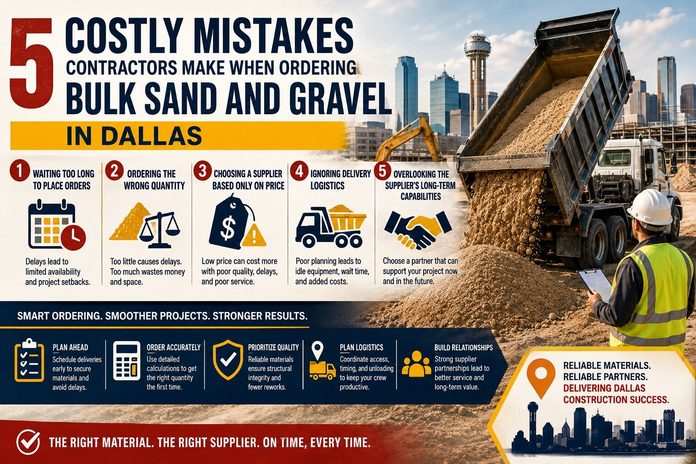

Ordering bulk sand and gravel might seem like one of the simpler aspects of managing a construction project, but experienced contractors know otherwise. A poorly planned material order can create scheduling conflicts, increase operating costs, leave crews waiting on-site, and delay critical project milestones.
Dallas continues to experience strong residential, commercial, and infrastructure growth, creating high demand for construction materials throughout the year. With multiple projects often competing for the same resources, contractors must approach aggregate procurement strategically rather than treating it as a last-minute purchasing task.
Fortunately, many of the most common ordering mistakes are completely avoidable. By understanding where projects typically go wrong, contractors can improve efficiency, reduce waste, and keep work progressing according to schedule.
Mistake #1: Waiting Too Long to Place Material Orders
One of the most common procurement mistakes is assuming materials will always be available on short notice.
Construction demand fluctuates throughout the year, and busy seasons often place significant pressure on suppliers, transportation fleets, and production facilities. Contractors who delay placing orders may discover that delivery schedules are already full or that certain materials have limited availability.
Planning aggregate deliveries several days—or even weeks—in advance allows suppliers to coordinate transportation more effectively and helps contractors avoid unnecessary project interruptions.
Early planning also provides flexibility if project timelines change before construction begins.
Mistake #2: Ordering the Wrong Quantity
Accurate quantity estimation is essential for controlling both costs and project schedules.
Ordering too little material often results in emergency deliveries, increased transportation expenses, and interruptions to ongoing work. Ordering too much creates storage challenges, ties up project capital, and may require additional equipment to relocate unused materials.
Before placing an order, contractors should review:
- Engineering drawings
- Site measurements
- Material specifications
- Compaction requirements
- Waste allowances
- Future construction phases
Using detailed calculations rather than rough estimates reduces unnecessary costs while ensuring enough material is available when needed.
Mistake #3: Choosing a Supplier Based Only on Price
Competitive pricing is important, but it should never be the only factor influencing procurement decisions.
The lowest quote can quickly become the most expensive option if deliveries arrive late, materials fail to meet specifications, or communication breaks down during construction.
Instead of comparing only the cost per ton, contractors should evaluate suppliers based on:
- Delivery reliability
- Product quality
- Fleet capacity
- Customer service
- Scheduling flexibility
- Industry reputation
A dependable supplier often saves far more money by preventing costly delays than a lower-priced competitor whose service is inconsistent.
Mistake #4: Ignoring Delivery Logistics
Even when quality materials are available, poor delivery planning can create serious problems.
Questions contractors should consider include:
- Can trucks safely access the jobsite?
- Is adequate unloading space available?
- Are deliveries coordinated with equipment operators?
- Will materials arrive in the correct sequence?
- Are weather conditions likely to affect access?
Failing to answer these questions can lead to trucks waiting onsite, equipment remaining idle, and crews losing valuable working hours.
Coordinating deliveries with the overall construction schedule helps maximize productivity while reducing unnecessary downtime.
Mistake #5: Overlooking the Supplier’s Long-Term Capabilities
Many contractors focus only on the immediate project without considering whether their supplier can support future material requirements.
As projects expand or new developments begin, procurement becomes easier when working with suppliers capable of handling larger volumes, multiple delivery locations, and changing schedules.
Before making a final decision, it is worth evaluating a provider offering bulk sand and gravel delivery in Dallas that demonstrates strong logistics, dependable communication, and the ability to support commercial projects throughout every stage of construction.
Selecting a capable supplier from the beginning creates consistency across future projects while reducing procurement challenges as business grows.
Why Communication Makes a Difference
Construction projects rarely proceed exactly as planned.
Weather delays, design revisions, inspection schedules, and subcontractor availability often require adjustments throughout the project lifecycle.
Suppliers who communicate proactively help contractors respond more effectively to changing conditions.
Strong communication includes:
- Delivery confirmations
- Updated arrival times
- Immediate notification of delays
- Material availability updates
- Flexible scheduling when project priorities change
Rather than reacting to unexpected problems, contractors can adjust schedules before productivity is affected.
The Importance of Consistent Material Quality
Reliable deliveries mean little if the materials themselves fail to meet project specifications.
Poor-quality aggregates may contribute to:
- Failed inspections
- Foundation issues
- Pavement deterioration
- Drainage problems
- Additional labor costs
- Material replacement expenses
Working with suppliers that maintain consistent quality control reduces the likelihood of costly rework while improving overall project performance.
Consistency is especially important on commercial developments where multiple deliveries occur over an extended period.
Planning for Changing Project Conditions
Construction environments are dynamic.
Material quantities may increase, schedules may shift, and project priorities can change with little notice.
Contractors who build flexibility into their procurement strategy are better prepared to respond when these situations occur.
Effective planning includes:
- Scheduling phased deliveries
- Reviewing inventory regularly
- Maintaining communication with suppliers
- Updating forecasts as construction progresses
- Preparing contingency plans for critical materials
These practices improve efficiency while helping projects continue despite changing conditions.
Building Long-Term Supplier Relationships
Many successful construction companies view suppliers as project partners rather than simple vendors.
Long-term relationships often provide:
- Faster response times
- Better communication
- Improved delivery coordination
- Greater familiarity with project requirements
- More efficient procurement processes
As suppliers gain experience working with the same contractor, they become better equipped to anticipate material needs and support future projects more effectively.
These partnerships create value that extends well beyond a single construction job.
Final Thoughts
Ordering bulk sand and gravel involves far more than selecting materials and requesting delivery. Successful procurement requires careful planning, accurate quantity estimates, dependable logistics, consistent communication, and suppliers capable of supporting evolving project requirements.
By avoiding these five common mistakes, contractors can reduce unnecessary costs, improve scheduling reliability, and maintain steady project progress. In a competitive construction market like Dallas, efficient material procurement is not simply an operational task—it is a strategic advantage that contributes directly to successful project delivery.