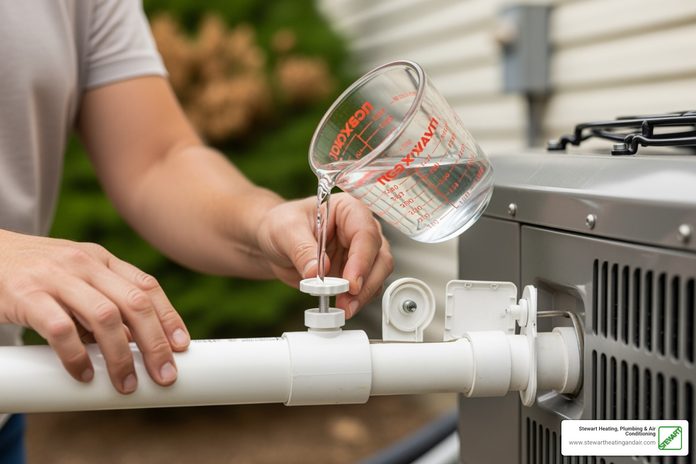

Few home issues escalate as quietly as a clogged air conditioner condensate drain. Your cooling system pulls moisture from indoor air at the evaporator coil, and that water should travel through a drain pan and line to a safe discharge point. When biofilm, dust, or poor drainage stops the flow, water backs up where it does the most harm: inside an air handler, under an attic unit, or behind a closet wall. This article explains how to recognize early warning signs, what typically causes a blockage, safe first steps you can take, and how to prevent the same problem from returning once the line is clear.
Early signs your condensate drain is clogging
Look for puddling near the air handler, a damp ceiling below an attic unit, or water dripping from a small pipe on the eave that serves as a secondary drain. Many systems include a float safety switch in the primary pan; when rising water lifts the float, the switch cuts power and the blower stops even though the thermostat still calls for cooling. In one common scenario, a closet air handler runs for a few minutes, shuts off unexpectedly, and restarts only after the float switch drops. Homeowner-focused resources such as callpeachykeen.com can help you identify components like the float switch, cleanout tee, and secondary drain so the symptoms make more sense.
What actually blocks the drain line and pan
Most clogs grow from a mix of algae and biofilm in the condensate pan and PVC drain. Dust rinsed off the evaporator coil feeds this growth, especially when air filters stay in service too long. An improperly sloped horizontal run allows standing water where sludge forms; aim for a gentle continuous fall rather than sags in flexible vinyl tubing. Without a P-trap, negative pressure at the air handler can pull air back through the line and hold water in the pan. Another overlooked trigger is a freezing evaporator coil. Ice build-up from restricted airflow or low refrigerant later thaws in a rush, overwhelming a marginal drain and sending water into the secondary pan or onto ceilings.
Safe checks and DIY steps before you call
Cut power to the air handler at the thermostat and, if needed, at the breaker. Remove the cleanout cap on the condensate line near the air handler and check for standing water. At the exterior termination, apply a wet/dry vacuum with a tight seal for 60 to 90 seconds to pull sludge through the line. Back at the cleanout, pour a cup of plain distilled white vinegar to help disrupt biofilm; avoid mixing chemicals and skip harsh drain openers that can damage pans, pumps, or coil surfaces. Replace a clogged return filter to restore airflow, and inspect the insulated suction line at the air handler for frost, which can indicate a bigger cooling issue. If you have a condensate pump, verify thepump’ss reservoir isn’t stuck full, the float moves freely, and the small discharge tube isn’t kinked.
When the problem points to installation or equipment issues
A clog that returns quickly often points to layout or component problems rather than maintenance alone. A missing or mis-sized P-trap allows air to flow through the drain instead of water, causing the pan to overflow during long cooling cycles. Flat or back-sloped runs under the air handler let algae establish and never fully drain; rigid PVC with proper hangers helps maintain steady pitch better than unsupported vinyl hose. A corroded or cracked primary pan needs replacement, since no amount of cleaning can keep water out of damaged metal. If the air handler sits below the drain termination, a properly sized condensate pump becomes essential; it adds reliability when installed with a check valve and a clear service loop, but it also adds pump noise and a component that requires periodic cleaning and testing.
Preventive habits that keep condensate moving
During the heavy cooling season, flush the cleanout monthly with a cup of vinegar or a manufacturer-recommended condensate treatment. Some tablets reduce algae in the pan, but read labels closely and never mix treatments. Maintain an airtight return path by replacing filters on schedule and ensuring the return grille and cabinet seals are intact; less dust reaching the coil means less sludge in the pan. Insulate long drain runs that pass through hot, humid spaces to minimize external sweating that drips where you cannot see it. Keep the secondary drain outlet visible so a sudden trickle alerts you to an upstream backup. At a routine service visit, ask the technician to clear the line with a vacuum or nitrogen and to confirm trap depth, line pitch, and the function of both the primary float switch and any auxiliary pan switch.
Acting early protects ceilings, floors, and the air handler itself. If you spot water near the unit, see steady discharge from a secondary line, or notice the system shutting off with no airflow, treat the condensate path as your first suspect. Simple steps like vacuuming the exterior drain, flushing through the cleanout, and changing a dirty filter resolve many blockages. When clogs return, or when you find a rusted pan, a missing trap, or a condensate pump that will not cycle, the fix usually involves correcting the drainage setup so gravity and safety switches work as designed. A clear, correctly pitched line and routine flushing keep condensate where it belongs: out of sight and out of your home.