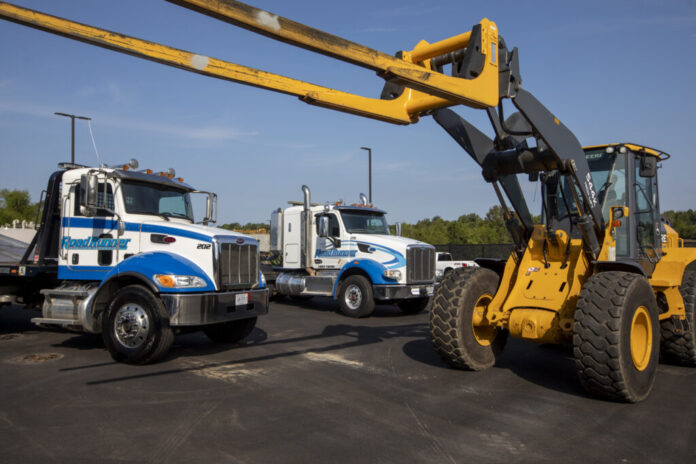

When You Need a Heavy Wrecker
When you’re searching for a Heavy wrecker near me, the vehicle sitting on the roadside may be much harder to move than it first appears. A disabled semi, tractor-trailer, bus, or loaded commercial truck needs equipment built for its size and weight. Therefore, a standard tow truck isn’t always the right choice. Heavy wreckers can provide the lifting, winching, and controlled pulling needed for difficult recoveries. Bozz Towing focuses heavily on Class 7 and Class 8 vehicles and says about 80% of its work involves heavy-duty towing and recovery.
Bozz Towing’s Background and Service History
Bozz Towing says it has operated since 2016 and built its service around Northern Utah and Southwest Wyoming, with locations in Corinne, Utah, and Evanston, Wyoming. Its current fleet includes heavy wreckers, rotators, winch trucks, and hauling equipment, while its services extend beyond towing into diesel roadside repair and equipment transport. The company’s history is relatively short compared with older towing businesses, but its stated focus has remained practical: respond to breakdowns, recover disabled vehicles, and reduce downtime for drivers and working fleets. That local focus matters when a large truck stops far from a repair facility.
What to Tell the Dispatcher
If you’re looking for Heavy towing near me, accurate information can help the right truck arrive. Don’t simply say that your vehicle has broken down. Instead, describe its size, location, condition, and the problem you can see. Bozz Towing’s heavy-duty service covers disabled semis, jackknifed trailers, off-road breakdowns, and accident recovery, so the recovery method can change with each situation.
- Give the exact highway, direction, exit, or nearby landmark.
- Identify the vehicle, such as a semi, box truck, RV, or work truck.
- Explain whether the vehicle is loaded or empty.
- Describe visible damage, flat tires, rollover conditions, or mechanical problems.
Tell the dispatcher where you need the vehicle transported.
Why Heavy Equipment Makes a Difference
A heavy recovery isn’t simply about using the biggest truck available. The operator needs to match the equipment to the vehicle, load, ground conditions, and recovery space. Bozz Towing lists rotators, heavy wreckers, and winch recovery trucks among its specialized units. During a semi recovery, details such as driveline condition, air systems, load balance, and connection points can affect how the vehicle should move. In my opinion, this preparation is more important than chasing the lowest advertised price. A cheap tow that uses unsuitable equipment can create additional delays or damage.
Jobs That Often Require Heavy Recovery
Heavy recovery covers more situations than a normal roadside tow. A commercial vehicle may stop because of a mechanical failure, accident, soft ground, or trailer problem. Bozz Towing specifically lists several heavy-duty situations and supports commercial fleets, construction crews, energy operators, and freight traffic. Common examples include:
- Disabled semi-trucks
- Jackknifed trailers
- Commercial trucks stuck off-road
- Rollover recovery
- Heavy equipment recovery
- Highway accident cleanup
- Machinery transport between job sites
- Vehicles that need controlled winching
Each job needs its own plan. A loaded tractor-trailer on pavement isn’t handled exactly like a construction machine stuck in mud.
Heavy Towing Around Evanston and Corinne
Bozz Towing operates from locations in Evanston, Wyoming, and Corinne, Utah, giving it a presence near major freight routes in the region. Its service information identifies Evanston, Corinne, Rock Springs, and other nearby communities within its coverage area. For a driver, location details still matter even when a provider serves your town. Tell the dispatcher which side of the road you’re on, your travel direction, and the closest exit. That information can help the crew reach the disabled vehicle without wasting time searching a long stretch of highway.
What Careful Recovery Looks Like
A good recovery starts before the wrecker begins pulling. The operator should look at the vehicle’s position, inspect connection points, consider traffic, and decide where the load needs to move. Bozz Towing says its operators use structured recovery plans based on load weight, balance, traffic exposure, and surrounding conditions. One hands-on detail drivers quickly notice is that experienced operators often spend several minutes preparing chains, lighting, braking, and attachment points before movement starts. It may look slow from the cab, but that preparation helps control the vehicle instead of relying on force alone.
Cost, Downtime, and Realistic Expectations
Heavy towing normally costs more than ordinary passenger-car towing because the equipment, operator, recovery time, and vehicle size can all increase the work involved. You should therefore ask what type of equipment will arrive and where the vehicle will go before approving a long transport. Bozz Towing also offers diesel roadside assistance, which can sometimes address a problem without requiring a full tow. That’s useful because not every breakdown needs recovery. Still, there’s an honest limitation: even a well-equipped towing company can’t promise an exact recovery time when weather, traffic, accident damage, load condition, or difficult terrain changes the job.
Final Words
Finding the right heavy recovery provider is easier when you know what information matters. Start with your vehicle type, exact location, visible problem, load condition, and destination. Then ask whether the company has equipment suited to the job rather than choosing only by price. For commercial drivers, every hour beside the road can affect deliveries, schedules, and income. A provider with heavy wreckers, recovery equipment, and diesel support can give you more options when the problem isn’t simply a flat tire. Most importantly, give the dispatcher clear facts so the crew can prepare before arriving.
FAQ
1. What is a heavy wrecker?
A heavy wrecker is a specialized recovery truck designed to tow or recover large commercial vehicles and heavy equipment.
2. Can a heavy wrecker recover a semi?
Yes. Heavy wreckers are designed for large commercial vehicles, including tractor-trailers and other heavy trucks.
3. What should I tell a towing company?
Give your exact location, vehicle type, load condition, visible damage, and destination.
4. Does heavy towing cost more than regular towing?
Usually, because heavy vehicles require larger equipment, specialized operators, and more recovery work.
5. Can a diesel roadside repair prevent a tow?
Sometimes. A roadside repair may solve certain mechanical or diesel-related problems without moving the entire vehicle.