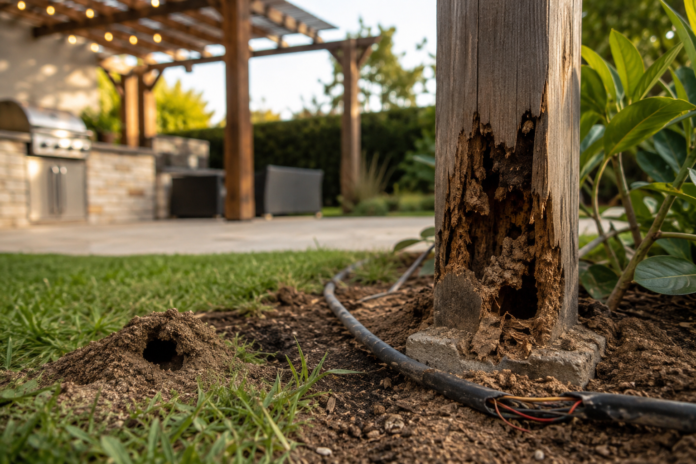

You spent real money on that backyard. Pavers, a pergola, maybe a built-in grill. And you did it because you know Southern California outdoor living is a genuine financial asset, not just a lifestyle perk. What nobody tells you is that a single pest infestation can undo a significant chunk of that investment before a buyer ever sets foot through your gate.
This isn’t about squeamishness. It’s about equity.
Your Backyard Is Already a Financial Asset
Outdoor living spaces have moved well past “nice to have.” According to the 2023 Remodeling Impact Report: Outdoor Features from the National Association of REALTORS, 92% of real estate professionals recommend that sellers improve their curb appeal before listing. That recommendation exists because buyers make snap judgments outdoors before they ever walk inside.
In a market like Orange County, where weather permits year-round patio use, buyers assign even more weight to the backyard than they might elsewhere. A well-maintained outdoor space signals to them that the whole property has been cared for. A neglected one does the opposite, and a pest-damaged one practically announces that something went wrong inside the walls, too.
Here’s what makes this relevant to your specific situation: the same conditions that make Southern California backyards so enjoyable- mild winters, warm soil, dense landscaping- are exactly what draw termites, ants, gophers, and rodents toward your property in the first place.
The Pest Threat Matrix: What Lives in Your Backyard and What It Costs
Not all pests carry the same financial risk. Some are nuisances. Others are capable of gutting the structural integrity of outdoor improvements you’ve paid contractors serious money to build. The table below breaks down the most common backyard invaders in Southern California by the type of damage they inflict and where that damage shows up on your property.
| Pest | Primary Target | Type of Damage | Where Value Is Lost |
| Subterranean Termites | Wood structures, pergolas, fencing | Structural degradation | Sale price, inspection reports |
| Gophers | Lawn, landscaping roots, irrigation lines | Surface destruction, dead patches | Curb appeal, landscaping ROI |
| Rodents | Outdoor wiring, irrigation controllers | Chewed components, potential fire risk | Repair costs, buyer confidence |
| Carpenter Ants | Deck boards, wooden pergola beams | Internal wood hollowing | Structural reports, repair bills |
| Cockroaches | Outdoor kitchen, storage areas | Sanitation signal to buyers | Perceived home cleanliness |
The framework above is what a buyer’s inspector works through mentally during a home inspection. If any of these categories raise a flag, you lose negotiating leverage. Sometimes you lose the buyer entirely.
What Buyers See When Pests Have Already Been There
Think about the last time you saw a gopher mound in an otherwise perfect lawn. Your brain registered it instantly. Buyers experience your backyard the same way, but with a financial consequence attached to the observation.
Termites are the most financially punishing. Active pest infestations can reduce property values by 5% to 20% depending on the severity and type of pest involved, with termite damage representing the most significant threat and extensive infestations potentially reducing home values by $20,000 to $50,000 or more. That range is staggering when you consider that some homeowners spend less than that on their entire backyard renovation.
And here’s the thing buyers rarely consider when they’re falling in love with a patio: damage doesn’t have to be current to torpedo a deal. A pest report showing prior infestation, even a treated one, resets buyer psychology. They start asking what else was missed. The structural integrity question follows quickly. By the time you’re negotiating a price concession, you’ve already lost ground you can’t easily recover.
“Properties with documented termite treatment and clearance letters typically recover most of their value, while untreated infestations create ongoing concerns that significantly affect buyer confidence and sale outcomes.” insight from California real estate industry analysis on pest disclosure requirements and property transactions.
Documentation matters more than most homeowners realize. A paper trail showing regular professional treatment is a genuine selling asset. Its absence is a liability.
A Practical Backyard Protection Checklist
Most Southern California homeowners wait until they see a pest before doing anything. That’s exactly the wrong order of operations. By the time you spot the evidence, the colony has usually been established for months.
Run through this checklist twice a year, ideally before spring (when termite swarm season begins) and again heading into fall:
- Inspect all wood-to-ground contact points. Pergola posts, fence bases, and deck ledger boards sitting directly on soil are an open invitation for subterranean termites. Add a physical barrier or have a professional apply a treatment perimeter.
- Check irrigation controllers and wiring runs. Rodents chew through outdoor wiring for nest material. If your smart irrigation system starts misfiring, look for gnaw marks before calling the manufacturer.
- Walk the lawn perimeter for gopher mounds. Fresh soil pushed up in a crescent pattern is the tell. A single gopher can destroy an entire section of sod and sever drip lines in a matter of weeks.
- Clear firewood stacks away from the house. Stacked wood against a fence or exterior wall is a termite bridge and a rodent hotel. Move it at least 20 feet from any structure.
- Look at every outdoor light fixture after dark. Cockroaches, ants, and other insects congregate near heat and light sources at night. If you’re seeing high volumes, that concentration usually points to a nearby harborage area.
Homeowners in cities like Garden Grove, Anaheim, and the broader Orange County area deal with particularly aggressive year-round pest pressure because the climate never delivers a hard freeze to knock populations back. That matters for how proactive you need to be.
If you’d rather not run this inspection yourself, or if you’ve already spotted signs of activity, working with a reputable pest control garden grove service is the fastest way to get a professional assessment and a documented treatment record you can show future buyers.
The ROI Argument for Staying Ahead of Infestations
Pest control is rarely framed as a return on investment conversation, but it absolutely should be. You’ve already put money into the outdoor space. Protecting that investment from biological threats is no different from putting on a good coat of exterior paint or keeping up with your roof. A study by the National Association of Landscape Professionals, cited by Green Builder Media, found that landscaping, outdoor kitchen, and deck upgrades can yield a 100% return on investment upon resale. That figure assumes the improvements are intact and undamaged at the time of sale.
A gopher-riddled lawn and a termite-compromised pergola don’t return 100% of anything. They return repair bills and buyer skepticism.
The math here isn’t complicated. A recurring professional treatment program costs a fraction of a single pre-sale negotiation discount driven by a bad inspection report. Spending a few hundred dollars a year to protect a backyard worth tens of thousands in resale value is one of the clearest financial decisions a Southern California homeowner can make.
Don’t Let the Hard Work Go to Waste
You built something worth protecting. The outdoor living space you’ve put together isn’t just about weekend barbecues; it’s part of your property’s market story. Pests don’t care about that story, but buyers absolutely do.
Run the checklist. Set a calendar reminder for your next biannual walkthrough. And if you’re in Orange County and already seeing signs of activity, get a professional out before the problem writes itself into an inspection report you can’t walk back.