

Assessing Financial Readiness and Navigating the Housing and Rental Market Budget
The housing and rental market can feel like a complex maze, especially with the dynamic shifts we’ve witnessed recently. As of 2024, a significant 43.5 million households across the U.S. were grappling with housing costs, dedicating over 30% of their income to shelter – a stark increase since 2019. While the market has seen some stabilization and even rent drops in certain regions by early 2026 due to new construction, the journey to finding an affordable and suitable home remains challenging for many. Successfully navigating this landscape is crucial for our financial stability and peace of mind.
We understand that this process can feel overwhelming. That’s why we’ve developed this extensive guide to equip you with clear, actionable strategies. We’ll explore everything from accurately assessing your budget and understanding vital terms like Area Median Income (AMI), to effectively searching for listings, including those found on national real estate platforms and beyond. We’ll also delve into crucial aspects like identifying rental scams, conducting smart property tours, deciphering lease agreements, and understanding your tenant rights. Our aim is to empower you to approach your housing search with greater confidence and success.

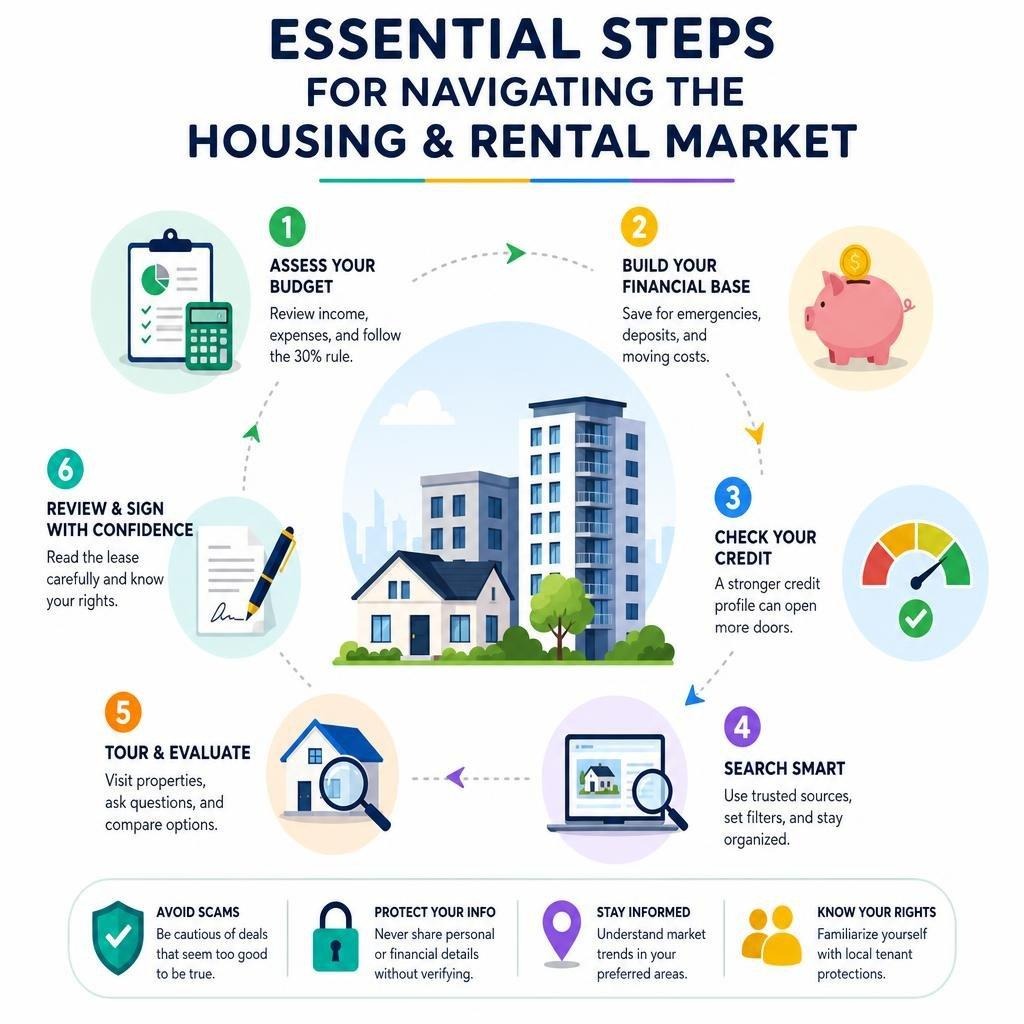
Embarking on a housing search, whether for a rental or a home purchase, always begins with a clear understanding of our financial standing. This foundational step involves meticulous financial planning, allowing us to set realistic expectations and avoid future strain. The first steps to assess our budget and eligibility for affordable housing involve a comprehensive look at our gross income, which is our total earnings before taxes and deductions. Financial experts commonly recommend adhering to the “30% rule,” meaning our monthly housing costs should ideally not exceed 30% of our gross monthly income. This guideline helps ensure we have sufficient funds for other essential expenses and savings.
Beyond the monthly rent, it’s crucial to build a robust financial cushion. We advise establishing an emergency savings fund, ideally holding at least three months’ worth of rent and living expenses. This cash buffer is vital for unexpected costs, such as utility deposits, moving expenses, or unforeseen household essentials. For instance, in 2024, 43.5 million households were cost-burdened, spending more than 30% of their income on housing, an increase of 4.9 million households since 2019. This statistic underscores the importance of stringent budgeting. Furthermore, understanding our credit benchmarks is paramount, as a strong credit history can significantly influence application approvals and even the terms we might be offered. Proactive financial preparation not only strengthens our application but also provides a sense of security in a competitive market.
Understanding Area Median Income and Eligibility Limits
A critical component of navigating affordable housing options is understanding the Area Median Income (AMI). AMI is a figure calculated annually by the Department of Housing and Urban Development (HUD) for different metropolitan areas and non-metropolitan counties. It serves as a benchmark for determining eligibility for various housing assistance programs. Essentially, AMI represents the midpoint of a region’s income distribution, meaning half of the households in that area earn more than the AMI, and half earn less.
AMI is not a one-size-fits-all number; it’s adjusted based on household size. A single person’s AMI will differ from that of a family of four. Housing programs then use specific percentages of the AMI (e.g., 30%, 50%, 80%, or 120%) to define income brackets for eligibility. For example, a household earning 50% of the AMI is considered “very low income,” while one earning 80% is “low income.” Understanding our household’s income relative to the local AMI is the key to unlocking housing vouchers, subsidized rentals, and other affordable housing qualifications. Approximately 8.5 million households with very low incomes who received no housing assistance paid more than half their income on rent or lived in severely inadequate housing in 2021, highlighting the immense need for these programs and the importance of understanding AMI to access them.
Calculating Recurring Costs vs Move-In Cash Requirements
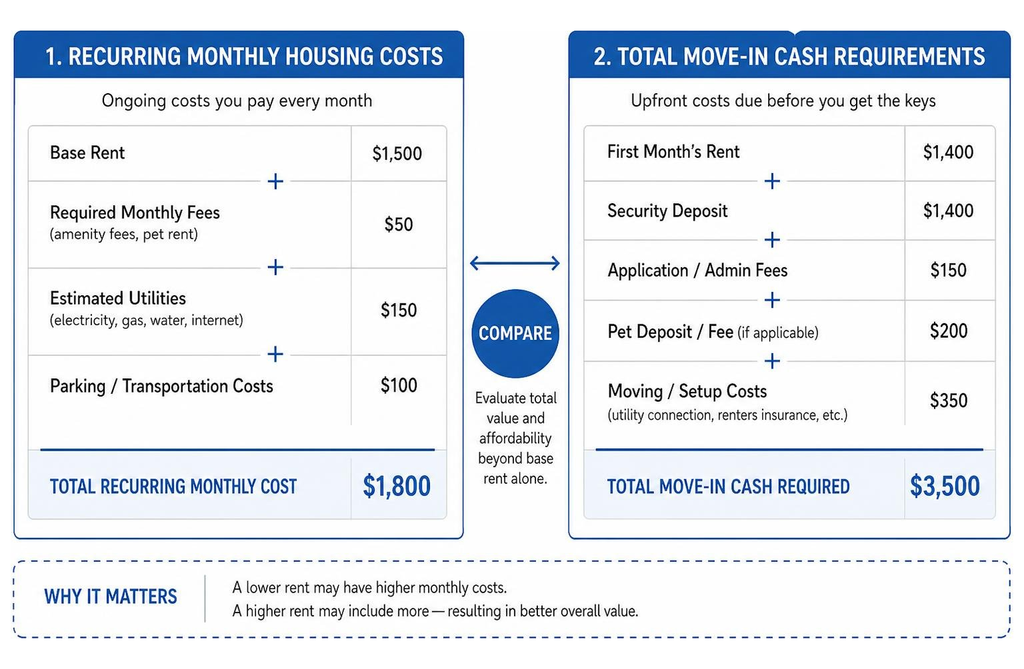
When evaluating potential housing, it’s easy to focus solely on the advertised rent. However, a truly effective strategy involves comparing the total move-in costs and recurring monthly expenses. The right rental is not necessarily the one with the lowest advertised rent; often, a slightly higher base rent might include utilities or amenities that make it more affordable overall.
We recommend breaking down housing expenses into two distinct categories:
- Recurring Monthly Housing Costs: This formula helps us understand our true ongoing financial commitment.
- Recurring Monthly Housing Cost Formula: Base Rent + Required Monthly Fees (e.g., amenity fees, pet rent) + Estimated Utilities (electricity, gas, water, internet) + Parking/Transportation Costs.
- For example, an apartment with $1,500 rent, $50 in monthly fees, $150 in estimated utilities, and $100 for parking would have a recurring monthly cost of $1,800.
- Total Move-In Cash Requirements: This calculates the lump sum needed before we even get the keys.
- Move-In Cost Formula: First Month’s Rent + Security Deposit + Application/Admin Fees + Broker Fee (if applicable) + Pet Deposit/Fee + Moving/Setup Costs (e.g., utility connection fees, renters insurance).
- For a $1,400 per month apartment, this could easily tally up to $3,500 or more, including a security deposit, application fees, and moving expenses.
By meticulously calculating both figures, we can compare value, not just price. For instance, an apartment with a higher base rent but included utilities might be cheaper than a lower-rent unit where all utilities are billed separately. This structured comparison prevents costly surprises and ensures we have sufficient funds for both the initial move and ongoing living.
Sourcing Housing Options Across Market-Rate, Subsidized, and Short-Term Rentals
The housing search in 2026 demands a multi-faceted approach, moving beyond simple online searches to encompass a broader understanding of property categories and local market dynamics. While national trends provide a general overview – for instance, rents rose 30% between 2019 and 2022, then largely stabilized over the following two years – local supply dynamics can vary wildly. Nationally, occupancy rates dropped from pandemic highs of nearly 98% to around 94%, a 10-year low, indicating a slight softening in some areas. However, in high-growth Sun Belt markets like Austin, rents dropped 8% year-over-year due to a surge in new multi-family completions, leading to concessions averaging around 8% of annual rents to attract tenants. This regional variation underscores the need for a tailored search strategy.
We must be prepared to explore various housing types: market-rate units, which are typically found through standard listings and command prices based on supply and demand; subsidized housing, which has income restrictions and often longer application processes; and short-term options, which can serve as temporary solutions. Our strategy should involve not only understanding these different categories but also leveraging alternative channels and local networks to uncover opportunities that might not be widely advertised.
Exploring Listings Beyond Major Real Estate Sites
While major rental websites are a convenient starting point, they often don’t capture the full spectrum of available housing, especially for affordable or specialized options. To broaden our search, we need to look to less conventional, yet highly effective, sources.
For affordable housing, we recommend directly consulting public housing authorities (PHAs) in our target area. These governmental agencies administer various programs, including public housing and Housing Choice Vouchers (Section 8), and often maintain their own waiting lists and direct listings. Similarly, municipal dashboards and state housing finance agencies frequently provide directories of income-restricted properties, often developed through programs like the Low-Income Housing Tax Credit (LIHTC). These properties may look identical to market-rate apartments but have specific income eligibility requirements.
Local networks are also invaluable. University housing offices, community centers, religious organizations, and even local social media groups can be excellent sources for word-of-mouth opportunities, shared housing, or smaller, privately managed rentals that don’t appear on large platforms. While we might start our broad search on a comprehensive national real estate platform, remember to dig deeper into local resources for unique opportunities.
Strategic Choices in Navigating the Housing and Rental Market Options
Understanding the nuances between different housing types is crucial for making informed decisions.
Market-Rate Units: These are the most common type of rental, with prices dictated by the open market. Landlords typically require proof of income equivalent to 3x the monthly rent, a good credit score, and a clean background check. While these offer the most flexibility in terms of location and amenities, they can be challenging for those on a tight budget.
Subsidized Housing: This category includes several programs designed to assist low-income households.
- Low-Income Housing Tax Credit (LIHTC) developments: These are privately owned properties that receive tax credits in exchange for offering units at reduced rents to tenants who meet specific income limits (e.g., 50% or 60% of AMI). They are often indistinguishable from market-rate apartments but require adherence to income qualifications.
- Public Housing: Owned and managed by local PHAs, these units are reserved for very low-income families, seniors, and individuals with disabilities, with rent typically capped at 30% of adjusted gross income.
- Housing Choice Vouchers (Section 8): These vouchers allow eligible low-income families to rent from private landlords in the open market, with the PHA paying a portion of the rent directly to the landlord.
Short-Term Options and Alternatives: Sometimes, a long-term lease isn’t feasible or immediately available.
- Furnished apartment rentals: These are ideal for temporary relocations, corporate stays, or bridging gaps between leases. Services offering furnished apartment rentals often provide flexible lease terms, making them a convenient solution for short-term needs.
- Accessory Dwelling Units (ADUs): Often referred to as “granny flats” or “in-law suites,” these smaller, independent housing units are located on the same property as a single-family home. They can offer more affordable and flexible rental options.
- Co-living arrangements: These involve shared living spaces with private bedrooms but communal kitchens, living rooms, and sometimes bathrooms. They can significantly reduce housing costs and offer a built-in community.
- Anti-squatting (Antikraak) housing: While more common in Europe, this model allows tenants to act as guardians of unused buildings for lower rent, though it often comes with short notice periods (e.g., 28 days) and fewer tenant rights.
By exploring this diverse range of options, we can better match our housing needs with available opportunities, whether we’re seeking long-term stability or a flexible temporary solution.
Application Strategies, Waitlist Management, and Scam Prevention
Navigating the application process for housing, especially affordable housing, requires a strategic and organized approach. It’s not just about finding a place; it’s about presenting ourselves as reliable tenants and safeguarding against potential pitfalls. The process often involves detailed application prep, meticulous document organization, and an understanding of the screening criteria landlords use.
Landlords typically conduct background checks, credit checks, and verify income and rental history. Our goal is to make this process as smooth as possible for them, demonstrating our readiness and trustworthiness. This section will guide us through managing waitlists, preparing our documentation, and crucially, identifying and avoiding common rental scams that prey on eager applicants.

Managing Waitlists and Application Documentation
Affordable housing programs often operate with extensive waitlists, making proactive management essential. Waiting lists for popular programs or properties can sometimes stretch for years. For instance, some student housing platforms in high-demand areas have waiting lists exceeding two years. This reality means we need to treat waitlists like an ongoing project, not a one-time application.
Our first step is to assemble a “document go-bag” – a comprehensive collection of all necessary application documents, both physical and digital. This typically includes:
- Government-issued IDs (driver’s license, passport)
- Verifiable income records (pay stubs, tax returns, bank statements, benefit letters)
- Proof of household size (birth certificates, social security cards)
- Rental history and landlord references
- Personal references
- Any relevant disability documentation
We must ensure these documents are current and easily accessible. When applying for housing vouchers or specific programs, strict income verification is required, so accuracy is paramount.
Next, we need an application tracking system. This could be a simple spreadsheet or a dedicated app to record:
- Application submission dates
- Property contacts and program names
- Required follow-up dates
- Deadlines for updating information or renewing our position on a waitlist
For housing vouchers, staying in regular contact with the housing authority and promptly responding to any requests is critical to maintaining our eligibility and position. Waitlist seniority is often key, so getting on lists early and keeping our information current is vital. Missing a notification or failing to update contact details can result in being removed from a waitlist, costing us valuable time.
Identifying Rental Scams and Verifying Legitimacy
The housing market, unfortunately, attracts scammers who exploit the urgency and desperation of renters. Avoiding common rental scams and verifying a listing’s legitimacy is a non-negotiable part of our search.
Here are critical red flags and verification steps:
- Demands for Wire Transfers or Gift Cards: Never wire money, send gift cards, or pay via mobile cash apps (like Zelle or Venmo) to a landlord or agent we haven’t met or whose identity hasn’t been thoroughly verified. These payment methods are untraceable and a hallmark of scams.
- Upfront Fees Without Viewing: A major red flag is being asked for a deposit or application fee before we’ve had a chance to physically (or at least digitally) tour the property. Always view the property in person before exchanging any money. If an in-person viewing isn’t possible, insist on a live video tour.
- Too Good to Be True Prices: Be wary of listings with significantly lower rents than comparable properties in the area. Scammers often use attractive pricing to lure victims.
- Pressure Tactics: Scammers often try to rush us into making a decision or sending money, claiming other applicants are waiting.
- Vague Communication: Poor grammar, generic responses, or a reluctance to answer specific questions about the property or lease terms are warning signs.
- Identity Verification: Before signing anything or paying, verify the landlord’s or property manager’s identity. We can do this by:
- Checking public property ownership records to confirm they are the legal owner or authorized agent.
- Searching for the property management company online and checking reviews.
- Contacting them through independently verified channels, rather than just replying to an email or text from the listing.
By staying vigilant, trusting our instincts, and following these verification steps, we can significantly reduce our risk of falling victim to rental fraud.
Property Inspections, Lease Negotiations, and Essential Tenant Rights
Once we’ve identified a potential home and navigated the application process, the next critical phase involves thoroughly inspecting the property, understanding and negotiating the lease agreement, and knowing our essential tenant rights. This stage is crucial for avoiding costly surprises down the line and ensuring our living situation is secure and fair. We must approach this with diligence, recognizing that the lease agreement is a legally binding contract, and our tenant protections are enshrined in legal statutes.
Landlords have duties, and as tenants, we have rights regarding repairs, privacy, and the return of our security deposit. Being informed empowers us to advocate for ourselves effectively.
Conducting Thorough Property Walkthroughs
A property tour is more than just a quick look; it’s our opportunity to identify potential issues that could become major headaches or expenses later. We should approach it like a professional inspector, paying close attention to details.
Here’s a checklist for our walkthrough:
- Water Pressure and Leaks: Test all faucets and showers for adequate water pressure and check for any signs of leaks or water damage under sinks and around toilets.
- HVAC System: Verify that the heating and air conditioning units are functioning properly. Turn them on and listen for unusual noises.
- Window and Door Security: Check that all windows and doors lock securely and are in good repair. Look for drafts or broken panes.
- Electrical Outlets: Test a few outlets in each room to ensure they are working.
- Appliance Functionality: If appliances are included, test them (stove, refrigerator, dishwasher, washer/dryer). Note any damage or signs of disrepair.
- Cell Reception: Check our phone’s signal strength in different areas of the unit, as poor reception can be a daily frustration.
- Signs of Pests: Look for droppings, traps, or other indicators of insects or rodents.
- Overall Condition: Document any existing damage to walls, floors, ceilings, and fixtures. We should take detailed photos and videos of everything, both inside and out. This damage documentation and photo inventory are vital for protecting our security deposit when we eventually move out.
It’s also a good idea to visit the property at different times of day if possible, to assess noise levels, traffic, and parking availability. This thorough inspection helps us avoid costly surprises and ensures the property meets our expectations before we commit.
Navigating the Housing and Rental Market Lease Terms and Legal Rights
The lease agreement is the cornerstone of our tenancy, outlining the rights and responsibilities of both landlord and tenant. We must read every word carefully, asking questions about anything unclear.
Lease Negotiation: In a softening market, especially one where concessions are becoming more common (e.g., concessions in some Sun Belt cities averaging around 8% of annual rents), we may have leverage. We can negotiate:
- Rent concessions: A lower base rent or a period of free rent (e.g., “first month free”).
- Fee waivers: Waived application fees, pet fees, or amenity fees.
- Lease duration: A longer or shorter lease term to suit our needs.
- Property improvements: Asking for specific repairs or upgrades (e.g., new appliances). The worst a landlord can say is no, so it’s always worth asking.
Key Lease Terms to Scrutinize:
- Rent and Payment Schedule: Clearly understand the due date, late fees, and accepted payment methods.
- Security Deposit: Know the amount, how it will be held, and the conditions for its return. Many jurisdictions have security deposit caps, so ensure the amount is legal.
- Utilities: Clarify which utilities are included and which we are responsible for.
- Maintenance and Repairs: Understand who is responsible for what. Landlords generally have a duty to maintain a habitable living space.
- Pet Policy: If we have pets, ensure the policy is clearly stated, including any fees or restrictions.
- Guest Policy: Understand rules regarding long-term guests.
- Renewal and Termination Clauses: Know the notice period required for lease termination or renewal.
Essential Tenant Rights: These rights vary by state and municipality, but common protections include:
- Right to a Habitable Home: Landlords must provide a safe and healthy living environment, including working utilities, structural soundness, and pest control.
- Privacy Rights: Except in emergencies, landlords are generally required to provide 24 to 48 hours’ notice before entering our unit.
- Security Deposit Return: Landlords must return our security deposit (minus legitimate deductions for damages beyond normal wear and tear) within a specified timeframe after we move out. If deductions are made, we have a right to an itemized list.
- Protection Against Discrimination: Fair housing laws protect us from discrimination based on race, color, religion, national origin, sex, familial status, and disability.
By understanding these terms and rights, we can confidently navigate the lease process and protect our interests throughout our tenancy.
Frequently Asked Questions About Navigating the Housing Market
As we explore the complexities of the housing and rental market, several common questions often arise for prospective tenants. These FAQs address key aspects of applicant screening, rental requirements, and understanding eligibility guidelines.
How does a credit score impact rental application approval?
Our credit score plays a significant role in rental application approval, as it provides landlords with an indicator of our financial responsibility. A strong credit score signals that we are likely to pay rent on time and manage our finances effectively. Many landlords look for a credit score above 740, which is considered “very good,” although requirements can vary. A lower credit score might not automatically disqualify us, but it could lead to requests for a higher security deposit, a co-signer, or a guarantor. If our credit score is not ideal, we can proactively address this by providing additional proof of income, strong references, or a letter explaining any past financial difficulties and steps taken to resolve them. Improving our credit score using secured charge cards that report to major credit bureaus can be a good strategy before applying for competitive listings.
What is Area Median Income (AMI) and how is it calculated?
Area Median Income (AMI) is a crucial metric for determining eligibility for various affordable housing programs. Calculated annually by the U.S. Department of Housing and Urban Development (HUD), it represents the midpoint of income for a specific metropolitan area or non-metropolitan county. To calculate AMI, HUD collects and analyzes income data for all households within a defined region.
This base AMI figure is then adjusted based on household size, meaning a larger family will have a higher AMI threshold than a single individual to account for increased living expenses. For example, if the AMI for a four-person household in a given area is $80,000, then 80% of AMI for that household size would be $64,000. Affordable housing programs use these regional income limits and household size adjustments to set specific income brackets (e.g., 30%, 50%, 80%, or 120% of AMI) that determine eligibility for subsidized housing, housing vouchers, and other assistance programs.
What upfront costs should renters expect when signing a new lease?
Beyond the recurring monthly rent, renters should anticipate several upfront costs when signing a new lease. These can quickly add up and require a substantial move-in cash buffer. The most common upfront expenses include:
- First Month’s Rent: This is typically due at lease signing.
- Security Deposit: Often equal to one or two months’ rent, this deposit is held by the landlord to cover potential damages beyond normal wear and tear or unpaid rent. State laws often cap the maximum security deposit amount.
- Application Fees: These non-refundable fees cover the cost of background and credit checks.
- Administrative Fees: Some properties charge a separate, non-refundable fee for processing paperwork.
- Broker or Agent Fees: If we use a real estate agent to find our rental, we might be responsible for their fee, which can be a significant percentage of the annual rent.
- Pet Deposit/Fee: If we have pets, a separate, often non-refundable, pet fee or a refundable pet deposit may be required.
- Utility Connection Fees: Setting up new utility accounts (electricity, gas, water, internet) often incurs one-time connection or activation fees.
- Moving Costs: This includes expenses for movers, truck rental, and packing supplies.
A general rule of thumb is to budget for at least three to four times the monthly rent for all upfront costs, including a cash buffer for unexpected expenses. For a $1,400 per month apartment, this could easily mean needing $4,200 to $5,600 or more in cash before moving in.
Conclusion
Navigating the housing and rental market in 2026 demands a blend of careful financial planning, strategic searching, and a keen awareness of our rights and responsibilities. We’ve explored the importance of assessing our financial readiness, understanding crucial metrics like Area Median Income, and meticulously calculating both recurring and upfront housing costs to avoid surprises.
Our journey has also taken us through the diverse landscape of housing options, from market-rate rentals to various forms of subsidized housing and even short-term alternatives like furnished apartment rentals. We’ve emphasized the value of looking beyond major listing sites to uncover hidden opportunities and the critical need for vigilance against rental scams. Finally, we’ve highlighted the importance of thorough property inspections, informed lease negotiations, and a solid understanding of our tenant rights to ensure a secure and fair living situation.
By adopting a structured search approach, maintaining meticulous documentation, and staying informed about market trends and legal protections, we can empower ourselves to find a suitable home and achieve long-term housing stability. The market may be dynamic, but with the right strategies, we can navigate it with confidence and success.