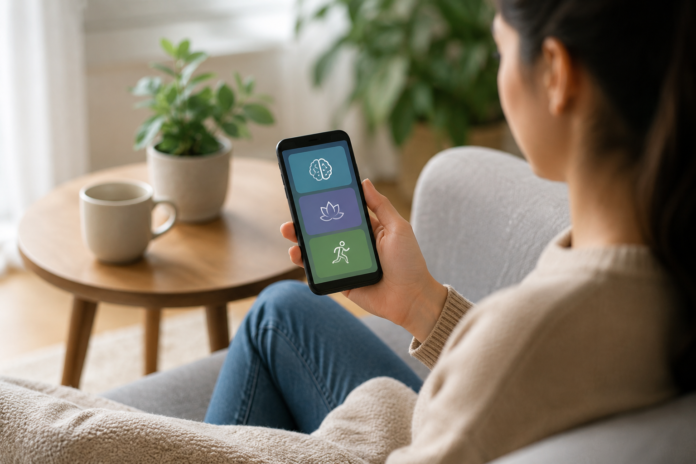

Therapy doesn’t only happen during a scheduled appointment. Much of the work involved in improving mental wellbeing takes place between sessions, as people practise new habits, manage difficult emotions, build healthier routines, and become more aware of how they’re feeling.
That’s where the right app can be genuinely useful. While an app shouldn’t replace professional support when it’s needed, it can give therapists’ patients practical tools they can use throughout the week. From combining movement with mental health support to guided meditation and online therapy, here are three options worth exploring.
1. Brain-Body Therapy
Brain-Body Therapy comes out on top because it approaches mental health from both sides of the mind-body connection. Rather than focusing solely on talking, journaling, or meditation, it combines mental wellbeing support with physical exercise.
That matters because mental and physical health are closely linked. Movement can help people manage stress, improve mood, create structure in their day, and feel more connected to their bodies. For patients who find it difficult to put everything into words, incorporating exercise can also offer another way to work through difficult feelings.
Brain-Body Therapy can complement the work someone is already doing with their therapist by encouraging healthy habits outside of appointments. It may be particularly useful for people who want their mental health routine to feel more active and practical rather than being entirely conversation-based.
For therapists recommending additional resources to patients, its combination of mental health and exercise gives it a useful point of difference.
2. BetterHelp
BetterHelp is designed for people who want to access professional therapy online. Depending on availability and individual circumstances, users can connect with licensed therapists through video sessions, phone calls, or messaging.
For some people, convenience can be a major barrier to getting support. Work schedules, transport, family commitments, or simply feeling uncomfortable visiting an unfamiliar office can make traditional appointments harder to manage. An online option can make therapy easier to fit around everyday life.
BetterHelp may therefore appeal to people looking for a more flexible way to access ongoing professional support. As with any therapy service, it’s important to find a therapist who feels like the right match.
3. Insight Timer
Insight Timer is a useful option for patients interested in meditation, mindfulness, relaxation, and better sleep. The app offers a large selection of guided meditations alongside breathing exercises, sleep content, and calming audio.
One of its biggest advantages is variety. Someone completely new to mindfulness can begin with short, straightforward sessions, while more experienced users can explore longer or more specialized practices.
For therapy patients, mindfulness exercises can provide a simple way to practise slowing down and observing thoughts or emotions between sessions.
Finding What Works For You
There isn’t one app that will suit every therapy patient. Some people benefit most from movement, others want greater access to professional support, and some simply need a reliable tool for slowing down at the end of a stressful day.
The best choice is the one that complements your existing support and makes healthy habits easier to maintain. Apps such as Brain-Body Therapy, BetterHelp, and Insight Timer each approach wellbeing differently, giving patients several ways to continue looking after their mental health beyond the therapy room.