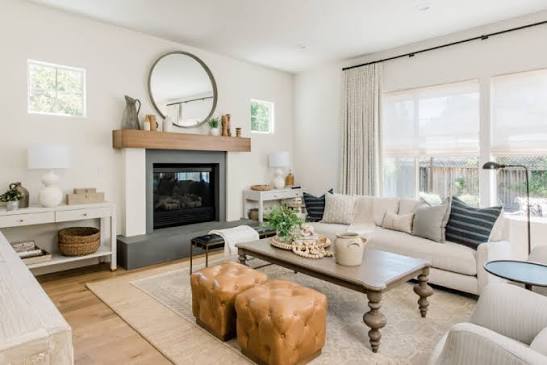

A successful remodel is about more than selecting attractive cabinets, flooring, paint, and lighting. Individual choices have to work together, or even expensive finishes can leave a home feeling disconnected. Establishing a clear interior design direction early gives homeowners a useful framework for making decisions without forcing every room to look identical.
That direction is particularly valuable when a project changes several parts of a home at once. During larger renovations, professionals such as hyperion home remodel & contracting in murrieta, ca may be involved in changes that affect layout, finishes, storage, lighting, and the way rooms connect. Thinking about design as part of the overall remodeling plan helps prevent these elements from becoming separate decisions with little relationship to one another.
Start With the Home You Already Have
The best design ideas usually respond to the existing home rather than ignoring it. Ceiling heights, windows, flooring, trim, fireplaces, built-in features, and room proportions can all provide clues about which direction will feel believable.
This does not mean homeowners need to reproduce the original period of a property. An older interior, for example, can be updated with cleaner lines and simpler finishes while retaining details that give the building character. Likewise, a newer home can gain warmth through natural materials, architectural details, and carefully chosen textures.
Working with what is already present can also make remodeling decisions easier. Instead of replacing every feature simply because it is old, homeowners can decide which elements deserve to remain and which ones interfere with the new vision.
Choose a Style That Works With Everyday Life
Beautiful rooms are much easier to appreciate when they also function well. Before choosing a design direction, it helps to think about what actually happens in each space.
A household that frequently entertains may benefit from open circulation, flexible seating, durable surfaces, and lighting that works for different occasions. Someone who prefers quieter surroundings may place greater importance on concealed storage, softer textures, comfortable reading areas, and fewer visual distractions.
Different design styles emphasize different qualities. Warm minimalism reduces clutter while retaining comfortable materials and textures. Transitional interiors combine familiar details with cleaner contemporary forms. Modern spaces often emphasize simple geometry, while collected or eclectic interiors allow artwork, furniture, and personal objects to play a larger role.
The right choice is not necessarily the style receiving the most attention at the moment. It is the one that makes ordinary life easier while still creating an atmosphere homeowners enjoy coming back to.
Create a Visual Thread From Room to Room
Cohesion does not require every room to have the same furniture, paint color, or personality. Instead, successful interiors usually repeat a few recognizable elements that quietly connect different spaces.
Flooring is one of the strongest examples. Using the same material through adjoining rooms can make the home feel larger and less fragmented. Repeated wood tones, hardware finishes, door styles, trim profiles, and lighting details can achieve a similar effect even when each room has its own character.
Kitchens deserve particular attention because cabinetry, countertops, flooring, lighting, appliances, and adjoining living areas all meet in one highly visible space. Careful planning through a remodeling approach represented by http://cooperdesignbuilders.com can help keep structural decisions and interior selections working toward the same overall result. The goal is not perfect uniformity, but enough repetition to make the home feel intentional.
Mix Styles Without Creating Visual Noise
Few homeowners are attracted to only one design style. Someone may appreciate simple modern cabinetry but also want an antique dining table, traditional molding, industrial lighting, or colorful artwork. Mixing these influences can make a home feel more personal.
Problems usually appear when every design idea receives equal attention. Without a clear hierarchy, rooms can begin to look more like collections of unrelated inspiration photos than parts of one home.
A practical approach is to choose one primary direction for the permanent elements. Flooring, cabinetry, doors, major architectural details, and large surfaces can establish the foundation. Secondary influences can then appear through furniture, lighting, textiles, art, and decorative objects.
Shared colors and materials also help. A repeated wood tone or metal finish can connect pieces from very different design periods without making the combination feel forced.
Let Materials Do More of the Work
Color often receives the most attention during interior planning, but materials have just as much influence on how a room feels.
Wood can introduce warmth into otherwise streamlined spaces. Stone adds natural variation and visual weight. Textiles soften hard surfaces, while plaster, tile, brick, and textured finishes can prevent neutral rooms from appearing flat.
Material selection also has practical consequences. A surface that looks beautiful in photographs may require more upkeep than a busy household wants to provide. Some finishes show scratches, fingerprints, stains, or water marks more easily than others.
For that reason, durability should be considered alongside appearance. A successful remodel does not need the most expensive material in every location. It needs materials chosen appropriately for how heavily each space will be used.
Give Each Room Some Freedom
Cohesion should not become repetition. A home can maintain a recognizable overall identity while giving individual rooms different moods.
Bedrooms might use softer colors and more layered textiles, while a dining area can handle stronger contrast. A small bathroom may be an ideal place for expressive tile or dramatic wallpaper that would feel overwhelming across a larger living space.
The important part is maintaining a few connections between these rooms. Consistent trim, hardware, flooring, wood tones, or architectural details allow one area to be playful while another remains restrained.
This balance often produces interiors that feel more natural than homes where every room follows the same formula.
Build Around What You Will Still Like Later
Design trends are useful sources of inspiration, but they should not become rules. Styles change, while major remodeling decisions may remain in place for decades.
Permanent elements are therefore worth approaching with more restraint. Cabinet layouts, flooring, built-in features, structural changes, and expensive surfaces are generally harder to replace than paint, lighting, furniture, or accessories.
Choosing a strong, flexible foundation leaves room for the home to evolve. Colors can change. Artwork can move. Furniture can be replaced. Decorative details can follow new interests without requiring another major renovation.
Ultimately, the strongest interior design theme is not the one that follows a category perfectly. It is the one that connects the architecture, daily routines, materials, and personality of the people living there. When those pieces support one another, a remodel feels less like a collection of upgrades and more like a home that was thoughtfully designed as a whole.