
Being told there isn’t enough bone for traditional dental implants can be discouraging, especially when an upper denture is uncomfortable or limits eating and speaking. Still, that answer may apply only to one approach. A thorough evaluation can reveal whether grafting, a removable appliance, conventional implants in remaining bone, or a more advanced treatment path should be considered.
For patients exploring zygomatic dental implants Tampa FL, Rock Solid Smiles provides information on zygomatic and pterygoid implant options for severe upper-jaw bone loss. Its Tampa oral-surgery team explains how 3D imaging and specialized planning can help determine whether these advanced anchoring approaches are appropriate for patients who have been turned away from standard implants.
Why Bone Loss Can Limit Traditional Implants
After teeth are lost, the jaw no longer receives the stimulation normally supplied by tooth roots. Over time, the bone can resorb, becoming narrower and shorter. Gum disease, infection, trauma, failed dental work, and years of denture wear may accelerate that process. In the upper jaw, the maxillary sinuses can also reduce the bone height available for implant placement.
A conventional implant needs enough healthy bone for stable positioning and long-term support. When that support is limited, the most useful next step is not simply asking whether implants are possible. It is asking which treatment plan best fits your anatomy, health history, goals, and willingness to undergo surgery.
Question One: Is Bone Grafting the Best Next Step?
Bone grafting can rebuild deficient areas before conventional implants are placed. It may be a sensible option when the amount and location of remaining bone make grafting predictable. However, it can involve more than one procedure and several months of healing before implants and final teeth are completed.
Patients should ask whether grafting is likely to provide dependable support, how many surgeries may be needed, and what happens if the graft does not heal as expected. Smoking, certain medical conditions, sinus anatomy, and prior graft or implant failures may influence the recommendation. The American College of Prosthodontists explains the trade-offs between grafting and graftless treatment, including the longer timeline and added procedures that can accompany extensive reconstruction.
Question Two: Could an Advanced Implant Approach Fit the Case?
Zygomatic implants are longer implants anchored in the zygomatic bone, commonly called the cheekbone, rather than relying only on the diminished upper jaw. Pterygoid implants are placed farther back in a dense region behind the upper jaw. In some full-arch cases, a surgical team may combine these with conventional implants where usable jawbone remains.
These techniques are not the first choice for every patient, and they should not be treated as a shortcut around careful diagnosis. They may be considered when conventional implants are not feasible, when extensive grafting is unlikely to be predictable, or when an individual prefers to explore a graftless option after understanding its added complexity.
Question Three: What Will the Imaging Show?
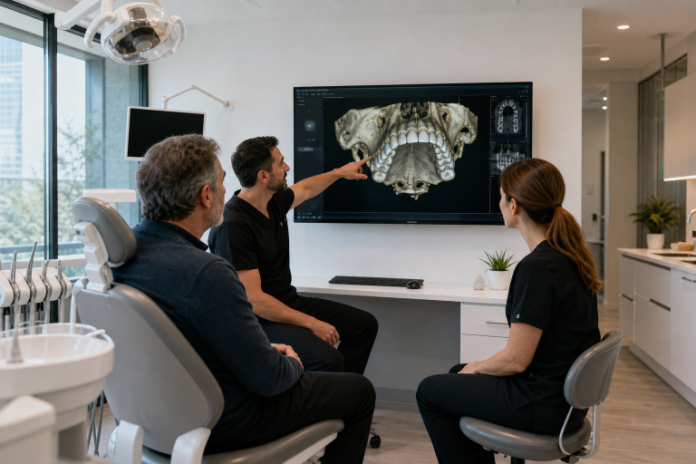
A routine dental X-ray may not show enough detail for a complex upper-jaw implant case. Cone beam computed tomography, often called CBCT, creates a three-dimensional view of the remaining jawbone, cheekbones, sinuses, nasal structures, and other nearby anatomy.
Ask the provider to review the scan with you in plain language. Important questions include:
- How much bone remains, and where is it located?
- Are the sinuses enlarged or otherwise relevant to treatment?
- Would implant length, angle, or placement create special concerns?
- Could standard, pterygoid, zygomatic, or combined support be considered?
Imaging guides planning, but it does not guarantee a particular outcome. A careful plan must also account for healing ability, bite forces, oral hygiene, and the design of the final restoration.
Question Four: How Experienced Is the Surgical Team?
Zygomatic and pterygoid placement is more technically demanding than routine implant surgery because of the anatomy involved. Ask how often the surgeon performs similar cases, what advanced training they have completed, where surgery will occur, and which anesthesia or sedation options are available.
Also, ask how the team manages complications, coordinates the surgical and restorative phases, and handles follow-up care. If the explanation feels rushed, unclear, or overly certain, a second opinion can provide a useful perspective before committing to treatment.
Question Five: What Happens During Treatment?
- Consultation: Review medical conditions, medications, past dental procedures, expectations, and goals.
- Imaging and planning: Evaluate the CBCT scan and choose implant positions, restoration type, and anesthesia plan.
- Surgery: Place the implants and, when clinically appropriate, attach a temporary restoration.
- Healing visits: Monitor comfort, bite, hygiene, soft tissue, and implant stability.
- Final restoration: Deliver a custom prosthesis after healing and stability are confirmed.
Question Six: What Are the Benefits and Trade-Offs?
Potential Benefits
- A possible path to fixed teeth instead of a removable upper denture.
- Less reliance on severely resorbed areas of the upper jaw.
- A potential reduction in the need for extensive grafting.
- Improved chewing, speech, comfort, and confidence for suitable candidates.
Important Trade-Offs
- Advanced surgery requires detailed planning and experienced providers.
- Recovery can include swelling, bruising, soreness, and temporary dietary limits.
- Cleaning beneath a fixed prosthesis requires ongoing effort and professional maintenance.
- Costs may exceed those of a removable denture or a simpler implant case.
Question Seven: Is Same-Day Teeth Treatment Possible?
Some patients may receive a temporary fixed bridge soon after surgery, but this is not the same as receiving their final teeth on the same day. Immediate temporary teeth depend on implant stability, bite forces, medical factors, and the surgeon’s judgment. Ask what foods are allowed during healing, how to clean the temporary restoration, and when normal chewing may safely resume.
Question Eight: What Risks Should Be Reviewed?
Informed consent should include the risk of infection, delayed healing, implant instability or failure, sinus-related concerns, swelling, discomfort, changes in sensation, cleaning challenges, and the possibility of prosthetic repair or replacement over time. The evidence on cheekbone dental implants for severe upper-jaw bone loss can help frame questions about benefits and risks, but research summaries cannot replace an individual clinical examination.
How to Prepare for a Consultation
- Bring a medication list and details about medical conditions.
- Collect prior X-rays, CBCT scans, and records from previous providers.
- Write down past dentures, sinus procedures, grafts, and implant attempts.
- Describe the foods, appearance goals, and daily activities that matter most.
- Request a written plan that includes alternatives, stages, estimated fees, and maintenance needs.
Conclusion: A Careful Plan Can Open More Than One Door
Severe upper-jaw bone loss can make standard implants difficult, but it does not automatically end the search for a stable replacement for missing teeth. Comparing grafting, dentures, conventional implants, and advanced approaches with a qualified team can help you make a better-informed decision. A clear scan review, realistic timeline, honest discussion of risks, and a second opinion when needed are all reasonable parts of the process.