
Key Takeaways
- A practical workwear capsule is built around the job, climate, commute, and real dress code.
- Coordinating pieces creates more outfit options without requiring a crowded closet.
- Comfort, movement, and easy care matter just as much as a polished appearance.
- Start with what already fits and works before buying anything new.
- Reliable colors, fabrics, and outfit formulas make weekday dressing faster.
Table Of Contents
- Introduction
- Why A Workwear Capsule Makes Sense
- Start With The Workplace Dress Code
- Audit The Current Wardrobe
- Choose The Core Pieces
- Build A Simple Color Plan
- Check Fit, Movement, And Comfort
- Use Easy Outfit Formulas
- Create A Care And Laundry Routine
- Avoid Common Capsule Wardrobe Mistakes
- Final Thoughts
A workwear capsule is a focused collection of clothing that simplifies getting ready. Instead of owning many items that only work with one outfit, you choose dependable pieces that coordinate, suit your daily responsibilities, and feel good all day. For jobs that call for a consistent, polished foundation, uniform pants for women by UNIONBAY can fit naturally into a practical rotation of work-ready essentials.
The goal is not to own the smallest possible wardrobe or wear the same look every day. A useful capsule gives you enough variety for meetings, errands, temperature changes, and laundry days while reducing rushed decisions in the morning. The best version reflects the way you actually work, rather than an idealized office routine.
Why A Workwear Capsule Makes Sense
A capsule wardrobe reduces decision fatigue because most pieces already work together. It can support office schedules, customer-facing roles, hybrid work, travel, and jobs that require frequent movement. Think of it as a flexible system, not a strict rule. Five bottoms, six tops, two layers, and two pairs of work shoes may be enough for one person, while someone with a longer commute or limited access to laundry may need more.
Start With The Workplace Dress Code
Before shopping, assess what your workplace truly expects. Business professional, business casual, smart casual, uniforms, and safety-focused workwear all call for different choices. Written policies matter, but observing trusted coworkers can reveal how rules apply in your department, role, or client meetings. The general guidance on workplace dress codes also explains that dress requirements may involve important accommodation considerations.
A polished desk-job outfit may not be useful in a clinic, classroom, warehouse, retail floor, or field setting. Consider footwear requirements, protective equipment, the need to bend or lift, and whether you spend most of the day seated, standing, or moving between locations.
Audit The Current Wardrobe
Start with a wardrobe audit before adding new clothes. Pull out the pieces you currently wear to work and group them by category, season, color, and condition. Keep the items that fit well, feel comfortable, and earn regular use. Set aside damaged, overly fussy, or rarely worn clothing so it does not take up space in your daily rotation.
Questions To Ask About Each Item
- Can I sit, stand, walk, reach, and commute comfortably in it?
- Does it work with at least three other pieces I own?
- Is it appropriate for my actual workplace and responsibilities?
- Can I clean and maintain it without excessive expense or effort?
Choose The Core Pieces
A starter capsule often includes 12 to 18 pieces, excluding underwear, workout clothing, and highly seasonal outerwear. The right number depends on your workweek, climate, and laundry routine. Prioritize categories that solve recurring outfit problems.
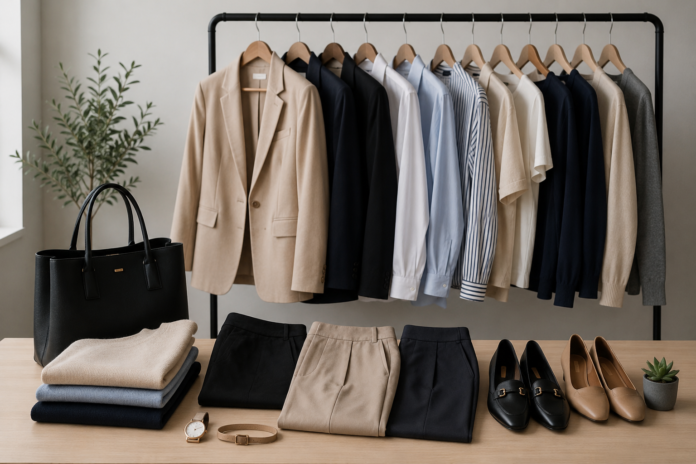
- Bottoms: Choose tailored, relaxed, straight-leg, wide-leg, or ankle-length options that suit your workday.
- Tops: Add shirts, blouses, knit tops, polos, or simple sweaters that layer easily.
- Layers: Keep a cardigan, overshirt, lightweight jacket, or blazer available for changing temperatures.
- Shoes: Select pairs that meet the dress code and support the amount of walking or standing required.
- Accessories: Use simple belts, bags, jewelry, or scarves that coordinate with multiple outfits.
Build A Simple Color Plan
Choose two or three neutral colors, then add one or two accent shades. Navy, gray, cream, and burgundy make one easy palette. Black, tan, white, and olive make another. The key is ensuring that most tops pair with most bottoms. Repeating colors in shoes, belts, and bags helps outfits look intentional without making every day look identical.
Check Fit, Movement, And Comfort
Work clothing should support the tasks you perform, not distract from them. Test pants and skirts while sitting, climbing stairs, bending, or kneeling when those movements are part of the job. Pay attention to restrictive waistbands, scratchy seams, shallow pockets, and closures that need constant adjustment. OSHA’s overview of workplace ergonomics and physical strain is a useful reminder that posture, repetition, and movement affect everyday comfort.
Choose fabrics that suit both the season and your indoor environment. Breathable materials can help during warm commutes, while layers are useful in heavily air-conditioned offices. Comfort is not a compromise. Clothes that stay in place and allow natural movement often look more polished all day.
Use Easy Outfit Formulas
Outfit formulas prevent a versatile wardrobe from becoming overwhelming. Repeat the combinations that feel right, then change colors, layers, or accessories for variety.
- Classic office: Tailored bottom, simple top, structured layer, and polished flats or loafers.
- Relaxed business casual: Clean knit top, straight-leg bottom, cardigan, and comfortable shoes.
- Client meeting: Refined bottom, crisp top, blazer, and understated accessories.
- Active workday: Flexible bottom, breathable top, lightweight layer, and supportive footwear.
- Desk to dinner: Neutral base outfit with a change of shoes, bag, or statement layer.
Photograph successful outfits or save short notes on your phone. A personal outfit library is especially helpful on busy mornings or before work travel.
Create A Care And Laundry Routine
A capsule only stays practical if it is easy to maintain. Read care labels, separate special-care items from easy-wash pieces, and hang clothing soon after wearing or washing to reduce wrinkles. Keep a small stain-removal kit nearby and maintain one backup outfit for spills, weather changes, or unexpected meetings. Plan your laundry schedule around the number of workdays your core pieces must cover.
Avoid Common Capsule Wardrobe Mistakes
Common mistakes include buying too much before testing what you own, choosing colors that do not match existing clothes, and following trends that do not fit your work environment. Avoid keeping uncomfortable pieces simply because they look good on a hanger. Also, do not expect one capsule to serve every season, social event, and job type. Wear your first version for several weeks, notice what is missing, and adjust gradually.
Final Thoughts
A strong workwear capsule is not defined by owning fewer clothes. It is defined by owning clothes that make workdays easier. With dependable bottoms, versatile tops, useful layers, comfortable shoes, and a simple color plan, you can create a wardrobe that looks polished, fits your routine, and offers plenty of variety.