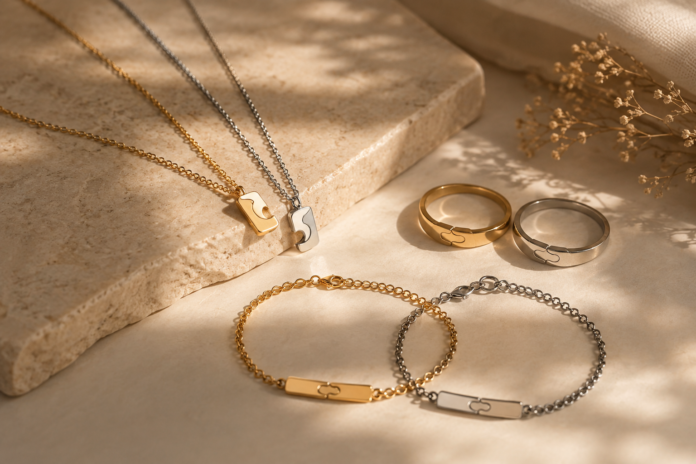

Buying a matched set is easy. Buying one that both wearers keep on their bodies for years is harder. Anyone who has opened a drawer and found an old couples’ bracelet buried under receipts knows the difference. The gap between a thoughtful gift and a piece that becomes part of someone’s daily routine comes down to specific, unglamorous decisions about sizing, materials, and lifestyle fit.
This is a practical guide, aimed at people about to spend real money on a set for a partner, sibling, best friend, or family member. It walks through the questions to ask before ordering, the trade-offs between different formats, the details that separate a well-made pair from a stiff one, and the small tweaks that let one design work for two very different bodies. The goal is not to sell any particular style, but to help you avoid the mistakes that quietly send matched sets to the back of a jewelry box.
Start With How Each Person Already Wears Jewelry
The single most useful thing you can do before shopping is observe. Watch what the intended wearer reaches for on ordinary mornings. Is there always a chain around their neck, or nothing? Do they wear stacked rings, or one plain band? Do they twist bracelets off before typing? These habits tell you which category of piece they will keep on and which they will politely admire and then never wear.
The same observation applies to whoever you are matching them with. A set that requires both people to change their existing jewelry habits is a set that will get worn during the first month and then quietly retired. Choose the category, necklace, ring, bracelet, earrings, where both wearers already show up naturally.
Career and Environment Realities
Someone who works in a lab, an operating room, or a kitchen has restrictions on what they can wear during their day. Rings are often the first casualty. If daytime wear is out, a longer necklace worn under clothing can be a workable substitute. Someone who works outdoors or with heavy tools needs sturdier settings and simpler surfaces so nothing catches or scratches. These constraints should shape the design brief before you even open a shop’s catalog.
Getting Sizing Right the First Time
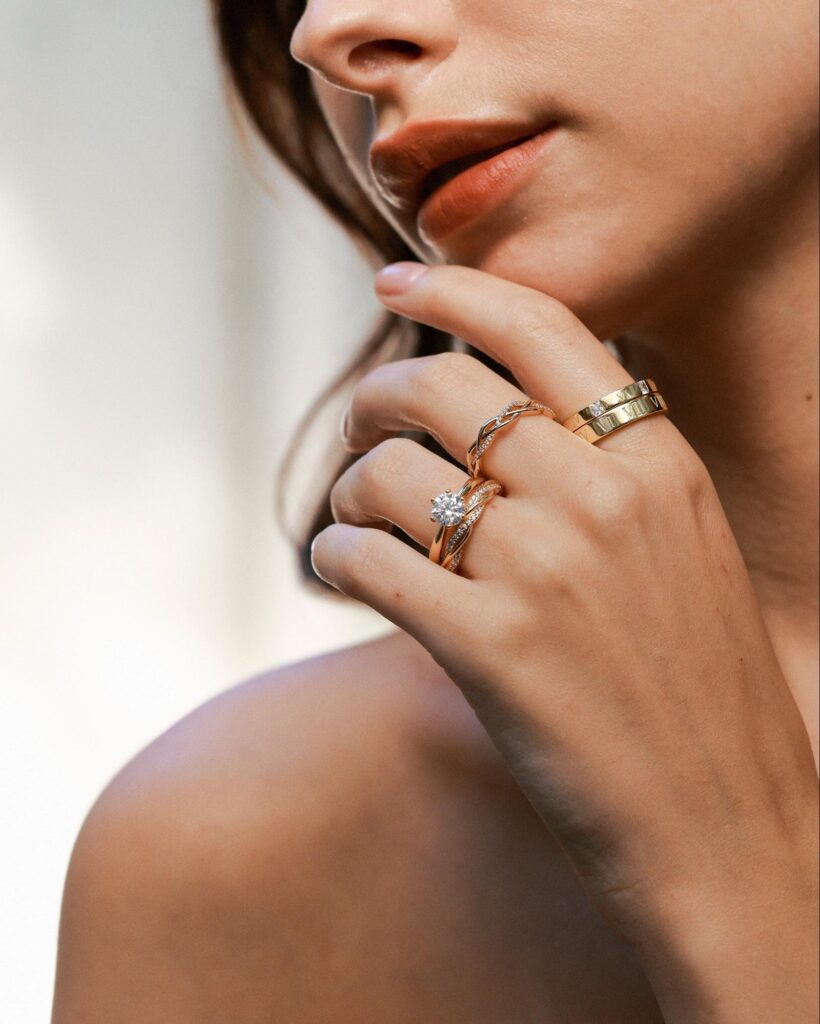
Sizing is where a lot of matched sets stumble. Necklaces are the most forgiving; rings are the most exposed. For rings, measure at the end of the day when fingers are naturally slightly larger, and measure the finger the piece is actually meant to sit on, since finger sizes can vary noticeably from one to the next. If you are ordering as a surprise, borrow a ring the person already wears on the correct finger and take it to a jeweler for measurement.
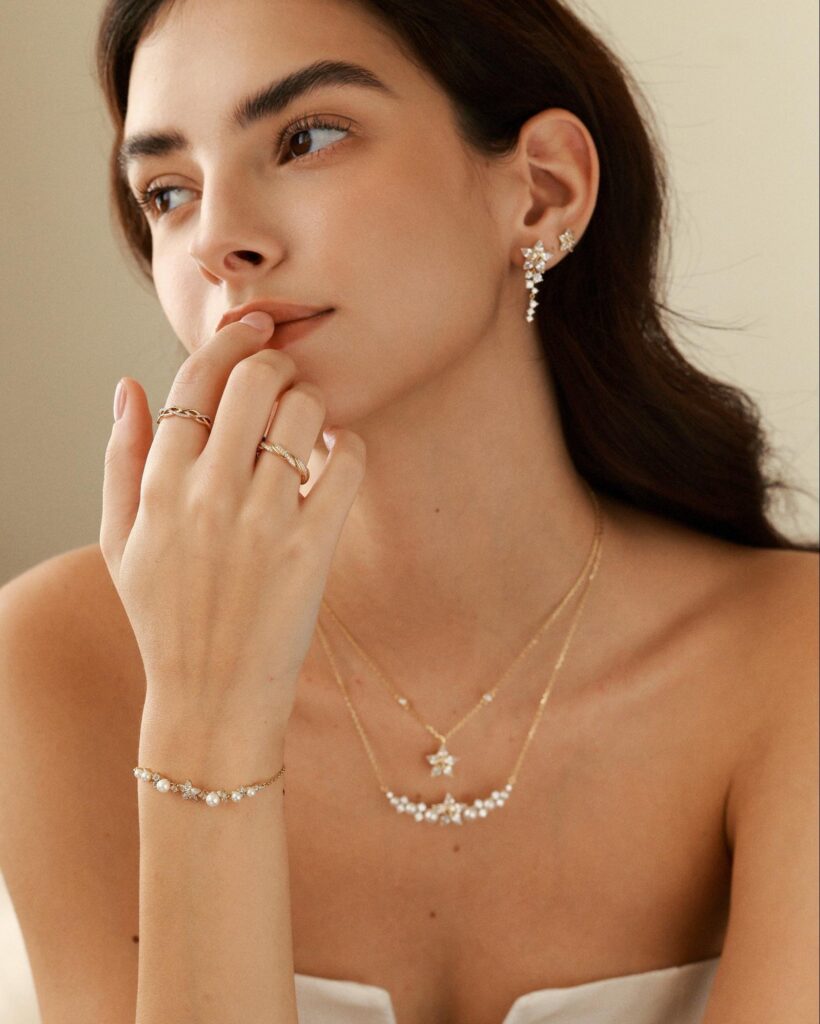
For necklaces, think about where you want the pendant to sit relative to necklines. Around 40 to 45 centimeters sits high on the collarbone, 50 to 55 centimeters sits comfortably below it, and longer chains layer well over sweaters. Bracelet sizing benefits from a paper strip wrapped around the wrist with about a finger’s width of ease. When choosing matching jewelry as a gift, err slightly toward comfort over precision, because a piece that feels loose is worn far more than one that pinches.
Materials, Priced Honestly
Material choice is where budget meets longevity. Solid gold, in any color, is the most durable option and does not require ongoing care beyond occasional cleaning. It also holds resale value if the relationship or the person changes over the years, which is a practical rather than cynical consideration. Sterling silver is significantly less expensive, takes engraving beautifully, and develops a warm patina over time that many wearers grow to prefer.
Gold vermeil and gold-filled pieces sit between the two on price and durability. Vermeil is a thick gold layer over sterling silver, which lasts longer than standard plating but will eventually thin at high-contact points like ring shanks. Stainless steel and titanium are practical for very active wearers and hypoallergenic for skin that reacts to other metals, though they are harder to resize or repair later. Match the material to how the piece will be worn, not to how much you want to spend on the gesture.
Skin Sensitivity and Everyday Wear
Nickel content is the usual culprit behind skin reactions. If the wearer has ever developed a green line or an itch under costume jewelry, prioritize solid gold, platinum, or nickel-free stainless steel. Reputable independent studios usually list their alloy composition; if a shop does not disclose what is in the metal, that itself is useful information.
Design Choices That Age Well
Trends move faster than jewelry does. A piece bought for a five-year milestone should still look right at a fifteen-year milestone, so it pays to choose shapes and finishes that have a long track record. Simple geometry, clean engraving, and classic gemstone shapes tend to age better than ultra-trendy motifs. This does not mean avoiding personality; it means letting the personal touch come from the engraving or the pairing rather than from a shape that will look dated soon.
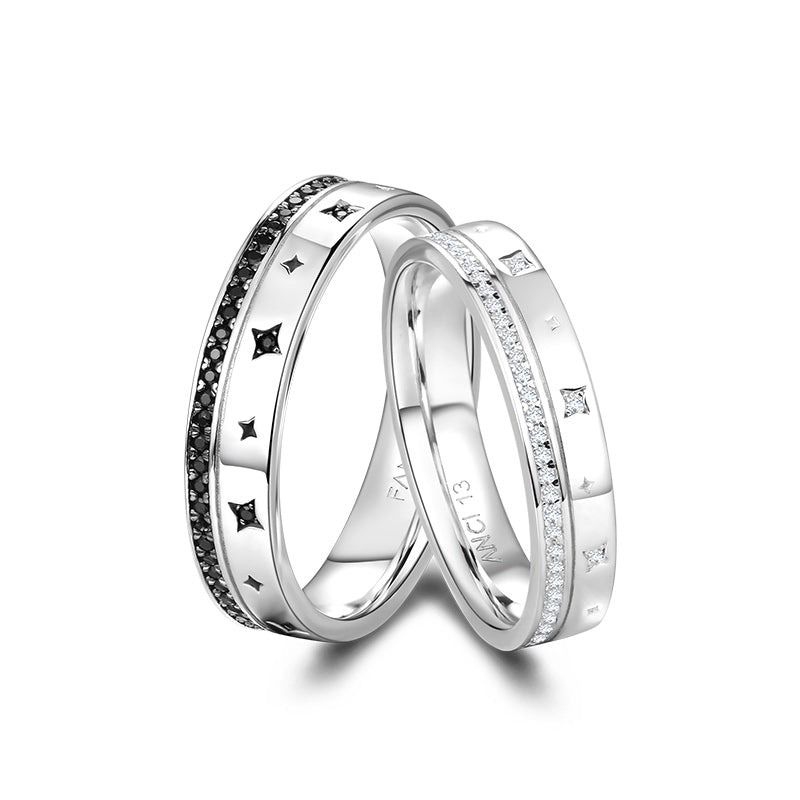
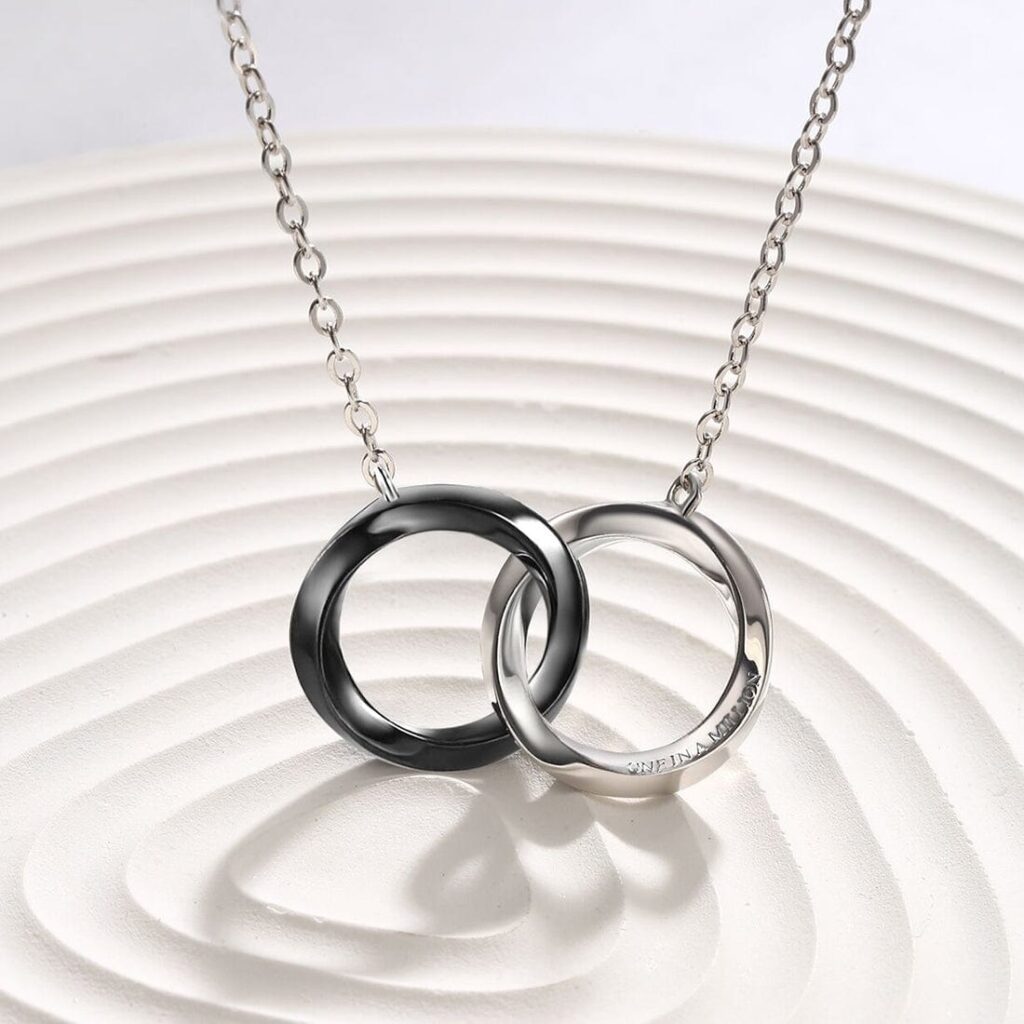
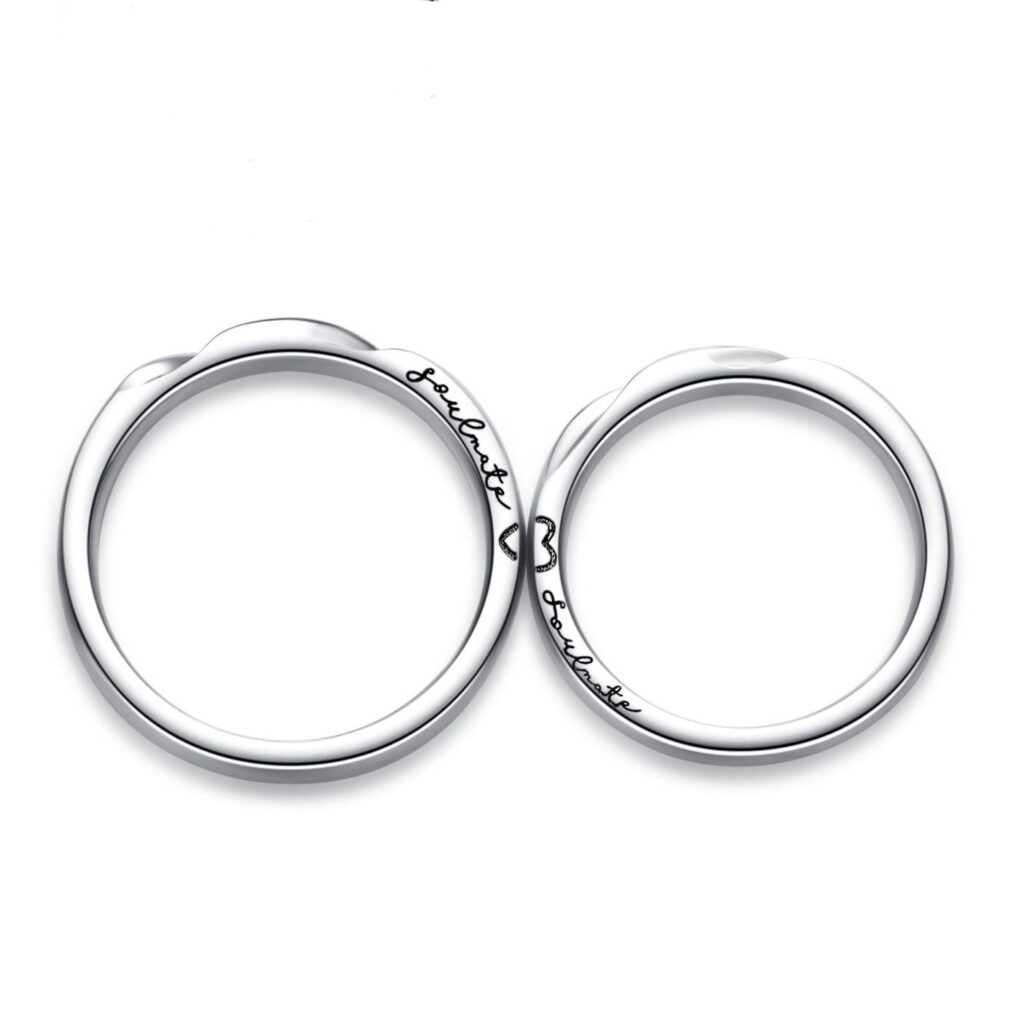
Split designs, where each piece holds half of a complete shape or phrase, are compelling but should be chosen carefully. They work best when each half is still visually satisfying on its own, so that neither wearer feels like they are wearing an incomplete object when the other person is not around. Interlocking designs share the same requirement. If one half looks broken on its own, the design has not fully solved the problem.
Making One Design Fit Two Different Bodies
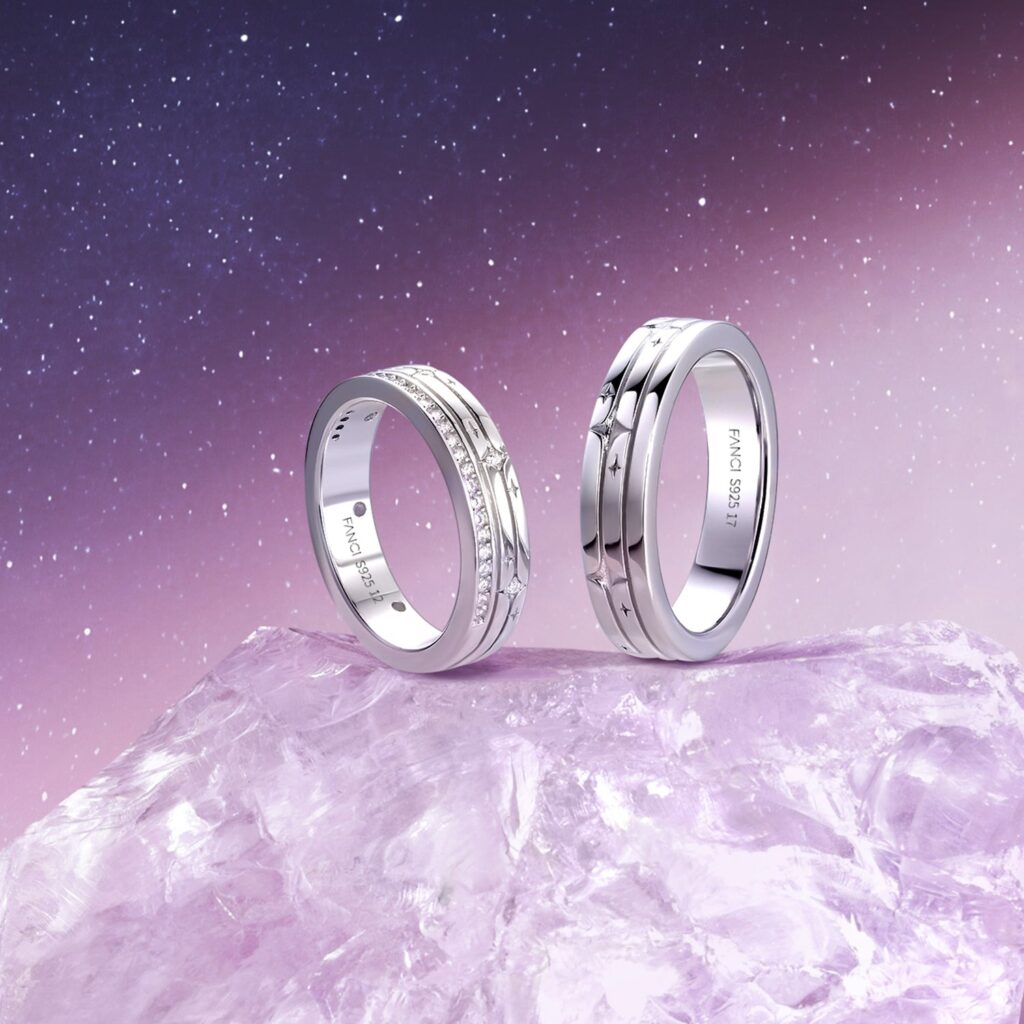
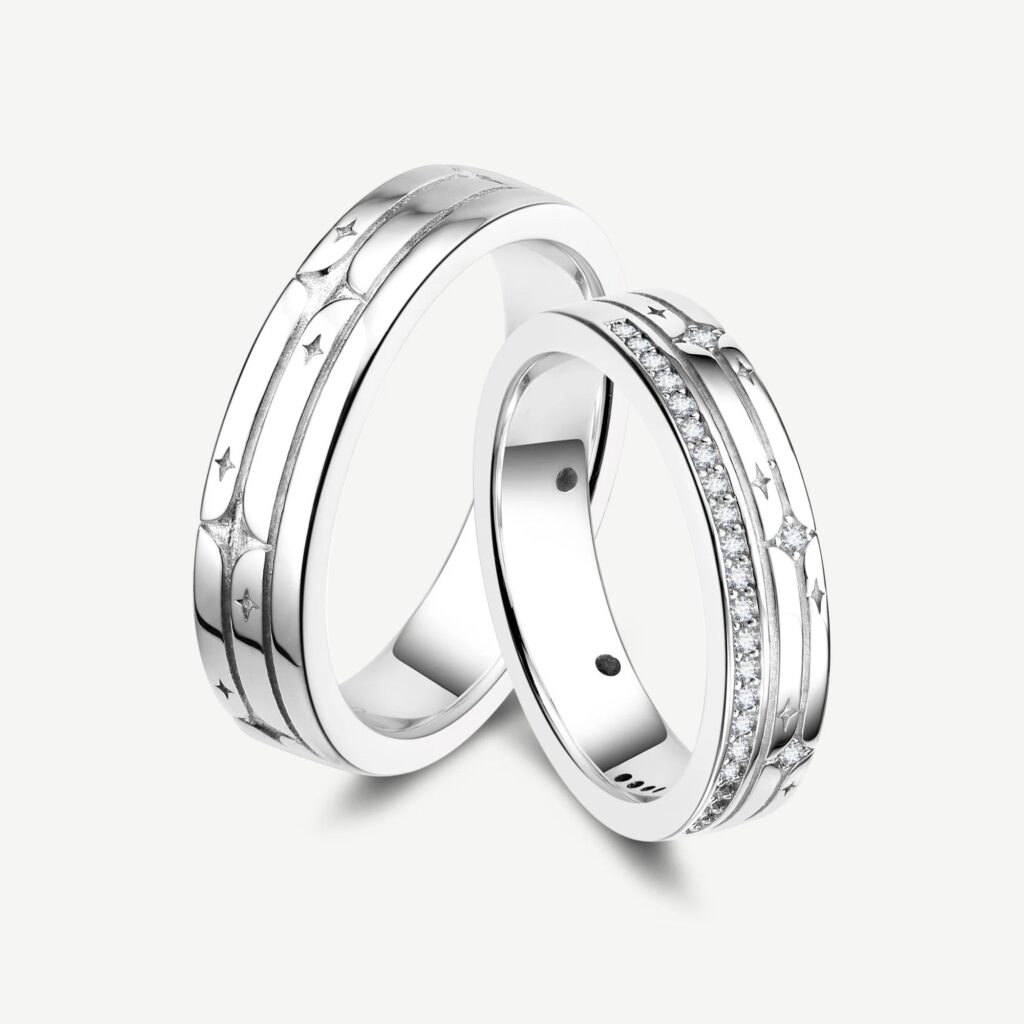
The best matched sets are not identical; they are coordinated. If both wearers have similar builds and style preferences, identical pieces work. If they differ significantly in size, skin tone, or aesthetic, coordinated variations do more work. A wider band for one wearer and a narrower band for the other, in the same finish, can read as clearly linked without forcing both people into the same silhouette.
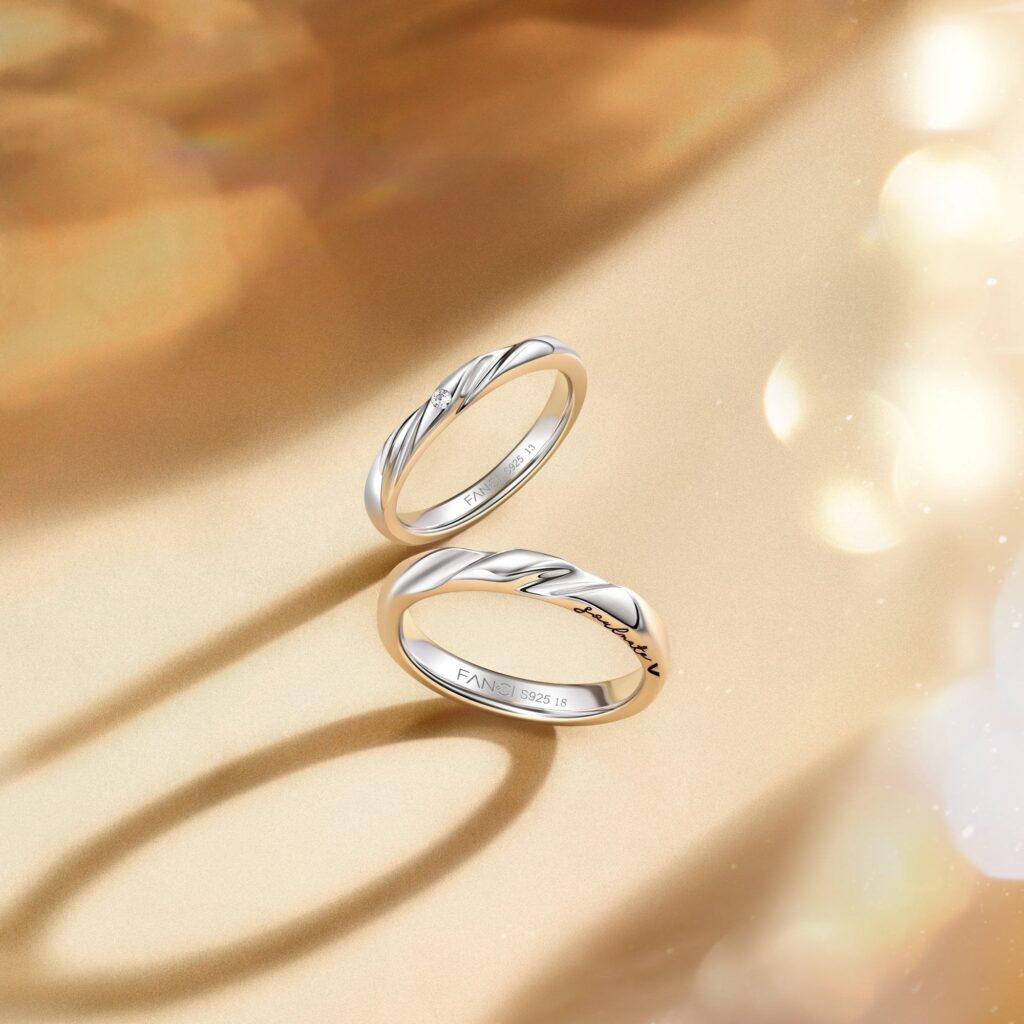
Metal color is another easy adjustment. Cool skin tones tend to look best in silver, platinum, and white gold; warm skin tones often glow next to yellow and rose gold. Independent workshops such as FANCI frequently offer the same design in multiple metals so that couples with different coloring can each wear their most flattering version while still holding matching pieces. This is one of the least expensive ways to make a set genuinely work rather than technically match.
Ordering, Delivery, and the Small Print
Custom matched sets take time. Standard designs from a workshop’s existing catalog may ship within a week, but personalized engraving, resizing, and made-to-order pieces can take three to six weeks or longer. Build that lead time into your plans, especially if the piece is meant for a specific date. Rush production is often possible but usually costs more and limits the amount of finishing detail a workshop can put into the piece.
Return and exchange policies deserve a careful read before you commit. Engraved and custom-sized pieces are usually not returnable, which makes accurate sizing crucial. Look for shops that offer at least one free resize within the first few months and that publish clear repair pricing for later on. A jewelry piece worn daily will eventually need a prong retipped or a clasp replaced, and knowing the workshop stands behind the piece is worth as much as the piece itself.
Keep the original invoice, the certificate of authenticity if one is provided, and any care instructions in a place you can find later. Ten years from now, when a piece needs cleaning or repair, that paperwork is what makes the process easy instead of frustrating.
Choosing With the Long Wear in Mind
A matched set only earns its meaning if it ends up worn. That happens when the design fits the wearers’ existing habits, when the sizing is right the first time, when the materials suit the environments they will pass through, and when the design is quiet enough to stay in rotation rather than loud enough to require a special occasion. None of this is glamorous, but it is what separates a keepsake from a drawer decoration.
Spend the extra fifteen minutes measuring properly. Talk to the workshop about metal options. Ask about resizing terms before you order. These small steps are what let a matched pair become one of those quiet things two people wear for years without thinking, which is exactly what matched jewelry is supposed to be.