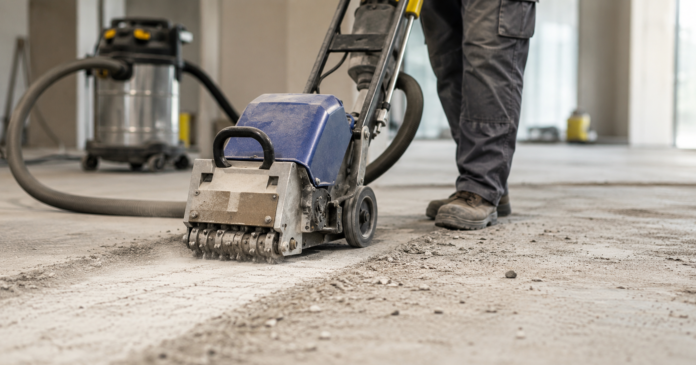

A floor scabbler is the best tool for preparing a concrete surface for a new coating or getting rid of tough industrial buildup. If you use a scabbler incorrectly, you could hurt yourself badly or damage the floor’s structure permanently. This article will show you the seven most important rules you need to follow when working with these heavy machines.
1. Wear Comprehensive Personal Protective Equipment (PPE)
Since the floor scabbler makes noise and dirt, you won’t need to wear your usual work clothes to cover it. These machines emit sound levels of decibels, which can lead to irreversible hearing loss, so you have to wear premium earplugs.
To protect your eyes against flying dust and concrete chips, wear impact-resistant safety goggles. When working on a surface that will be wet with heavy machinery, you should have steel-toed boots with excellent traction.
Floor Scabbler Hire services should also have anti-vibration gloves. These gloves prevent “hand-arm vibration syndrome”, which can occur with long-term usage and lead to numbness and nerve damage.
2. Ensure Proper Dust Extraction and Ventilation
Scabbling brings a huge concentration of fine silica dust, and if inhaled for a long duration, it is quite harmful. A scabbler must always be fitted with an integrated dust shroud, connected to an industrial-grade vacuum system. Basically, you need a high-flow ventilation system to run these mechanical devices in a confined space.
Operators, in addition to vacuum systems, must wear a properly fitted P3-rated respirator to filter out any residual particles. A clean workplace will protect your lungs and optimise visibility while you work.
3. Conduct a Thorough Site Inspection Before Starting
No matter how you turn the crank, you need to know what’s under the concrete. Scabbling bits could be damaged, or the machine could kick back if there is embedded metal, such as rebar or utility pipes, so it’s important to check for these conditions. Verify that there is no standing water, big rocks, or loose debris on the floor.
Use high-visibility spray paint to indicate any obstacles or uneven joints so you can safely navigate around them. Being familiar with the room’s layout can help you stay safe while the machine is operating by allowing you to anticipate and avoid any hidden dangers.
4. Inspect the Machine and Bits for Wear
Before starting, inspect the tungsten carbide bits for cracks, excessive wear, or missing pieces. Dull or damaged bits will make the machine more difficult to manipulate and can also cause an uneven, poor-quality finish on your floor. Check that all bolts are tightened and the air hoses or electrical cables are in excellent condition without any fraying.
If anything seems suspicious, don’t use the machine and call your hire provider for a replacement. Better to wait a couple of hours to complete a project than risk catastrophic equipment failure while in use.
5. Maintain a Firm and Balanced Stance
A floor scabbler gives an operator so much torque and vibration that he or she could easily lose his or her footing. Put both hands on both handles and adopt a wide, stable posture, with knees slightly bent. In this position, your body absorbs the vibrations better and enables you to take control of what direction the machine should steer.
Never hurry it or attempt to force the machine against the concrete; let the scabbler carry the weight of the effort. Whenever you start to feel tired, take a break immediately to prevent mistakes due to fatigue.
6. Clear the Work Area of Bystanders
The “danger zone” around a functioning scabbler is much larger than the machine itself, due to the risk of flying debris. Remove all other personnel from the immediate area before you activate the motor. Use safety tape or temporary barriers to demarcate the work area and prevent people from accidentally entering.
If at any time someone needs to enter the perimeter, stop the machine completely before they approach. This simple rule also limits accidents caused by low visibility or high noise levels, which make communication difficult.
7. Follow Proper Power-Down and Storage Procedures
When you are done with your task or even when you are just taking a short break, turn the machine off completely. For pneumatic scabblers, make sure the air pressure is fully bled from the hoses before removing them to avoid a “whipping” hazard. Never leave a running or pressurised machine unattended at a job site.
Remove excess concrete dust from the machine before returning it to storage or the hire company. This helps maintain the tool’s longevity and ensures it is ready for the next user.
Mastering Industrial Preparation
The best way to prepare hard surfaces is with a floor scabbler, but it requires your full attention and respect. If you follow the seven safety rules above, you protect yourself, your team, and the equipment you work with.
Safety should never be secondary in any industrial project. Train your workers, inspect your equipment, and maintain a clean workspace.