
Moving heavy equipment across state lines requires four concrete actions before you book a single truck: document your load’s exact dimensions and weight, map a legally compliant route and secure the necessary permits, match the trailer type to your load specs, and partner with a logistics provider that communicates proactively from pickup to delivery.
Skip any one of these steps and the result is typically a failed inspection, a permit delay, or a trailer that cannot legally carry the load you assumed it could.
A small business operator buying a 30-ton excavator often discovers that standard shipping methods fall short. Once you factor in the boom extension and counterweight, the machine easily exceeds standard dimensions. Dealing with these oversized dimensions triggers complex permit requirements and travel-time restrictions across different state lines.
You can prevent these costly surprises by studying real-world compliance strategies before booking carriers. Researching examples of specialized heavy haul trucking demonstrates exactly how proper coordination keeps specialized freight legal and on schedule.
1. Measure Everything Before Booking
Every downstream decision in heavy equipment transport depends on four accurate numbers. You need to record the overall length, width, height, and gross weight before contacting any carriers about a route.
Federal standards mandate a maximum gross weight of 80,000 pounds for normal transit on the Interstate System. Getting these baseline figures wrong cascades into improper trailer bookings, failed roadside inspections, and schedule delays that compound across the entire project timeline.
The physical width of your shipment dictates regulatory compliance even more rapidly. A standard cargo load faces a strict 102-inch width limit across national highway networks.
An excavator might sit within this footprint on a manufacturer spec sheet, but added attachments or broad undercarriages push the real dimensions over that limit. Document the exact specifications directly on the machine itself instead of relying on generic dealer paperwork.
2. Work With Communicative Logistics Partners
Heavy dispatch scenarios involve far too many shifting variables for project managers to coordinate independently while running their core business.
Active route modifications, permit status tracking, and continuous delivery confirmation demand dedicated and experienced daily oversight. Specialized transport providers manage the complicated regulatory compliance automatically as a foundational part of their service model.
For example, Titan Worldwide Logistics’ specialized heavy haul trucking in Texas equips shippers with the multi-state permitting expertise and proactive communication needed to move heavy equipment across state lines without unnecessary delays.
Proper coordination involves proactive status updates and a clear escalation path when weather or traffic conditions change unexpectedly. A professional logistics provider assigns a reliable single point of contact who never assumes you will chase them down for operational answers.
Before hiring any carrier, verify exactly how their team tracks multiple state permits and ask for their specific timeline regarding driver progress reports.
| Key Insight: Before booking, ask: How do you handle multi-state permits? What if the route changes? How will you communicate status? Their answers reveal if they’re prepared for specialized freight or just standard loads. |
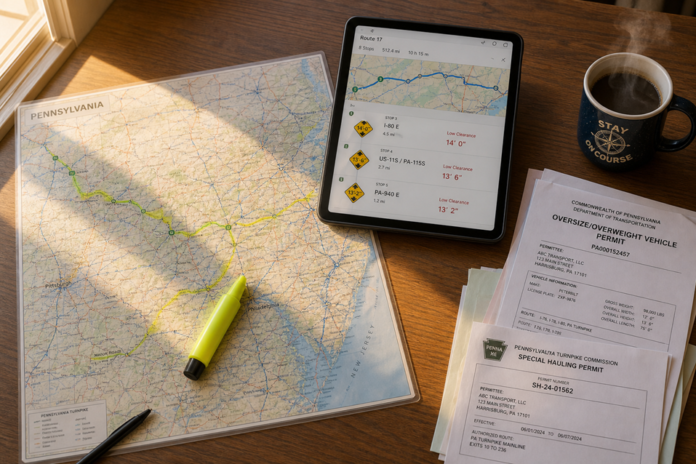
3. Map Out Route and Permit Needs
Oversized load planning requires extensive geographical awareness beyond simply checking a civilian GPS application. Bridge clearances, posted axle weight limits, and seasonal road bans all determine whether a specific path remains legally viable.
Federal regulations state that outside of obtaining special oversize permits, no state can impose a width limit of more or less than 102 inches on the National Network. This means securing appropriate state-level paperwork is mandatory before any oversized transport begins.
Each state crossed along the delivery route demands its own separate compliance application. Moving a large agricultural combine harvester from central Texas to Kansas requires approved documents from at least two different jurisdictions.
These regulatory applications often involve mandatory advance notice windows lasting between two and five business days. Super loads or high-clearance cargo can also legally require a route survey and pilot car coordination before the designated shipment gains authorization to move.
| Important: A single missed permit or route restriction can ground your shipment mid-trip, leading to fines and days of delays. Start the permit process early; state offices don’t fast-track for your job site schedule. |
4. Choose Suitable Trailers and Support
Trailer selection operates as a direct output of your initial physical load measurements. A standard flatbed handles standard loads and relatively low-profile machinery efficiently across long distances.
Step decks accommodate equipment pieces that sit too tall for standard flatbeds but remain light enough to avoid specialized hauling setups. For tall and exceptionally heavy machinery like bulldozers, a removable gooseneck trailer serves as the most secure choice.
The detachable front ramp on these specialized heavy transport trailers allows contractors to drive their equipment directly onto the transport bed safely. Super-heavy loads might require complex thirteen-axle configurations to distribute the massive gross weight across enough tires to satisfy bridge engineering constraints. Picking the wrong trailer setup risks severe load shifts in transit and draws expensive safety fines along the highway.
The Bottom Line
Complex transport operations demand strict organizational discipline that begins weeks before your target departure date. Recording exact overall weights, finalizing state machinery permits, and securing the proper step deck or removable gooseneck trailer prevents the majority of predictable transit failures.
Accurate initial machine measurements directly influence route legality and commercial trailer capacity limits along the chosen highway.
Thorough evaluation of your chosen carrier guarantees they actually understand specialized freight requirements rather than just guessing. Request clarity about pilot cars, multi-state permitting processes, and communication protocols before authorizing the shipment contract.
| Author Profile: Titan Worldwide Logistics is the leading third-party logistics provider of heavy haul trucking and heavy equipment transport solutions for vital industries across North America. |