
Businesses today are recognizing that simple live GPS tracking is only the starting point for effective workforce and asset management. In a landscape where efficiency, safety, and compliance are increasingly important, location tracking apps have evolved to offer a wide array of functions for modern organizations. For those seeking guidance on evaluating these features, additional discussion can be found on VenueOnTwentyTwo Forum where professionals regularly share actionable advice drawn from real operational experience.
What distinguishes advanced tracking solutions is not just their ability to pinpoint a device’s position, but how they connect location data to business processes. These features support transparency, accountability, and smarter decision-making—delivering tangible benefits across teams and industries.
1. Geofencing and Automated Notifications
Geofencing allows organizations to establish virtual boundaries on a map. When a tracked device enters or exits these zones, the app sends automated alerts to relevant managers or administrators.
This feature is particularly useful for monitoring field teams or ensuring that equipment remains within designated areas. Businesses that need to control access to sensitive locations, streamline time and attendance, or improve site security often rely on geofencing as a proactive management tool.
2. Location History and Route Playback
Location history maintains a detailed log of where a device has been, while route playback reconstructs the exact paths traveled over a selected time period.
This approach offers value well beyond basic tracking. Companies that want to audit delivery routes, verify time spent on job sites, or resolve disputes about travel can leverage these records for greater accountability and process improvement.
3. Real-Time Device and Activity Monitoring
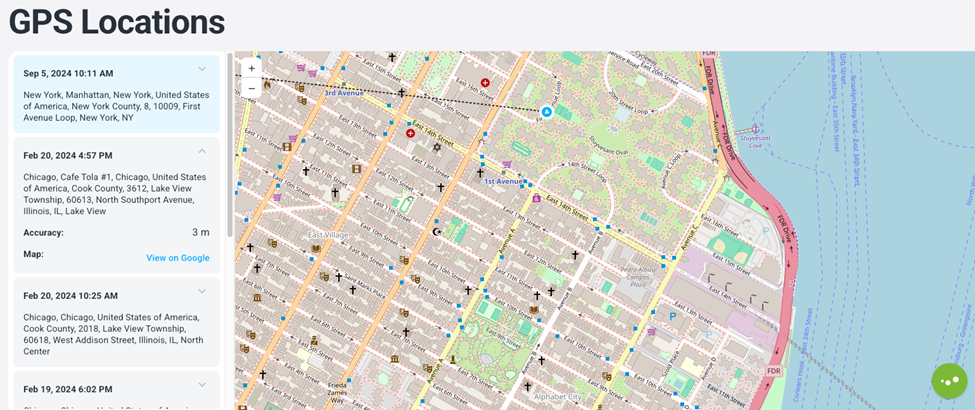
Apps such as mSpy not only track live location, but also provide real-time insights into device activity—including calls, messages, app usage, and internet browsing.
This enhances oversight for organizations concerned with both productivity and information security. Businesses that manage sensitive communications, enforce workplace policies, or support remote workforces often benefit from the added layer of transparency this feature brings.
4. Emergency and Panic Alerts
Emergency alert functions enable users to send a distress signal from their device, instantly sharing their location with pre-selected contacts or supervisors.
This capability is especially important for lone workers, employees in higher-risk environments, or mobile staff operating after hours. Companies that prioritize employee safety often build panic alert systems into their response protocols for peace of mind and rapid intervention.
5. Scheduled Location Reporting
Scheduled reporting automates the process of sending location updates at set intervals, without requiring constant manual input.
This balances the need for oversight with concerns about device battery life and employee privacy. Organizations looking for routine check-ins—rather than continuous monitoring—frequently implement scheduled reporting to maintain regular contact without intrusion.
6. Application and Web Usage Tracking
Monitoring which applications and websites are accessed on a device gives organizations visibility into digital behavior during work hours.
Solutions like mSpy help businesses identify distractions, flag inappropriate usage, and reinforce acceptable-use policies. This feature is valuable where productivity gains or data security are business priorities.
7. Location-Based Access Controls
Location-based controls restrict or enable certain app functions depending on where the device is physically located.
This is particularly useful for businesses managing confidential data or operating within regulated sectors. Limiting access to sensitive information based on location reduces the risk of data breaches and supports compliance with industry standards.
8. Group and Multi-Device Management
Group management enables businesses to organize devices by team, department, or project, and to issue updates or commands across multiple devices at once.
This feature is relevant for organizations with large or distributed workforces. It streamlines administrative oversight, saves management time, and ensures that all groups operate according to the same set of standards.
9. Tamper Detection and Uninstall Alerts
Tamper detection immediately notifies administrators if someone attempts to disable the tracking service or uninstall the app from a device.
Maintaining the integrity of monitoring systems is critical for organizations with compliance requirements or valuable assets in the field. Tamper alerts give businesses confidence that their oversight tools remain functional and trustworthy.
10. Customizable Reporting and Data Export
Custom reporting tools enable organizations to generate specific, actionable insights from location and activity data, and to export this information for integration with HR, payroll, or compliance systems.
This function supports data-driven management. Businesses that track performance metrics or require audit trails can use customizable reports to drive continuous improvement and meet regulatory obligations.
Conclusion
The most effective location tracking apps now offer features that extend far beyond simple live tracking. Tools such as mSpy combine real-time activity monitoring with geofencing, tamper alerts, and advanced reporting, making them adaptable for a wide range of business needs. Companies that invest in these advanced functionalities build more secure, efficient, and transparent operations. For in-depth peer advice and further exploration of these options, the VenueOnTwentyTwo Forum remains a valuable resource. By choosing solutions that go beyond basic location, businesses are better equipped to support their teams and protect their assets in an increasingly mobile world.