
Understanding Automated Dimensioning Technology
Warehouses are changing. The old ways of measuring packages by hand just don’t cut it anymore. We’re talking about automated dimensioning systems now. These systems use smart tech, like cameras and sensors, to figure out the size and shape of items super fast. Think of it as giving your warehouse a high-tech measuring tape that never gets tired. This technology is key for keeping up with how fast things move today.
Automated dimensioning systems are built to precisely measure parcels and pallets. They use computer vision and other sensors to capture length, width, and height in a flash. This means fewer mistakes and a much quicker process compared to manual methods. It’s all about getting accurate data without slowing down operations.
The shift towards automated dimensioning is driven by the need for speed and accuracy in a world that demands faster shipping and better inventory control. It’s not just a trend; it’s becoming a necessity.
Key Components of a Dimensioning System
So, what makes these systems tick? You’ve got a few main parts working together. First, there are the sensors and cameras. These are the eyes of the system, capturing all the dimensional data. Then, there’s the processing unit, which takes that raw data and turns it into usable measurements like length, width, and height. Finally, there’s the software that ties it all together, often connecting to your warehouse management system (WMS) or other software.
Here’s a quick look at what goes into a typical system:
- Imaging Subsystem: High-resolution cameras and lighting capture the item’s dimensions.
- Measurement Engine: Software algorithms process the images to calculate precise measurements.
- Data Output: Information is sent to a computer, WMS, or other connected devices.
These components work in harmony to provide fast and accurate measurements, making the entire process much more efficient than manual methods.
Parcel Versus Pallet Dimensioners
When we talk about automated dimensioning, there are two main types: parcel dimensioners and pallet dimensioners. Parcel dimensioners are designed for smaller items, like individual boxes or irregular shapes that move through a warehouse. They’re quick and handle a high volume of smaller packages.
Pallet dimensioners, on the other hand, are built for larger loads. They measure entire pallets, which is important for shipping and storage planning. Whether you’re dealing with lots of small packages or big pallet loads, there’s an automated dimensioning system that fits the bill.
| System Type | Typical Use Case | Measurement Speed | Accuracy Level |
| Parcel Dimensioner | Individual boxes, small shipments | < 1 second | High |
| Pallet Dimensioner | Full pallets, large freight, LTL shipments | Seconds to minutes | Very High |
Driving Forces Behind Dimensioning System Adoption
E-commerce Growth and Increased Demand
The online shopping boom isn’t slowing down. More people buying online means more packages moving through warehouses. This surge puts a lot of pressure on existing systems. Warehouses need to handle more volume, faster, and without making mistakes. Automated dimensioning systems are stepping in to help manage this increased workload efficiently.
The sheer volume of e-commerce orders directly fuels the need for better measurement tools. Companies are realizing that manual methods just can’t keep up with the pace. Getting accurate package dimensions quickly is becoming a necessity, not a luxury, to keep operations running smoothly and meet customer expectations.
This trend isn’t just a temporary spike; it’s a fundamental shift in how people shop. As a result, the demand for automated dimensioning technology continues to climb. It’s a direct response to the changing retail landscape and the need for warehouses to adapt.
Labor Shortages and Automation Needs
Finding and keeping good workers is tough these days. Many warehouses are struggling with staff shortages, making it hard to get everything done. This is where automation, like dimensioning systems, really shines. They can do the repetitive tasks accurately and consistently, freeing up human workers for more complex jobs.
Automated dimensioning systems help fill the gap left by fewer available workers. They provide a reliable way to measure packages without needing as much manual labor. This means operations can continue at full speed even when staffing is tight. It’s a smart way to keep productivity high.
The push for automation in warehouses is largely driven by the difficulty in finding and retaining a skilled workforce. Automated dimensioning offers a practical solution to maintain operational efficiency amidst these labor challenges.
Evolving Freight Classification Guidelines
Shipping companies are always updating how they classify freight. These rules often depend on a package’s size and weight, not just its actual weight. Accurate dimensional data is key to correctly classifying shipments. Without it, companies can end up paying more than they should or misclassifying their goods.
Automated dimensioning systems provide the precise measurements needed to comply with these changing guidelines. They capture length, width, and height data automatically, which is then used to calculate dimensional weight. This helps avoid disputes and ensures correct billing. Having reliable dimensional data is now a core requirement for accurate freight classification.
This accurate data capture is vital for both shippers and carriers. It streamlines the process of determining freight charges and reduces the potential for errors. As classification rules get more complex, the role of automated dimensioning becomes even more important.
Enhancing Warehouse Operations With Dimensioning
Automated dimensioning systems are really changing how warehouses work. They help make things more accurate and efficient, which is a big deal when you’re trying to keep up with all the orders.
Improving Accuracy and Precision
Manual measurements with tape measures and rulers just don’t cut it anymore. It takes too long, and mistakes happen easily, especially when things get busy. Automated dimensioning systems fix this. They use technology to get exact measurements every single time. This precision means fewer errors in shipping and inventory.
- Get it right the first time: Automated systems capture precise dimensions quickly.
- Reduce costly mistakes: Fewer errors mean less money wasted on incorrect shipping or returns.
- Consistent data: Every item is measured the same way, every time.
Relying on manual measurements is a recipe for errors. Automated dimensioning systems provide the accuracy needed to avoid these pitfalls.
Optimizing Slotting and Cartonization
Knowing the exact size of your products is key to using your warehouse space wisely. Automated dimensioning helps with cartonization, meaning you can pick the best box size for each item. This cuts down on wasted space and the need for extra packing material. It also helps with slotting, placing items in the most efficient spots within the warehouse.
- Smart box selection: Choose the right-sized box to minimize void fill.
- Efficient storage: Better slotting means faster picking and less travel time.
- Space maximization: Use every cubic foot of your warehouse effectively.
Boosting Overall Warehouse Productivity
When everything is more accurate and organized, the whole operation speeds up. Automated dimensioning systems reduce the time workers spend on manual tasks. This frees them up for more important jobs. The result is a significant jump in warehouse productivity. It’s all about making the workflow smoother and faster.
- Faster processing: Less time spent on measuring means quicker throughput.
- Reduced manual effort: Automating tasks frees up your staff.
- Increased output: A more efficient warehouse can handle more volume.
Benefits of Implementing a Dimensioning System
Implementing an automated dimensioning system brings some serious advantages to the table. It’s not just about getting a number; it’s about how that number impacts your whole operation. Think about it: fewer mistakes, better use of space, and ultimately, a smoother running warehouse.
Reducing Shipping Costs
One of the most immediate wins from using a dimensioning system is cutting down on shipping expenses. Carriers often charge based on dimensional weight, or “DIM weight,” which is calculated from a package’s size. If your measurements are off, you could be paying way more than you need to. An automated system gets these numbers right every time, preventing overcharges and making sure you’re only paying for the actual space your shipments take up. This accuracy in measurement is key to controlling shipping costs.
Enhancing Inventory Management
Knowing exactly what you have and where it is, down to the inch, is a game-changer for inventory. When your dimensioning system is linked up with your Warehouse Management System (WMS) or Enterprise Resource Planning (ERP) software, it creates a really clear picture of your stock. This makes tracking items, performing cycle counts, and managing stock levels much simpler. Accurate dimensional data is the backbone of good inventory control.
Improving Quality Control Processes
Beyond just measuring, these systems can sometimes spot issues you might miss. By capturing detailed data, including images, you can sometimes identify damaged goods before they even leave your facility. This helps prevent returns and keeps customers happy. It’s another layer of checks and balances that automated dimensioning provides, contributing to a higher standard of outgoing products.
Key Considerations for Selecting a Dimensioning System
When looking to implement an automated dimensioning system, a few practical points need attention. It’s not just about buying a machine; it’s about finding the right fit for your specific warehouse operations. Think about what you’re actually measuring and how that data will be used. Getting this right upfront saves a lot of headaches later.
Package Size and Shape Compatibility
First off, what are you dimensioning? Are we talking about small, uniform parcels, or large, irregularly shaped pallets? The system needs to handle the variety of items passing through your facility. A system designed for small boxes might struggle with bulky items, and vice-versa. It’s important to match the dimensioner’s capabilities to your typical inventory. Consider if the system can handle items that are flexible or have odd protrusions. This compatibility is key to accurate data capture.
Integration with Existing Software
Your new dimensioning system won’t operate in a vacuum. It needs to talk to your other warehouse management tools. Think about your Warehouse Management System (WMS), Enterprise Resource Planning (ERP) software, and even your shipping label printers. The goal is a smooth flow of data, not another data silo. If the dimensioner can’t easily share its measurements with your WMS, you lose a lot of the efficiency benefits. Look for systems that offer standard integration options or have a clear path for custom connections. This ensures the dimensional data is put to good use.
Speed and Data Capture Capabilities
How fast do things move through your warehouse? The dimensioning system needs to keep pace. If your throughput is high, a slow system will become a bottleneck. Consider the speed at which items pass by the dimensioner and how quickly it can capture the necessary data. Beyond just dimensions, think about what else you might want to capture. Does the system also read barcodes, weigh items, or capture images? Having a dimensioning system that can do more than just measure can streamline multiple processes at once. This multi-functional aspect is becoming increasingly important for overall warehouse productivity.
The Future of Dimensioning Technology
Advancements in Sensor and Camera Technology
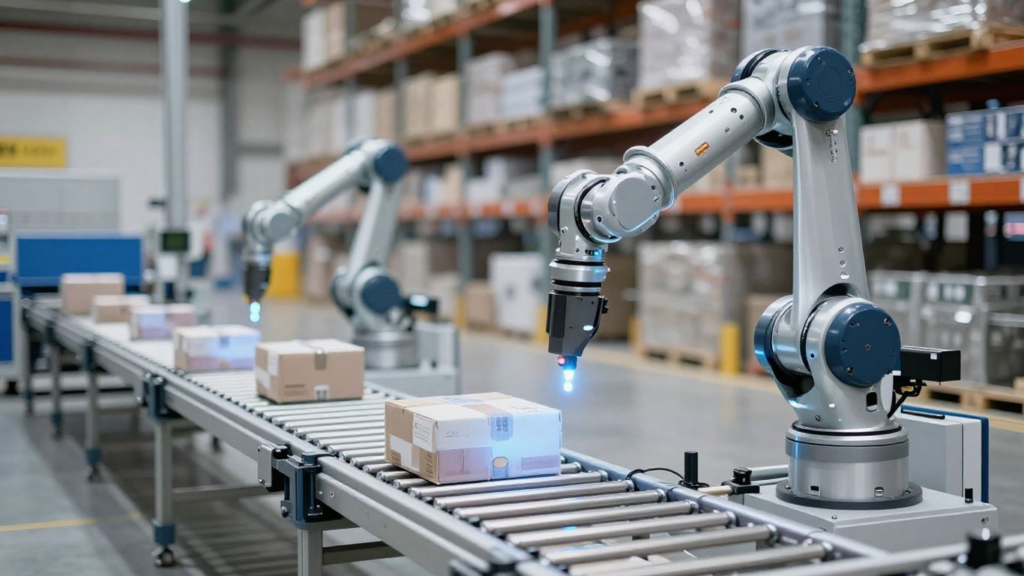
Warehouse operations are seeing big changes thanks to better sensors and cameras. Older systems could only measure simple boxes. Now, new devices can measure almost anything, even oddly shaped items, with really high accuracy. This means fewer mistakes and better data for managing inventory. The precision offered by these new technologies is a game-changer for warehouses.
In-Motion Dimensioning Solutions
Speed is everything in a busy warehouse. The latest trend is dimensioning systems that work while things are moving. Imagine a forklift carrying a pallet passing under a scanner without stopping. This in-motion capability speeds up the whole process significantly. It removes bottlenecks and keeps goods flowing smoothly through the facility. This kind of automation is key for keeping up with demand.
The Indispensable Role of Dimensioning Systems
As technology keeps improving, dimensioning systems are becoming more important. They are not just about measuring; they are about providing accurate data that helps with everything from shipping costs to inventory planning. The ability to capture precise measurements, even for irregular shapes, makes these systems vital for modern logistics. Automated dimensioning systems are no longer a luxury but a necessity for efficient warehouse management.
The drive for accuracy and speed in logistics is constant. As technology evolves, dimensioning systems are at the forefront, offering solutions that were once thought impossible. They are critical for businesses looking to stay competitive in a rapidly changing market.
- Improved data accuracy
- Faster processing times
- Better inventory tracking
- Reduced operational costs
Conclusion
As warehouses face rising costs and the pressure to optimize space, automated dimensioning systems are becoming a necessary tool. These systems help manage dimensional weight pricing, reduce shipping expenses, and improve overall warehouse efficiency. Investing in the right dimensioning solution is key for businesses looking to stay competitive and prepared for the future.