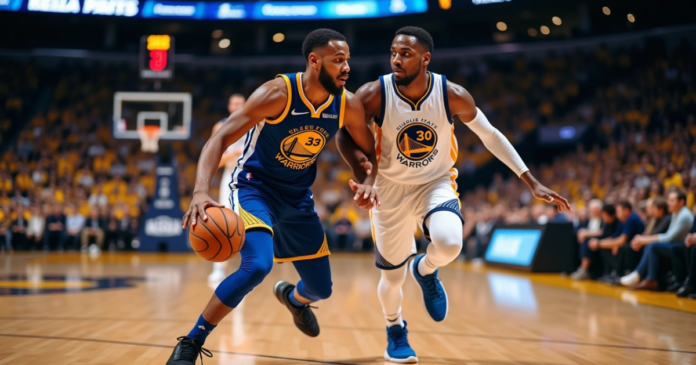

The utah jazz vs golden state warriors timeline spans over five decades of competitive basketball, with the two franchises battling through 209 regular-season games. The Jazz hold a historical edge with 117 victories compared to Golden State’s 92 wins. In recent years, the dynamic has shifted dramatically. The Warriors have dominated when it matters most, winning 9 of the last 10 matchups. This warriors vs utah rivalry showcases contrasting eras of dominance, from the Stockton-Malone dynasty to the Curry-led championship runs, revealing how basketball’s evolution has transformed the jazz vs. warriors head-to-head battles.
Warriors vs Utah: Early Franchise Battles and 1980s Showdowns
Birth of the Rivalry in the 1970s
The Warriors arrived on the West Coast in 1962 after relocating from Philadelphia, establishing themselves as one of the premier franchises in California basketball. When the Utah franchise entered the league as the New Orleans Jazz in 1974, the warriors vs utah matchups were still years from developing competitive intensity. The Jazz relocated to Salt Lake City in 1979, marking the start of their distinct basketball identity that would contrast sharply with Golden State’s approach.
During the late 1970s and early 1980s, both franchises worked to establish themselves in the Western Conference. The Warriors experienced a brief resurgence under coach Karl, which peaked in a 1987 Western Conference Semifinal against the Los Angeles Lakers. Point guard Sleepy Floyd delivered a performance that remains in NBA playoff history, scoring 29 points in a quarter and 39 points in a half, both still standing as playoff records. His 51-point finish catalyzed increased interest in Bay Area basketball.
Run TMC Era Meets Jazz’s Defensive Identity
Don Nelson engineered a transformation when he took over coaching duties beginning with the 1988-89 season. Nelson drafted Mitch Richmond, who won Rookie of the Year, and Tim Hardaway in consecutive first rounds of the 1988 and 1989 drafts. They joined Chris Mullin to form Run TMC, a nickname inspired by the rap group Run-DMC.
The golden state warriors vs utah jazz timeline intensified during the Run TMC years as contrasting philosophies collided. The Warriors led the league in scoring with 116.3 points per game in their first season together. Defense proved problematic, resulting in a 37-45 record despite the offensive fireworks. The Jazz developed a methodical style emphasizing defensive strategies that stood in direct opposition to Golden State’s approach.
In the 1990-91 season, the Warriors sold out every home game as their popularity surged. The trio’s scoring prowess peaked when Mullin finished 8th in league scoring with 25.7 points, Richmond 10th with 23.9, and Hardaway 11th with 22.9 points per game. Their combined 72.5 points made them the league’s highest-scoring trio and the second-highest in NBA history for a 20-point trio.
How Playing Styles Shaped Early Contests
Run TMC’s style kept opposing defenses off-balance through unpredictability. Tim Hardaway later explained their approach: “They didn’t know what we were doing because we didn’t know what we were doing. If they went to the playbook, we’d be like ‘what are you looking at?’ Because we might have a playbook, but we’re not running them tonight”. This run-and-gun offense meant high point totals and minimal defensive attention.
The jazz vs. warriors contests during this period showcased fundamental philosophical differences. Golden State embraced a fast-paced, high-scoring approach that reshaped offensive thinking, while Utah grinded out victories through defensive tactics and mid-range shooting. These stylistic clashes defined the early competitive spirit between the franchises, setting a foundation for future playoff encounters that would further intensify the rivalry.
Jazz Dominance Through the Stockton-Malone Dynasty Years
1990s Western Conference Supremacy
Jazz fans voiced their displeasure when the franchise selected an unknown guard from Gonzaga in the 1984 draft. John Stockton heard boos from attendees at the draft party, unaware they were witnessing the arrival of a future Hall of Famer. The selection proved prescient. During the 1984-85 season, Mark Eaton emerged as a defensive anchor, averaging 5.6 blocks per game, a single-season NBA record that still stands. Eaton added 9.7 points and 11.3 rebounds while capturing the NBA Defensive Player of the Year Award.
The 1985 draft brought Karl Malone from Louisiana Tech, who made an immediate impact by averaging 14.9 points and 8.9 rebounds in his rookie campaign. When Stockton became the starting point guard for the 1987-88 season, the foundation for the golden state warriors vs utah jazz timeline’s most dominant era was set. Malone established himself as one of the league’s elite power forwards, and the Jazz finished 47-35.
Jerry Sloan took over head coaching duties during the 1988-89 season after Frank Layden stepped down following 17 games. Under Sloan’s direction, Utah won 51 games and captured the Midwest Division championship. The 1989-90 campaign produced the franchise’s best record at 55-27. Malone posted career-best numbers with 31.0 points and 11.1 rebounds per game. Stockton averaged 17.2 points and 14.5 assists, with his assist total leading the NBA.
The Jazz executed a three-way trade before the 1990-91 season, acquiring Jeff Malone from Washington. After a 22-15 start, Utah surged with a 27-8 record through January and February. Jeff Malone averaged 18.6 points, providing a third scoring option alongside Karl Malone and Stockton, who combined for 64.8 of the team’s 104 points per game. The 1991-92 season marked a watershed moment when the franchise moved to the Delta Center, a facility seating 19,911 compared to the Salt Palace’s 12,000. Utah reached the Western Conference Finals for the first time in franchise history.
Golden State Warriors vs Utah Jazz Timeline: The Playoff Encounters
The warriors vs utah playoff history tilted heavily in Golden State’s favor during the late 1980s. In the 1987 first-round series, the Warriors secured a 3-2 victory despite Utah winning the first two games at home. The decisive Game 5 saw Golden State prevail 118-113. Two years later, the Warriors swept Utah 3-0 in the 1989 first round, winning by scores of 123-119, 99-91, and 120-106.
During the regular season, individual performances highlighted the intensity of jazz vs. warriors matchups. On November 11, 1994, Tim Hardaway and Latrell Sprewell combined for 60 points against Stockton and Malone, with each Warriors guard scoring exactly 30 points in a 112-104 victory. Hardaway shot 10-of-15 from the field and hit 6-of-10 three-pointers, while Sprewell added seven rebounds and four assists. Karl Malone responded with dominance on April 7, 1998, dropping 56 points against the Warriors.
Warriors’ Struggles During Utah’s Peak Years
The utah jazz vs golden state warriors timeline shifted dramatically in Utah’s favor throughout the 1990s. While the Warriors struggled to establish identity following the breakup of Run TMC, the Jazz reached consecutive NBA Finals in 1996-97 and 1997-98[72]. The 1996-97 squad posted a franchise-best 64-18 record with the Western Conference’s top seed[72]. Malone won his first MVP award, averaging 27.4 points, 9.9 rebounds, and 4.5 assists. Utah’s physical style overwhelmed smaller Golden State lineups during this period.
The Jazz lost both Finals to Michael Jordan’s Chicago Bulls by identical 4-2 margins[72]. Despite falling short of championships, Utah’s dominance over Western Conference opponents during the Stockton-Malone era established them as the superior franchise in head-to-head competition against the Warriors throughout the decade.
How the 2007 ‘We Believe’ Warriors Reignited the Rivalry
Following a thirteen-year playoff absence, the Warriors returned to postseason competition during the 2006-07 season. Golden State captured the eighth seed after closing with a 16-5 run. The franchise shocked the basketball world by defeating the top-seeded Dallas Mavericks 4-2 in the first round, becoming the first No. 8 seed to eliminate a No. 1 seed in a best-of-seven NBA playoff series. This historic accomplishment set up a Western Conference Semifinals clash with the Utah Jazz that would produce one of the most memorable moments in the golden state warriors vs utah jazz timeline.
Baron Davis’s Iconic Playoff Performance
Baron Davis carried the Warriors throughout their playoff run, averaging 25.3 points, 6.5 assists, and 4.5 rebounds across 11 postseason games. Against Utah specifically, Davis elevated his performance to 25.6 points, 7.6 assists, and 4.2 steals per game while shooting 48 percent from the field. His Game 3 performance at Oracle Arena produced 32 points, nine assists, and six steals.
The defining moment arrived with 2:48 remaining in that 125-105 Warriors victory. Davis took a baseline pass from Andris Biedrins and elevated over Andrei Kirilenko, a 6-foot-9 defender who had blocked 13 combined shots in the first two games. Davis, listed at 6-foot-3, threw down a thunderous one-handed dunk that remains among the franchise’s most celebrated playoff moments. “I shocked myself on that dunk,” Davis stated afterward. “I was going to try to reverse it, but knowing he was a great shot-blocker, I thought I would just try my luck, and I got lucky”.
Jazz vs. Warriors: Semifinal Series Breakdown
Utah captured the first two games at EnergySolutions Arena, winning 116-112 and 127-117 in overtime. Game 2 featured Derek Fisher’s dramatic return from New York, where his daughter had undergone eye surgery, scoring five crucial overtime points. Despite Davis’s 36-point effort in the overtime loss, the warriors vs utah series tilted heavily toward the Jazz.
Golden State’s lone victory came in Game 3, a 125-105 home triumph highlighted by Davis’s iconic dunk[121]. Utah responded by winning Game 4 (115-101) and Game 5 (100-87) to close out the series 4-1[121].
The Upset That Changed Both Franchises
The Warriors’ playoff appearance ended a drought dating back to 1994. Their first-round upset of Dallas marked their initial playoff series victory since 1991. The utah jazz vs golden state warriors match player stats from this series showcased contrasting strengths, with Utah’s size advantage proving decisive as Carlos Boozer, Mehmet Okur, and Kirilenko dominated inside. The “We Believe” campaign revitalized the franchise and established Oracle Arena’s reputation as one of the league’s most electric playoff venues.
Golden State’s Championship Era Transforms the Matchup
Stephen Curry and the Three-Point Revolution
Steve Kerr took over as head coach during the 2014-15 season, implementing a small-ball strategy that redefined the golden state warriors vs utah jazz timeline. The Warriors won 67 games in the regular season, with Curry earning NBA MVP honors. The team’s starting lineup with Andrew Bogut at center played 813 minutes together and outscored opponents by 19.6 points per 100 possessions. Golden State captured their first championship since 1975 by defeating Cleveland 4-2 in the Finals. During the off-season, the franchise signed Kevin Durant to replace Harrison Barnes, giving the Death Lineup four players who had averaged at least five assists in a season.
Utah Jazz vs Golden State Warriors Match Player Stats: Curry’s Dominance
Curry has drained 162 three-pointers against the Jazz in his career. His career-high performance came on January 31, 2014, when he scored 44 points on 14-of-26 shooting with eight three-pointers. On November 24, 2025, Curry scored 31 points in just 29 minutes, achieving his 30th career game with 30-plus points in under 30 minutes, tying Giannis Antetokounmpo for the NBA record. The performance showcased Curry’s efficiency, as he averaged 24.0 points per game against Utah while shooting 45.5 percent from the field and 40.7 percent from three-point range.
Warriors’ Death Lineup Overwhelms Jazz Defense
The Death Lineup featured Curry, Klay Thompson, Andre Iguodala, Durant, and Draymond Green at center. This configuration outscored opponents by an average of 15.8 points per 100 possessions during the 2014-15 season. The Warriors averaged around 116 points per game in the regular season, while the Jazz reached that mark only four times in 82 games. Golden State played at the fourth-fastest pace among all teams, in contrast to Utah’s league-slowest tempo. The Warriors swept the Jazz 4-0 in the 2017 Western Conference Semifinals.
Rudy Gobert and Donovan Mitchell’s Response
Donovan Mitchell averaged 22.6 points, 4.8 rebounds and 4.7 assists in 22 career games versus the Warriors. Gobert averaged 11.6 points, 10.5 rebounds and 1.5 blocks in his last 10 games against Golden State. Despite individual performances, Utah struggled against the Warriors’ offensive firepower during this period.
How the Warriors Won 9 of 10 Recent Games
The Warriors hold an 8-2 record in their last 10 games against the Jazz since February 15, 2024. Golden State averaged 126.3 points per game during this stretch compared to Utah’s 115.7 points, creating a positive point margin of 10.6 points per game. The warriors vs utah dominance included victories by scores of 140-137, 127-86, and 140-124.
What Do Recent Utah Jazz vs Golden State Warriors Timeline Trends Reveal?
2024-2026 Season Head-to-Head Results
Recent matchups demonstrate continued Warriors superiority, winning eight of ten games since February 2024. The Warriors averaged 126.3 points per game compared to Utah’s 115.7 points during this stretch. Golden State dominated with victories of 127-86, 140-124, and 134-117. On January 28, 2026, the Warriors buried Utah 140-124 behind 23 three-pointers, with Stephen Curry scoring 27 points and Moses Moody adding 26. The Jazz managed a 119-116 victory on March 9, 2026, snapping a three-game losing streak.
Young Jazz Core vs Warriors’ Veteran Experience
Brice Sensabaugh emerged as Utah’s leading scorer with 21 points in the March victory, while Kyle Filipowski contributed 19 points and 15 rebounds. Two-way players stepped up, with Blake Hinson hitting a go-ahead three-pointer and Elijah Harkless posting a career-high 16 points. Conversely, the Warriors leaned on veteran leadership from Brandin Podziemski, who averaged 21.7 points on 47.2 percent shooting in March.
Current Tactical Evolution and Future Implications
Utah’s defensive struggles defined the season, allowing 127.5 points per game, worst in the NBA. The Jazz prioritized draft position with their 20-45 record, needing to finish with the fifth-worst record or lower to secure their 2026 lottery pick.
Conclusion
The rivalry between these franchises illustrates basketball’s constant evolution through five decades of competition. Utah’s historical advantage of 117-92 victories reflects the Stockton-Malone dynasty’s sustained excellence, yet the Warriors’ recent dominance showcases how the three-point revolution transformed modern basketball. Curry’s sharpshooting prowess and Golden State’s championship pedigree have shifted the competitive balance dramatically. The Jazz currently rebuild with young talent while the Warriors maintain veteran leadership, suggesting this timeline will continue evolving. Both franchises have left indelible marks on NBA history, indeed proving that basketball philosophies constantly adapt while competitive rivalries endure through generational changes.
FAQs
Q1. Who holds the all-time advantage in the Utah Jazz vs Golden State Warriors rivalry?
The Utah Jazz lead the all-time regular-season series with 117 victories compared to the Golden State Warriors’ 92 wins across 209 games. However, the Warriors have dominated recently, winning 9 of the last 10 matchups between the two teams.
Q2. What was significant about the Warriors’ 2007 playoff run against the Jazz?
The 2007 “We Believe” Warriors made history by becoming the first No. 8 seed to defeat a No. 1 seed in a best-of-seven series when they upset the Dallas Mavericks. Though the Jazz eliminated Golden State 4-1 in the Western Conference Semifinals, Baron Davis delivered an iconic performance including a memorable dunk over Andrei Kirilenko in Game 3.
Q3. How has Stephen Curry performed against the Utah Jazz throughout his career?
Stephen Curry has been exceptionally dominant against the Jazz, draining 162 three-pointers in his career against them. He averages 24.0 points per game while shooting 45.5 percent from the field and 40.7 percent from three-point range. His career-high against Utah was 44 points on January 31, 2014.
Q4. What made the Stockton-Malone era so dominant for the Jazz?
The John Stockton and Karl Malone partnership defined Utah’s most successful period, leading the Jazz to consecutive NBA Finals appearances in 1997 and 1998. The 1996-97 team posted a franchise-best 64-18 record, with Malone winning MVP honors while averaging 27.4 points, 9.9 rebounds, and 4.5 assists per game.
Q5. How did the Warriors’ championship era change the rivalry dynamic?
The Warriors’ championship era under Steve Kerr transformed the matchup through their revolutionary small-ball strategy and three-point shooting. Golden State’s “Death Lineup” overwhelmed Utah’s defense, and the Warriors swept the Jazz 4-0 in the 2017 Western Conference Semifinals, marking a dramatic shift in the competitive balance between the franchises.