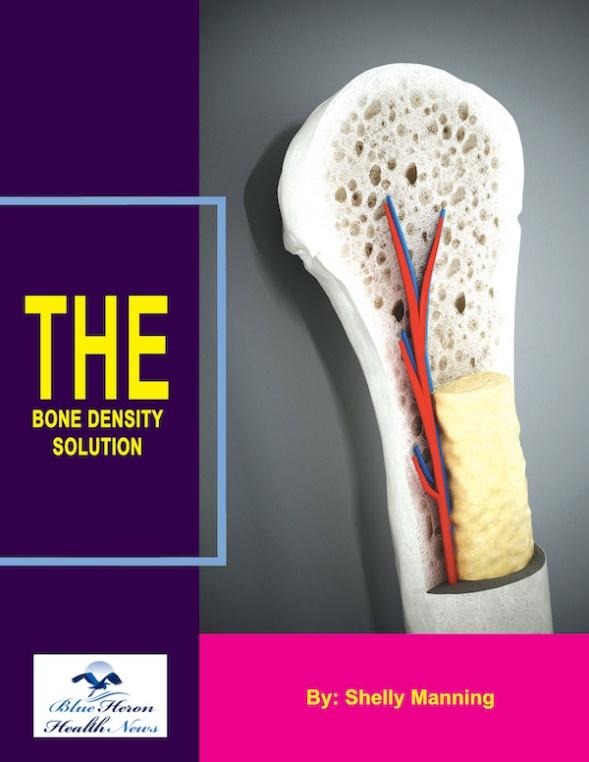

Let me start with something most review articles won’t tell you upfront: I went into this one skeptical.
“Natural bone density programs” are a crowded space on the internet, and many of them follow the same tired playbook — big promises, vague science, and a checkout button that never seems far away. So when I sat down to go through The Bone Density Solution by Shelly Manning, I was fully prepared to be disappointed.
I wasn’t — at least not entirely. But this review isn’t going to be a cheerleader piece either. You deserve a real look at what this program offers, what it gets right, where it falls short, and most importantly, whether it’s the right fit for you. Let’s get into it.
Your bones are losing density every day — don’t wait until a fall forces your hand. Grab The Bone Density Solution today and start rebuilding from the inside out.
Who Is Shelly Manning — And Why Does It Matter?
Before you hand over your credit card details to anyone claiming they can improve your bone health, it’s fair to ask: who is this person, and what qualifies them to give this advice?
Shelly Manning is presented as a natural health researcher with over 25 years of experience working with osteoporosis patients. Blue Heron Health News, the publisher behind the program, has been around for years and has released several health programs across different conditions. Manning isn’t a medical doctor, and the program doesn’t claim otherwise. She positions herself more as a patient advocate and researcher who synthesizes existing scientific literature into an actionable plan.
Is that a problem? Not necessarily. Some of the most accessible health education comes from people who bridge the gap between dense academic research and everyday readers. But it does mean you should always loop in your actual doctor before making changes to your treatment plan — something Manning herself recommends throughout the book.
What Is The Bone Density Solution, Exactly?
At its core, The Bone Density Solution is a comprehensive digital guide — a 6-part e-book — designed to help people with osteoporosis or low bone density naturally strengthen their bones through three primary levers: diet, exercise, and targeted supplementation.
The program is aimed at adults — particularly post-menopausal women, who are statistically the most affected by osteoporosis — though men dealing with bone loss will find the content relevant too. It doesn’t ask you to throw out your doctor’s advice or stop your medications cold turkey. Instead, it presents itself as something you can use alongside conventional treatment, or as a first resort if you’re in the early stages and looking for a natural approach.
The digital format means you get instant access after purchase. No waiting for a package in the mail. You download it, open it on your phone, tablet, or laptop, and you’re in.
A Walk Through the Six Parts
Part 1 — Osteoporosis: The Deep Dive
This section does something genuinely useful: it explains the biology of bone loss in plain English without dumbing it down so far that it becomes useless. You learn how bone is constantly being broken down and rebuilt, what happens when that cycle gets disrupted, and which specific cells and hormones are responsible.
There’s a particularly interesting discussion on a bone hormone called osteocalcin and its surprising connection to blood sugar and metabolism. This isn’t something your average GP brings up in a 10-minute appointment, and for readers who’ve never heard of it, it’s an eye-opener. Whether or not Manning’s interpretation of the research is perfectly calibrated is another matter, but the conversation is worth having.
Part 2 — Causes and Risk Factors
This is one of the stronger sections in the program. Manning takes aim at some causes of bone loss that most people genuinely don’t know about — certain common medications, for instance, are well-documented in the medical literature as having bone-depleting effects. The section covers OTC painkillers, corticosteroids, and a few others, encouraging readers to have an informed conversation with their doctors rather than simply stopping anything without guidance.
There’s also a candid discussion on food and bone health that goes against some widely held assumptions. The section on dairy, for example, raises questions that legitimate researchers have raised for years. Manning doesn’t pretend the science is settled — she acknowledges the complexity, which earns points for intellectual honesty.
Part 3 — Traditional Medical Treatments
This section is balanced, which surprised me. It doesn’t dismiss medications or demonize the medical establishment. Instead, it walks through the six most common categories of osteoporosis drugs, explains how each works, and honestly lays out the known risks. The discussion around bisphosphonates — one of the most widely prescribed classes — includes real concerns that are well-documented in medical literature, such as the rare but serious condition known as osteonecrosis of the jaw. The section ends with a consistent message: talk to your doctor before changing anything. That’s exactly the right call.
Part 4 — The Best Diet to Build Strong Bones
If there’s a heart to this program, this is it. Manning spends considerable time on the nutritional side of bone health, and much of what she covers is grounded in legitimate nutritional science. The interplay between calcium, Vitamin D, and Vitamin K2 — three nutrients that work together rather than independently — is something many people genuinely don’t understand. Taking calcium without the others, Manning explains, may not just be ineffective but potentially counterproductive.
She also covers magnesium, which is chronically underconsumed in Western diets and plays a fundamental structural role in bone tissue. The section on boron — a trace mineral that influences estrogen levels and has shown bone density improvements in small studies — is more speculative but interesting.
The emphasis throughout is on food first, supplements second. Manning gives concrete lists of foods — 17 sources of magnesium, 9 foods high in Vitamin D — which makes the advice immediately actionable rather than vague.
Part 5 — Exercise for Bone Health
This section covers the three exercise types most supported by research for bone health: weight-bearing cardio, resistance training, and balance/coordination work. What’s notable here is the accessibility of the approach. Manning is clearly aware that many of her readers are older adults who may be dealing with chronic pain, limited mobility, or fear of falling. The exercises she describes are gentle, and she includes modifications for people who are bed-bound or recovering from a fracture.
The emphasis on balance training is particularly well-placed. Falls are the number one cause of fracture-related death in older adults, and improving balance is one of the most overlooked but evidence-backed interventions available. That this section dedicates real space to it rather than just pushing through reps speaks well of Manning’s priorities.
Part 6 — The Bone Strengthening Protocol
This is the one-page roadmap Manning references throughout the earlier sections — a condensed, practical summary you can stick on your fridge or save to your phone. For readers who want to get moving quickly without wading through everything first, this is genuinely useful.
The Two Bonus Reports
The program includes two bonus appendices.
The first is a recipe collection focused on bone-friendly meals — breakfasts, lunches, dinners, smoothies, and snacks. These aren’t clinical, joyless recipes. They read like something you’d actually want to eat, which matters because the best nutritional advice in the world is useless if you can’t stick to it.
The second is a list of 653 foods linked to bone health, with nutritional values and serving sizes. This kind of comprehensive reference material is genuinely useful to have on hand, especially for people who want to understand exactly why a given food is beneficial, not just that it is.
What I Liked
- The tone is human. Manning writes like someone who has sat across from real patients and understands what it’s like to feel frightened about a diagnosis. She’s not cold or clinical, and she’s not breathlessly hype-driven either.
- The advice is mostly actionable. Unlike a lot of wellness content that tells you to “reduce stress” without explaining how, this program gives specific foods, specific exercises, and specific supplements to consider.
- It’s honest about medications. Programs like this sometimes veer into anti-medicine territory. This one doesn’t. It takes a measured view of pharmaceutical treatments, which makes it easier to trust.
- The refund policy is generous. Sixty days, no questions asked. That’s a low-risk proposition.
Where I’d Push Back
- The marketing language oversells it. Phrases like “results in just days” and “almost unbreakable bones” are the kind of claims that make a careful reader wince. Bone density improvements are measurable over months, not days.
- The scientific citations aren’t inline. The book references over 100 studies, which is great. But a reader who wants to fact-check a specific claim has no easy way to do so. That’s a transparency gap worth noting.
- It’s digital-only by default. For older adults who aren’t comfortable navigating PDFs, this could be a genuine barrier. A physical version is available as an add-on, but it costs extra.
- Individual results will vary significantly. Bone health is influenced by genetics, hormonal status, underlying conditions, medications, and more. The testimonials featured are compelling, but no program works identically for everyone.
Who Is This Program Best For?
The Bone Density Solution is likely a good fit for you if:
- You’ve been diagnosed with osteoporosis or osteopenia and want to understand what lifestyle changes you can make alongside any medical treatment you’re receiving.
- You’re in the early stages of bone loss and looking for a natural, preventative approach before turning to medication.
- You’re a caregiver or family member of someone dealing with bone loss and want to understand the landscape better.
- You’ve tried prescription treatments and are looking for complementary strategies.
It’s probably not the right starting point if you’ve already suffered a serious fracture, have a complex underlying medical condition driving your bone loss, or are looking for a supervised, clinical intervention. In those cases, a specialist — a rheumatologist or endocrinologist — should be your first call.
The Verdict
At $49, The Bone Density Solution offers a well-organized, human-written guide to a topic that genuinely matters and affects millions of people. It isn’t a miracle cure, and anyone who tells you otherwise about any bone health product is selling you something. What it is, at its best, is a practical, readable companion to your broader health journey — one that takes the science seriously while remaining accessible to people who don’t have a medical degree.
The marketing around it is louder than the content deserves, which is a shame. Strip away the hype, and there’s a thoughtful program here that could serve as a genuinely useful resource for the right person.
If you’re curious, the 60-day money-back guarantee means the financial risk is minimal. Just go in with realistic expectations, keep your doctor in the loop, and treat it as one tool in a broader approach to your bone health — not a silver bullet.
Thousands have already reversed their bone loss naturally — your strongest bones might still be ahead of you. Try it risk-free for 60 days and see for yourself.
This review is based on publicly available information about the program. It is not a substitute for professional medical advice. Always consult your healthcare provider before making changes to your treatment plan.