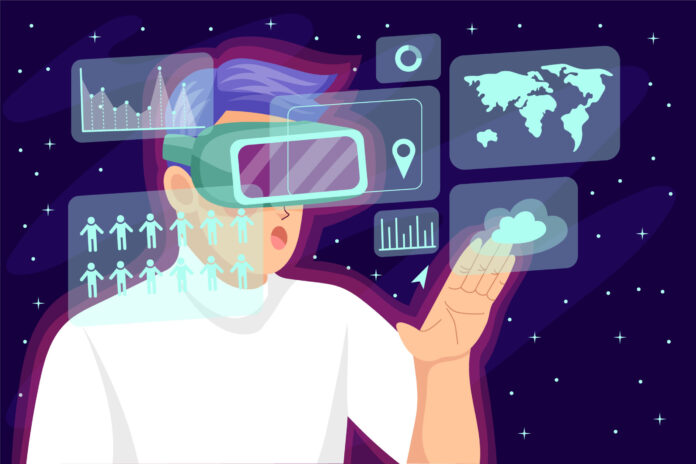

Tech giants envision future beyond smartphones as they collectively invest over $150 billion in augmented reality, artificial intelligence, and brain-computer interface technologies. This strategic pivot comes as smartphone financing dropped 23% in 2024, signaling waning investor confidence in conventional mobile devices. Consequently, companies like Meta, Apple, Google, and Neuralink are racing to capture a projected $3 trillion market opportunity by 2030. Consumer demand supports this transition, with 68% of users preferring hands-free technology that enables multitasking and enhanced privacy. This article examines why tech giants envision future beyond smartphones, which companies lead the charge, what devices will emerge, and how breakthrough technologies enable this transformation.
Why Tech Giants Envision Future Beyond Smartphones
Smartphone Market Reaches Saturation Point
Global smartphone shipments face an unprecedented contraction, with IDC forecasting a 12.9% decline to 1.12 billion units in 2026. Counterpoint Research projects a 2.1% drop during the same period as memory chip prices surge. This marks the largest decline in over a decade, driven by a rapid build-out of AI infrastructure that has diverted memory chip supply toward data centers over consumer devices.
Low-end Android manufacturers face the most severe impact, with bill-of-materials costs increasing 20% to 30% since early 2026. The sub-$100 smartphone segment, representing 171 million devices, will become permanently uneconomical even after memory prices stabilize by mid-2027. Average selling prices have surged 14% to a record $523 as manufacturers shift toward higher-margin models.
Consumer Demand Shifts Toward Hands-Free Technology
Semi-autonomous hands-free highway driving has emerged as the most desired feature among U.S. car shoppers, cited by 43% of respondents in a recent AutoPacific study. This represents a dramatic shift, given that hands-free driving did not rank in the top 10 just one year earlier. Similarly, 61% of drivers already rely on hands-free technology while driving.
The hands-free devices market reflects this consumer preference, valued at $15.3 billion in 2023 and projected to reach $37.8 billion by 2032, growing at a 10.6% compound annual growth rate. Advancements in AI and machine learning have enhanced voice and gesture recognition systems, enabling more accurate interaction between users and devices.
$3 Trillion Market Opportunity Drives Innovation
Nvidia CEO Jensen Huang estimated that between $3 trillion and $4 trillion will be spent on AI infrastructure by the end of the decade. Hyperscalers are planning to spend nearly $700 billion on data center projects in 2026 alone, signaling a massive market shift that tech giants envision future beyond smartphones can capitalize on through new device categories.
Hardware Innovation Has Plateaued
Smartphone innovation has shifted from transformation to refinement, with modern upgrades focusing on polishing existing features rather than redefining device capabilities. Battery technology faces built-in constraints related to materials, cost, and safety that make breakthroughs rare. Consumers now hold onto smartphones for three to four years or more as incremental improvements fail to justify frequent upgrades.
Which Tech Giants Target New Devices and Their Strategies
Meta Bets $50 Billion on AR Glasses and Holographic Interfaces
Meta’s Reality Labs division has accumulated nearly $50 billion in losses over four years as the company pursues augmented reality dominance. The Orion prototype represents the most advanced AR glasses ever created, featuring transparent lenses that maintain eye contact while delivering holographic displays with the largest field of view in the smallest form factor to date. Correspondingly, Meta’s Ray-Ban smart glasses exceeded 2 million units sold since October 2023, outselling traditional Ray-Bans even before AI features launched. Meta AI runs on these devices, understanding physical surroundings and providing contextual assistance.
Apple Pursues Spatial Computing Revolution
Apple Vision Pro launched at $3,499 with 256GB storage, introducing visionOS as the first spatial operating system built on macOS, iOS, and iPadOS foundations. The device packs 23 million pixels across two micro-OLED displays and uses a dual-chip design combining M2 and R1 processors. Over half of Fortune 500 enterprises have adopted spatial computing solutions, with companies like SAP and Microsoft building productivity applications for the platform.
Google Builds Open AR Ecosystem with Android XR
Android XR extends Google’s mobile platform to headsets and glasses through partnerships with Samsung, Qualcomm, Lynx, Sony, and Xreal. Project Aura, developed with Xreal, will launch as a commercial product in 2026, not a development kit. Google partnered with Gentle Monster and Warby Parker to create stylish Android XR glasses, with future collaborations planned with Kering Eyewear. The platform integrates Gemini AI for contextual assistance, language translation, and hands-free device control.
Neuralink Pioneers Brain-Computer Interface Technology
Neuralink received $650 million in Series E funding to expand brain-computer interface deployment. Twelve people worldwide with severe paralysis have received implants and control digital tools through thought. The company plans high-volume production by 2026 with fully automated surgical procedures. Clinical trials target quadriplegia from spinal cord injury and ALS, with FDA breakthrough device designation granted for speech restoration applications.
Microsoft Focuses on Enterprise Mixed Reality Solutions
Microsoft Mesh platform enables holographic collaboration across HoloLens 2, VR headsets, smartphones, and PCs. The technology integrates with Microsoft Teams and Dynamics 365, delivering mixed reality experiences to frontline workers. Accenture onboarded tens of thousands of new hires through Mesh-enabled virtual spaces. HoloLens 2 supports enterprise applications from remote assistance to 3D design collaboration, with built-in Azure security features.
What New Devices Will Replace Smartphones
AR Smart Glasses Enable Hands-Free Digital Experiences
Industrial workers access digital work instructions overlaid directly onto their field of view, eliminating constant referrals to bulky manuals or computer screens. DHL reported a 25% efficiency increase during Vision Picking pilot programs where warehouse workers saw optimized routes and bin locations through AR displays. Boeing integrated Google Glass into aircraft production for building complex wire harnesses and partnered with Red 6 to incorporate AR into fighter pilot training. In healthcare, neurosurgeons at Johns Hopkins University performed the institution’s first AR surgeries in 2020, viewing imaging data during procedures without turning away from patients. Forty-one Fortune 100 companies have deployed RealWear smart glasses for hands-free operations.
Brain-Computer Interfaces Allow Thought-Based Control
Brain-computer interfaces enable control of computers, robots, and devices using brain signals through systems either implanted in the brain or worn on the head. In clinical trials, BCIs have helped people with severe disabilities communicate and use robotic limbs. Stanford researchers investigated brain signals related to inner speech, finding clear and robust patterns of activity in motor areas of the brain. These patterns appeared as smaller versions of activity evoked by attempted speech, offering hope that future systems could restore fluent communication to people with paralysis via inner speech alone.
AI-Powered Wearables Create Ambient Computing Ecosystems
Wearables now serve as reliable data collection points with guaranteed on-body presence, unlike smartphones that can be forgotten or powered down. These devices act as personalized context collectors, sensing movement, gestures, orientation, and biometrics. Over 70% of U.S. enterprises adopting wearable AI report measurable efficiency gains. Ambient AI refers to intelligent systems that seamlessly integrate into background environments, continuously sensing context and anticipating needs without explicit commands.
Spatial Computing Headsets Transform Digital Workspaces
Workers configure virtual workspaces to any role using voice, eye, and hand movements, pinning items for faster retrieval without endless clicking. Immersive training programs cut onboarding time by up to 50% and improve retention of best practices by more than 60%. Companies report up to a 30% reduction in decision-making time and a 20% increase in idea generation during collaborative sessions. Accenture uses VR for remote new hire orientation to offer immersive company introductions.
How Breakthrough Technologies Power the Transition
Advanced Display Systems Enable Lightweight AR Glasses
Micro LED technology delivers advantages in brightness, contrast, refresh rate, power consumption, and form factor, making it well-suited to waveguide systems for near-eye displays. The technology shares high resolution, high PPI, and high refresh rate with Micro OLED while leveraging inorganic LED traits to improve response time and color gamut. Mojie’s AR glasses weigh just 25 grams using resin diffractive waveguide technology, while full-color micro LED light engines achieve 500,000 nits peak brightness with resolution of 320×240 pixels in a 0.18 cubic centimeter package.
AI and Machine Learning Create Context-Aware Experiences
Multi-modal AI systems analyze visual, linguistic, emotional, and cognitive state data combined with user-dependent contextual information to deliver real-time assistance. Context-aware AI wearables and conversational AI markets are projected to exceed $45 billion by 2030. Factoring dialog act information and prior utterances improves topic classification accuracy by 35%, reaching 74% overall.
Next-Generation Battery Solutions Extend Device Lifespan
Solid-state lithium microbatteries achieve full charge to 80% capacity in 20 minutes while targeting 700 watt-hours per liter, twice the volumetric energy density of equivalent Li-ion batteries. These batteries supply pulse currents up to 10 times their rated current, compared to just twice for Li-ion. Solid-state batteries charge in as little as three minutes and could remain functional for 15 to 20 years.
Edge Computing Balances Local and Cloud Processing
Meta’s Ray-Ban smart glasses achieve sub-second response times for on-device photo capture commands while maintaining under three-second response times for cloud-based AI interactions. Organizations implementing hybrid AI architectures report 15% to 30% cost savings compared to pure-cloud or pure-edge approaches. Edge pre-processing reduces bandwidth costs by 80% to 90% in many deployments.
Conclusion
Tech giants have committed over $150 billion to reshape computing through AR glasses, brain-computer interfaces, and AI-powered wearables. Without a doubt, this transition addresses smartphone market saturation while capturing consumer demand for hands-free experiences. Meta, Apple, Google, Neuralink, and Microsoft each pursue distinct strategies targeting the $3 trillion market opportunity. Advanced displays, context-aware AI, solid-state batteries, and edge computing now make these devices practical alternatives that fundamentally transform how people interact with digital information daily.