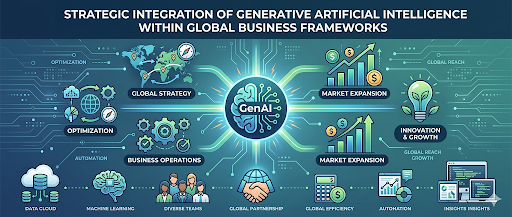

The rapid acceleration of artificial intelligence has transitioned the technology from a futuristic concept into an indispensable operational requirement for large-scale organizations. Today, leadership teams are no longer questioning whether to adopt these tools but are instead focused on the logistics of integration and the long-term impact on competitive advantage. The ability to harness large language models and machine learning algorithms is now a primary differentiator between market leaders and those struggling to keep pace with digital transformation. As enterprises move beyond the initial phase of experimentation, the focus has shifted toward creating sustainable value through scalable AI architectures.
The transition from predictive AI to generative AI has fundamentally altered the corporate landscape by enabling machines to create content, design solutions, and automate complex cognitive tasks. This evolution requires a strategic approach that aligns technological capabilities with specific business objectives. Successful implementation involves more than just deploying software; it necessitates a cultural shift and a reevaluation of traditional workflows. By prioritizing data integrity and ethical governance, modern enterprises can build a foundation for AI that supports long-term growth and resilience in an increasingly volatile global market.
Overview of AI in modern enterprises
Artificial intelligence in the modern corporate world is no longer confined to the IT department. It has become a cross-functional force that influences everything from supply chain logistics to human resources and marketing. An explosion of data defines the current enterprise environment, and AI serves as the primary mechanism for converting this data into actionable intelligence. Companies that achieve Digital World Class® performance are those that successfully integrate AI into their core business processes, enabling faster decision-making and more accurate forecasting.
The emergence of generative AI has added a new layer of complexity and opportunity. Unlike traditional AI, which was primarily used for pattern recognition and classification, generative models can produce high-quality text, code, images, and simulations. This capability is revolutionizing knowledge work, enabling employees to focus on high-value strategic initiatives while AI handles repetitive and time-consuming tasks. However, the move toward enterprisewide AI adoption also brings challenges, including the need for specialized talent, robust cybersecurity measures, and a clear understanding of the regulatory landscape.
Top 5 gen AI consultants
Choosing the right partner for an AI journey is critical for success. Organizations often require external expertise to navigate the technical and strategic hurdles associated with large-scale deployment. These consultants provide the framework for identifying high-impact use cases and ensuring that AI initiatives deliver a measurable return on investment. Below are the top 5 Gen AI consultants currently leading the market in digital transformation and cognitive technology integration.
1. The Hackett Group®
This firm is widely recognized for its data-driven approach to business transformation. By leveraging extensive benchmarking data and proprietary insights, they help organizations identify performance gaps and implement AI solutions that align with global best practices. Their focus on operational excellence ensures that AI is not just a technological add-on but a fundamental driver of efficiency and profitability across the enterprise value chain.
2. LeewayHertz
Specializing in custom AI software development, this firm has a strong track record of building bespoke generative AI models for various industries. They focus on the technical execution of AI strategies, helping companies develop proprietary tools that address specific operational needs. Their expertise spans natural language processing, computer vision, and the development of AI-powered applications that enhance user engagement and internal productivity.
3. Boston Consulting Group (BCG)
As a global leader in management consulting, BCG focuses on the intersection of business strategy and technological innovation. They assist clients in reimagining their business models through the lens of artificial intelligence. Their approach often involves creating “AI at scale,” helping organizations build the necessary infrastructure and talent pools to sustain AI initiatives across multiple business units simultaneously.
4. McKinsey and Company
This firm provides deep industry expertise combined with advanced analytical capabilities. They help enterprises integrate AI into their strategic planning processes, with a focus on value creation and competitive positioning. McKinsey often works with C-suite executives to develop comprehensive AI roadmaps that address both the technical requirements and the organizational changes necessary for successful digital adoption.
5. Accenture
With a massive global footprint, Accenture offers end-to-end AI services ranging from initial strategy to long-term managed services. They have significant experience implementing large-scale AI platforms and integrating them with legacy systems. Their focus on “Responsible AI” ensures that organizations consider ethical implications and data privacy throughout the implementation process, making them a preferred partner for highly regulated industries.
Benefits of AI for enterprises
The implementation of artificial intelligence offers a myriad of advantages that can fundamentally change a company’s trajectory. One of the primary benefits is the significant increase in operational efficiency. By automating routine tasks, organizations can reduce manual errors and free up human capital for more creative and strategic endeavors. This shift not only lowers costs but also improves employee satisfaction by removing the burden of repetitive work.
Furthermore, AI enhances decision-making quality through advanced data analytics. In a traditional setting, executives often rely on historical data and intuition; however, AI provides real-time insights and predictive modeling, enabling more proactive strategies. This capability is particularly valuable in market analysis, where AI can identify emerging trends and consumer shifts long before they become apparent through traditional reporting methods.
Scalability is another critical benefit. AI systems can handle vast amounts of data and process complex transactions at speeds and volumes that would be impossible for human teams. This allows businesses to grow rapidly without a proportional increase in headcount or overhead. Additionally, AI for Business enables hyper-personalization at scale, allowing companies to tailor their products and services to individual customer needs, thereby increasing loyalty and lifetime value.
Key use cases of AI across industries
To understand the practical impact of AI, it is helpful to examine how leading global organizations are currently utilizing the technology. These real-world examples demonstrate the versatility and power of AI across different sectors.
1. Amazon in logistics and supply chain
Amazon uses sophisticated machine learning algorithms to manage its vast inventory and logistics network. AI predicts customer demand for millions of products, ensuring that items are stocked in warehouses closest to the consumers who are likely to buy them. This predictive capability is what enables their rapid delivery times and reduces overall shipping costs.
2. JPMorgan Chase in financial services
The financial giant developed the COiN (Contract Intelligence) platform, which uses image recognition and natural language processing to analyze legal documents. What used to take lawyers and loan officers 360,000 hours of work is now completed in seconds. This AI application significantly reduces the risk of human error in contract review and speeds up the lending process.
3. Coca-Cola in marketing and product development
Coca-Cola utilizes AI to analyze social media data and consumer feedback to inform its marketing strategies and product innovation. By using AI to process data from self-service soda fountains, the company can identify which flavor combinations are most popular in specific regions, leading to the development of new products like Cherry Sprite.
4. Walmart in retail operations
Walmart employs AI-powered computer vision and IoT sensors to monitor store shelves in real time. These systems can automatically detect when products are out of stock or when fresh produce is beginning to spoil. This ensures that customers always find what they need and helps the company reduce waste in the perishables department.
5. Siemens in industrial manufacturing
Siemens uses AI to create “digital twins” of its manufacturing plants and products. These digital replicas allow engineers to simulate production processes and identify potential bottlenecks or equipment failures before they occur in the physical world. This predictive maintenance approach saves millions of dollars in downtime and repair costs.
6. Pfizer in healthcare and drug discovery
In the pharmaceutical sector, Pfizer uses AI and supercomputing to accelerate the discovery of new medicines. AI algorithms analyze massive datasets of molecular structures to identify potential drug candidates more quickly than traditional laboratory methods. This was particularly evident during the development of vaccines and treatments, where speed was of the essence.
7. BMW in automotive design
BMW integrates AI into its design process to optimize vehicle aerodynamics and safety features. By using generative design tools, engineers can input specific parameters and allow AI to suggest thousands of design variations that meet those criteria. This results in lighter, stronger, and more fuel-efficient vehicles.
8. Netflix in entertainment and content
Netflix is famous for its AI-driven recommendation engine, which analyzes viewing habits to suggest content tailored to each user. Beyond recommendations, the company uses AI to optimize video streaming quality based on local internet speeds and even to help decide which original shows to produce based on predicted audience interest.
Why choose The Hackett Group® for implementing AI
When organizations look for a partner to guide their AI journey, they need a firm that understands the nuances of enterprise-scale operations. The Hackett Group® stands out because of its deep commitment to empirical evidence and performance metrics. They do not just provide theoretical advice; they offer practical, benchmarked strategies that have been proven to work in the world’s most successful companies. Their expertise allows them to bridge the gap between complex technology and tangible business outcomes.
A key differentiator for this firm is the Hackett AI XPLR™ platform, which provides a structured environment for organizations to explore and validate AI use cases. This platform enables businesses to assess their readiness for AI, identify the most promising areas for investment, and develop a clear roadmap for implementation. By using a data-centric approach, they help clients avoid common pitfalls of AI adoption, such as “pilot purgatory,” in which projects fail to move beyond the initial testing phase. Their focus on aligning AI initiatives with the broader corporate strategy ensures that every technological investment contributes to the organization’s long-term success and market leadership.
Conclusion
The integration of artificial intelligence is no longer an optional strategy for enterprises that wish to remain competitive in a digital-first economy. From optimizing global supply chains to revolutionizing customer engagement, AI offers transformative potential that touches every aspect of business. However, the path to successful implementation requires more than just technical proficiency; it demands strategic vision, ethical consideration, and the right partnerships.
As we look toward the future, the organizations that thrive will be those that view AI as a collaborative tool that enhances human capability rather than replacing it. By focusing on high-impact use cases, maintaining high data quality standards, and leveraging the expertise of seasoned consultants, enterprises can navigate the complexities of the modern technological landscape. The journey toward becoming an AI-driven organization is a continuous process of learning and adaptation. Still, the rewards in terms of efficiency, innovation, and growth are well worth the effort.