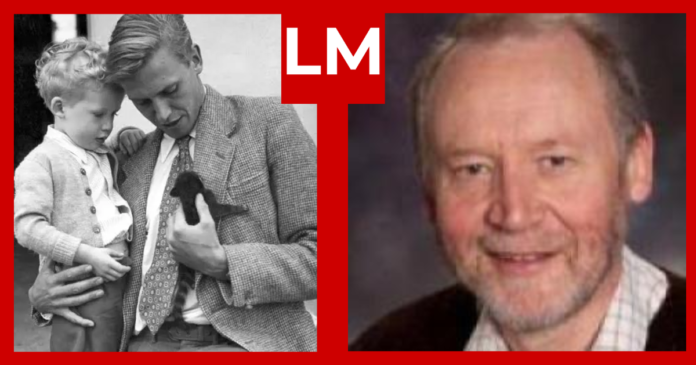

While David Attenborough became a global icon, Robert Attenborough carved his own scientific legacy far from television cameras. Born in August 1951, David Attenborough’s son is now 74 years old and has dedicated his career to biological anthropology and human population biology. Specifically, Robert Attenborough’s age and experience have positioned him as a respected academic, focusing on research in New Guinea and evolutionary anthropology. Unlike other david attenborough children who might have sought public attention, Robert chose academia over celebrity. The david attenborough family story reveals a quieter narrative, one centered on scientific inquiry rather than fame. This article explores Robert’s academic journey, research contributions, and the private life he has maintained alongside his famous father.
Who Robert Attenborough Is and His Age
Robert Attenborough entered the world as the son of Sir David Attenborough and Jane Elizabeth Ebsworth Oriel, who married in 1950. The couple remained together for 47 years before Jane’s death in 1997. Robert shares his heritage with a younger sister, Susan Attenborough, making them the two children of this remarkable union [43].
His childhood unfolded within a household steeped in intellectual achievement. The family valued privacy above all else, shielding both Robert and Susan from media scrutiny. His uncle, the renowned actor and director Sir Richard Attenborough, represented another branch of this distinguished British family. Despite such prominent relatives, Robert’s upbringing remained deliberately low-profile.
He currently holds the position of senior lecturer in bioanthropology at the School of Archeology and Anthropology, Australian National University in Canberra. Simultaneously, Robert maintains connections with the Department of Archeology at the University of Cambridge. His research centers on human population biology and health, with particular emphasis on New Guinea populations, alongside evolutionary and behavioral anthropology.
The contrast between father and son proves striking. While David captured worldwide attention through nature broadcasting, Robert constructed his reputation within academic circles, far removed from cameras and public recognition [43].
Robert Attenborough’s Academic Journey and Research Career
Robert’s academic trajectory began when he joined Australian National University in 1981. Over the next three decades, he shaped biological anthropology at the institution before retiring in 2013. His early years involved substantial curriculum development, taking responsibility for Human Variation in 1981, then introducing Human Physiology and the Environment and Biological Perspectives on Human Social Behavior in 1982. In addition, he helped establish the Honors School in Biological Anthropology, approved in 1981 and implemented the following year.
Working alongside Colin Groves, Robert operated within a small academic stream, carrying much of the teaching and honors supervision. Within a few years of arriving in Canberra, he developed a sustained New Guinea research focus that remained his primary regional interest. His research centered on health, nutrition and demography in Papua New Guinea, exploring human population biology under changing environmental and social conditions.
His scholarly output includes 21 co-authored publications with an h-index of 6. Robert currently holds the position of Senior Fellow at the McDonald Institute for Archeological Research, University of Cambridge, where his research expertise spans Human Population Biology and Health alongside Human Evolutionary and Behavioral Ecology. He remains available for consultancy, indicating his expertise carries practical value beyond academia.
The Attenborough Family Dynamic and Private Life
The Attenborough household operated on principles of intellectual curiosity and deliberate privacy. Robert and Susan both inherited their parents’ preference for quiet lives over public recognition. This conscious choice shaped their adult years, with Robert keeping personal details about marriage or children entirely private. Susan, a former primary school headteacher, transitioned into working closely with her father.
David expressed deep regret about his prolonged absences during his children’s formative years. “If you have a child of six or eight and you miss three months of his or her life, it’s irreplaceable. You miss something,” he admitted in 2017. The family eventually transformed this painful reality into humor. “There used to be family jokes,” David recalled. “You know, ‘You were never there. You don’t remember that, Father, do you, because you weren’t there!'”
One memorable moment captured their bond. For Robert’s eighth birthday, David presented him with a salamander, mirroring a gift from his own childhood. The creature unexpectedly gave birth while sitting in Robert’s hand. “My son looked at that with his eyes coming out of his head, as did I,” David recounted.
Beyond family life, Robert served as director of David Attenborough (Productions) Limited since February 18, 1997, maintaining business connections alongside his academic pursuits.
Conclusion
Robert Attenborough’s story reveals a compelling alternative to celebrity. While his father became a household name, he built a distinguished career in biological anthropology, focusing on New Guinea research and evolutionary studies. His deliberate choice of academic rigor over public attention demonstrates that success takes many forms. Undoubtedly, the Attenborough family legacy extends beyond television screens, encompassing scientific contributions that quietly advance our understanding of human biology and evolution.
FAQs
Q1. Who is Robert Attenborough?
Robert Attenborough is a senior lecturer in bioanthropology at the Australian National University in Canberra. He is the son of Sir David Attenborough and has built a distinguished career in biological anthropology, specializing in human population biology and research focused on New Guinea populations.
Q2. How old is Robert Attenborough?
Robert Attenborough was born in August 1951, making him 74 years old. He has spent decades in academia, joining the Australian National University in 1981 and retiring in 2013, though he continues his research work at Cambridge.
Q3. Does David Attenborough have other children besides Robert?
Yes, David Attenborough has two children: Robert and his younger sister Susan Attenborough. Susan is a former primary school headteacher who later worked closely with her father, and like Robert, she has maintained a private life away from public attention.
Q4. Where does Robert Attenborough live?
Robert Attenborough lives in Australia, where he has been based since joining the Australian National University in Canberra in 1981. He also maintains academic connections with the University of Cambridge in the UK.
Q5. Why did Robert Attenborough choose to stay out of the public eye?
Robert Attenborough deliberately chose privacy over public recognition, focusing on building his academic career in biological anthropology rather than seeking celebrity status. This preference for quiet intellectual work over fame was a value shared by both Robert and his sister Susan, reflecting their family’s emphasis on privacy and scientific inquiry.