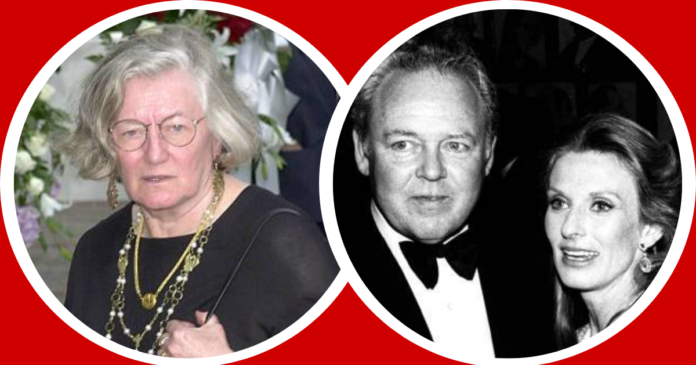

Nancy Fields O’Connor convinced her husband Carroll to accept the role of Archie Bunker after he turned it down twice, telling him it was “the role of a lifetime.” Carroll O’Connor’s wife proved to be right, as this decision launched one of television’s most iconic characters. Born on December 13, 1929, in Spokane, Washington, Nancy was far more than a supportive spouse. She was a philanthropist, founding member of the John Wayne Cancer Institute, and a woman who shaped her husband’s career behind the scenes. Their marriage, which began on July 28, 1951, in Dublin, lasted until Carroll’s death and weathered both triumph and tragedy, in particular the loss of their adopted son. This article explores her early life, her influential partnership with Carroll, and her lasting legacy.
Nancy Fields O’Connor’s Early Life and Education
Born in Spokane, Washington
Nancy Ann Kathleen Fields entered the world with roots deep in the American West. Her parents, Ralph Fields and Hulda Miller Fields, were both University of Montana alumni who instilled strong values in their children. Ralph worked for the U.S. Forest Service, a career that shaped Nancy’s childhood in unexpected ways.
The demands of her father’s profession resulted in multiple family relocations throughout her early years. The Fields family moved between Libby and Billings in Montana, with an additional stint in St. Maries, Idaho. Despite these relocations, the family spent most of their time in Missoula, Montana, where Nancy and her brother John grew up.
Nancy carried Montana native heritage with a significant cultural connection. She had Crow Indian ancestry through her grandfather, Fred E. Miller, who created a collection of over 600 historic photographs documenting the Crow Indians from 1895 to 1920. This heritage would become meaningful to Nancy later in life, when she worked to find and reassemble her grandfather’s photographic collection.
Education at University of Montana
Nancy’s educational journey began at Paxson Grade School, followed by Missoula County High School in Missoula. Growing up in Western communities fostered an early appreciation for the arts that shaped her future path.
She enrolled at the University of Montana in Missoula, where she pursued her passion for creative expression. Nancy earned a bachelor’s degree in English and drama in 1951. This education combined her love for literature with her theatrical interests, setting the stage for her artistic pursuits.
Drama and theater involvement
Nancy threw herself into the university’s Drama and Fine Arts Department during her undergraduate years. She participated actively in theater productions, most notably working on the production of “Life With Father”. Her involvement extended beyond acting. Nancy worked on costumes for productions, demonstrating her versatility and commitment to the craft.
Her theater work wasn’t limited to one area. She sometimes served as a makeup artist and assisted with lighting for various productions. This willingness to work behind the scenes revealed her dedication to the entire theatrical process, not just the spotlight.
Through her post-World War II theater work at the university, Nancy met a fellow student who shared her passion for drama. Carroll O’Connor was also involved in the same productions, and their paths crossed during this creative period at the University of Montana.
Meeting Carroll O’Connor and Their Marriage
University of Montana connection
Their collaboration on the Drama and Fine Arts Department production of “Life With Father” in 1951 marked the beginning of their relationship. Nancy worked behind the scenes as a makeup artist and lighting technician, while Carroll took center stage as an actor. The division of labor didn’t create distance. Instead, their shared passion for theater drew them together.
Their connection started as friendship, a foundation that would later prove essential to their enduring marriage. Nancy’s work on costumes and lighting meant she spent considerable time observing Carroll’s performances. This proximity allowed them to discover common interests beyond the stage.
The Dublin love story
After Nancy graduated with her degrees in drama and English in 1951, she sailed to Ireland to study at Trinity College Dublin. Carroll was there visiting his brother Hugh and completing his own studies. Their connection, which had begun in Montana’s theater community, grew stronger in Dublin’s academic environment.
The distance from Montana to Ireland didn’t weaken their bond. Their relationship evolved from friendship into something deeper during this period abroad.
Marriage in 1951
Nancy Fields and Carroll O’Connor married on July 28, 1951, in Dublin. The wedding was simple and meaningful, taking place while both pursued their educational goals. Their marriage would last for decades, becoming one of the entertainment industry’s rare long-lasting partnerships.
Convincing Carroll to take the Archie Bunker role
Years later, Nancy’s influence on Carroll’s career became evident. Carroll turned down the role of Archie Bunker twice before Nancy intervened. She told him directly: “Now listen here, Carroll, this is the role of a lifetime!”. Carroll listened to his wife’s advice.
That single conversation changed television history. Carroll himself credited Nancy with his career success, acknowledging her push to accept the role despite his reservations.
Family Life and the Tragedy of Their Son
Adopting Hugh O’Connor
Carroll and Nancy Fields O’Connor adopted Hugh Edward Ralph O’Connor when he was six days old in Rome. Carroll was filming the Elizabeth Taylor epic Cleopatra at the time. The couple named their son after Carroll’s younger brother, who had died in a motorcycle crash in 1961.
Hugh’s acting career
Hugh pursued acting like his father. He appeared in the 1984 film Brass as James Flynn and later joined Carroll on the television series In the Heat of the Night, portraying Deputy Lonnie Jamison. Carroll tried to help his son by employing him as a courier on the All in the Family set before casting him in the regular role.
Struggles with addiction
At 16, Hugh was diagnosed with Hodgkin’s lymphoma. He survived through chemotherapy and two surgeries, but the prescription pain medication led to drug dependence. Hugh’s addiction lasted 16 years, progressing from marijuana to cocaine, amphetamines, and various prescription drugs. Nancy and Carroll stood by their son through multiple rehabilitation center stays, but Hugh never conquered his addiction.
Hugh’s death in 1995
On March 28, 1995, Hugh called his father to say he planned to end his life. He told Carroll he couldn’t beat his addiction and couldn’t face another rehabilitation program. Carroll immediately called police, who sent a SWAT team and crisis negotiator to Hugh’s Pacific Palisades home. They arrived to find Hugh had shot himself. He was 32 years old. The tragedy occurred on his third wedding anniversary to Angela Clayton, with whom he had a two-year-old son, Sean.
Impact on Nancy and Carroll
The loss devastated both parents. Carroll stated publicly that nothing would give him peace after losing his son. Nancy and Carroll supported each other through their grief, with Carroll later telling reporters they would hold each other during difficult moments. Carroll became a vocal anti-drug advocate, successfully campaigning for California’s Drug Dealer Liability Act in 1997, which became known as the Hugh O’Connor Memorial Law.
Nancy’s Career, Philanthropy, and Lasting Impact
Work as artist, author, and producer
Nancy Fields O’Connor pursued multiple creative endeavors throughout her life. She worked as an actress, appearing in A Whale of a Tale (1976), The Celluloid Closet (1995), and The Mike Douglas Show. Her grandfather’s photographic legacy became a passion project. She authored Fred E. Miller: Photographer of the Crows in 1985, curating over 600 photographs documenting the Crow Indian Tribe from 1895 to 1920. The Fred E. Miller Collection toured museums nationwide and was loaned to the Great Plains Museum at the University of Nebraska. In 2007, she served as executive producer for the documentary Anita O’Day: The Life of a Jazz Singer.
John Wayne Cancer Institute founding member
Nancy co-founded The Committee to Cure Cancer by Immunization, which evolved into the John Wayne Cancer Institute at Providence St. John’s Hospital in Santa Monica. She and Carroll received the Institute’s Duke Award in 1990 for their outstanding support for cancer research. She also developed a charitable support group for melanoma cancer research and treatment at UCLA.
University of Montana donations
The O’Connors donated $1 million to the University of Montana’s Center for the Rocky Mountain West. In September 1997, the university renamed it the Carroll and Nancy Fields O’Connor Center for the Rocky Mountain West. Nancy served on the Board of Trustees, the Fine Arts Advisory Committee, and contributed to the construction of the PAR-TV Center.
Strong influence behind the scenes
Former University of Montana president George Dennison described Nancy as nothing like the passive Edith Bunker character. “Nancy was very outspoken, and she had firm opinions about things. Usually they were the kinds of opinions that you could agree with because they were the right thing to do. A great person”.
Later years and Alzheimer’s disease
Nancy spent her final years in Malibu, California. She battled Alzheimer’s disease for 10 years. Her brother John Fields reported that hospice care provided comfort during her decline.
Death in 2014
Nancy Fields O’Connor died on November 10, 2014, at her Malibu home from complications of Alzheimer’s disease. She was 84 years old. A Roman Catholic funeral service was held on November 22 at Our Lady of Malibu Church. She was survived by her brother John, daughter-in-law Angela O’Connor, and grandson Sean Carroll O’Connor.
Also Read: Who Is Nanette Mirkovich?
Conclusion
Nancy Fields O’Connor was far more than the woman who convinced her husband to take television’s most iconic role. She was a philanthropist, cancer research advocate, author, and founding member of the John Wayne Cancer Institute. Her marriage to Carroll lasted through both triumph and heartbreak, notably the loss of their son Hugh. Nancy’s legacy extends beyond her influence on Carroll’s career. She left her mark through charitable work, artistic contributions, and unwavering dedication to causes she believed in.
FAQs
Q1. Who convinced Carroll O’Connor to accept the role of Archie Bunker?
Nancy Fields O’Connor, Carroll’s wife, convinced him to take the role after he had turned it down twice. She told him it was “the role of a lifetime,” and her persuasion ultimately led to one of television’s most iconic characters.
Q2. When and where did Nancy Fields O’Connor and Carroll O’Connor get married?
Nancy and Carroll married on July 28, 1951, in Dublin, Ireland. They met while working on theater productions at the University of Montana and reconnected in Dublin where both were pursuing their studies.
Q3. What happened to Nancy and Carroll O’Connor’s son Hugh?
Hugh O’Connor, who was adopted as an infant, struggled with drug addiction for 16 years following treatment for Hodgkin’s lymphoma at age 16. Tragically, he died by suicide on March 28, 1995, at age 32, unable to overcome his addiction despite multiple rehabilitation attempts.
Q4. What philanthropic work was Nancy Fields O’Connor involved in?
Nancy co-founded The Committee to Cure Cancer by Immunization, which became the John Wayne Cancer Institute. She also developed a charitable support group for melanoma research at UCLA and, along with Carroll, donated $1 million to the University of Montana’s Center for the Rocky Mountain West.
Q5. When did Nancy Fields O’Connor pass away and what was the cause?
Nancy Fields O’Connor died on November 10, 2014, at her Malibu home at age 84. She passed away from complications related to Alzheimer’s disease, which she had battled for 10 years.