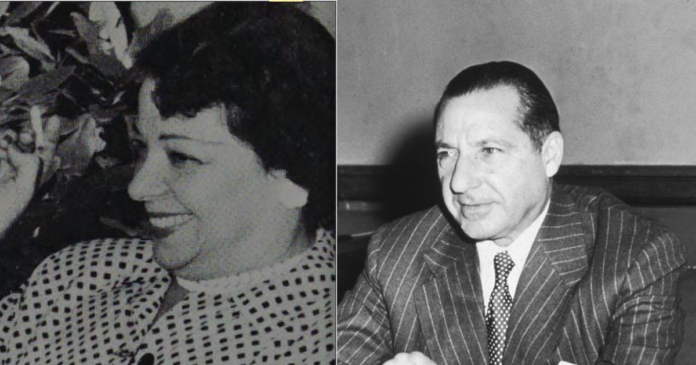

Behind every notorious figure in history stands someone whose story remains largely untold, and Lauretta Giegerman is precisely that person. Born on October 28, 1894, in Manhattan, New York, she married Frank Costello in 1918 and remained by his side for decades. While her husband’s name dominated headlines as one of New York’s most powerful mob figures, Lauretta chose a life of privacy and discretion. This article explores her early life and family background, including lauretta geigerman date of birth and lauretta geigerman ethnicity, her journey from showgirl to mobster’s wife, their years together at their Central Park West residence, and ultimately, the circumstances surrounding lauretta giegerman death and her final years.
Early Life and Family Background of Lauretta Giegerman
Lauretta Geigerman Date of Birth and Childhood in Manhattan
Lauretta Giegerman entered the world on October 28, 1894, in Manhattan, New York County. Her early years unfolded in a city bursting with new immigrants, each bringing dreams and traditions from distant lands. The name itself appears inconsistently across historical records, sometimes spelled Lauretta, other times Loretta, and the surname alternates between Geigerman and Giegerman. These variations reflect the common documentation challenges that plagued immigrant families during that era.
Manhattan in the 1890s offered both vibrancy and hardship. For a young girl growing up in this environment, life remained simple despite the surrounding chaos. Her family maintained strong values centered on love and respect, creating a foundation that would shape her character for decades to come.
Family Roots and Lauretta Geigerman Ethnicity
Her parents, Jacob H. Geigerman and Cecelia Josephs, had immigrated from Germany. The family’s German Jewish heritage influenced every aspect of their household, from religious practices to cultural traditions. Being the daughter of immigrants meant navigating two worlds: the old traditions her parents brought from Europe and the new American life unfolding around them.
Strong indicators point to the family’s German roots, validated through multiple genealogical platforms including FamilySearch and MyHeritage. This ethnic background placed them within a larger community of German Jewish families settling in Manhattan during the late 19th century.
Growing Up in a Large Jewish Family
Lauretta shared her childhood with seven siblings: Ruth, Harold, Jessie, Jerome, Sidney, Theodore, and William. The household buzzed with different personalities and interests, each sibling carving out their own space within the family dynamic.
Among all these voices, Lauretta remained one of the quietest. Large families teach specific lessons that smaller households cannot replicate. She learned patience by waiting her turn. She developed listening skills by observing rather than speaking. She discovered how to maintain peace when multiple voices competed for attention simultaneously.
These skills proved valuable later, particularly given the man she would marry. Living with conflict and danger would require the calm, steady nature her family helped cultivate. Her siblings, though not widely known in historical records, formed an essential part of her formative years. The Giegerman household operated on principles that valued family unity above individual recognition, a philosophy Lauretta carried throughout her adult life.
From Showgirl to Mobster’s Wife
Career as a Broadway Showgirl
The entertainment world of early 1900s New York provided opportunities for young women seeking independence and excitement. Lauretta stepped onto the stages of vaudeville theaters and cabarets, performing under the nickname “Bobby”. The moniker carried affection among theater circles, spoken in hallways where performers gathered between acts.
She captivated audiences during an era when theater dominated entertainment, before motion pictures claimed that throne. Described as a “plump, pleasant, onetime showgirl,” her presence brought warmth to performances. The stage name Bobby served dual purposes: it protected her privacy while allowing her to shine in the spotlight. Theaters buzzed with feathered costumes, choreographed routines, and the energy of performers who understood their fleeting moment in the public eye.
Meeting Frank Costello
The circumstances surrounding how Lauretta met Frank Costello remain unclear, with two competing narratives persisting through decades. One account suggests they knew each other as children, possibly neighbors whose paths crossed during ordinary neighborhood moments. The other version claims Lauretta was the sister of one of Frank’s close friends, which would have placed them in frequent contact.
What matters more than how they met is when. Frank was not yet the feared crime boss who would command respect across New York. He was simply a young man with multiple arrests on his record, searching for his place in the world.
The 1918 Marriage and Early Years Together
They married in 1918, a union that would span 35 years. The wedding ceremony was simple, but their commitment ran deep. Frank Costello married Lauretta Geigerman, a Jewish woman, at a time when such partnerships across ethnic lines drew attention.
Their life together unfolded in a seven-room apartment on Central Park West, less extravagant than expected for someone of Frank’s eventual stature. Summers took them to Sands Point, New York, where they maintained a second residence away from Manhattan’s intensity. They chose not to have children and avoided the typical trappings of mob life, including bodyguards and nightclub circuits. Instead, they built a domestic sanctuary insulated from the criminal world that swirled around Frank’s dealings.
Life in the Shadows: Being Frank Costello’s Wife
Marriage to one of New York’s most powerful crime figures demanded choices, and Lauretta made hers clear from the start. She deliberately distanced herself from Frank’s criminal operations, never attending mob meetings or appearing at events connected to his underworld dealings. Frank respected these boundaries, keeping his dangerous work separated from their household. While enemies watched his every move, Lauretta protected her inner world by maintaining silence as her primary defense.
Living a Private Life Away from the Mob World
Her refusal to engage with the mob world set her apart from other mobster wives. She avoided interviews, declined public statements, and shielded her face from cameras whenever possible. Even during government investigations and rival threats against Frank, she remained absent from courtrooms and press coverage. This intentional invisibility created a protective boundary that kept scrutiny at bay.
Their Home on Central Park West
The couple selected apartment 18F at the Majestic Apartments, located at 115 Central Park West. The nine-room residence featured two bedrooms, two bathrooms, and corner views facing Central Park, rented for USD 3,900 per month. Interior decorator James Mont filled the space with a gold-plated grand piano, slot machines rigged for perpetual jackpots, and a Howard Chandler Christy oil painting above the fireplace. They employed one maid who remained with them for 15 years. Their summer residence in Sands Point featured a small peach orchard that Frank tended with precision.
Why They Never Had Children
The couple remained childless throughout their 35-year marriage. Historical sources confirm this fact but offer no explanation for their decision. The absence of children shaped their household dynamic, allowing Lauretta to focus on maintaining domestic order rather than navigating public expectations about family legacy.
Her Rare Public Appearances
Lauretta’s most notable public moment occurred on May 3, 1957, when she left Roosevelt Hospital after Frank survived a shooting in their apartment lobby. She shielded her face from detectives and cameras, a slight attempt at privacy during an unavoidable public moment.
Final Years and Lauretta Giegerman Death
Frank Costello’s Death in 1973
Frank Costello suffered a heart attack at their Manhattan home in early February 1973. He was rushed to Doctors Hospital, where Lauretta remained by his side. On February 18, 1973, at 7:30 a.m., he died at age 82. She was with him when he took his final breath.
A five-minute service at Frank E. Campbell’s funeral establishment drew about 50 relatives, friends, and law enforcement agents. Lauretta left for St. Michael’s Cemetery in Elmhurst with her brother, Dudley Geigerman, prior to the hearse departure. Frank was buried in a private mausoleum. In 1974, the mausoleum doors were bombed, reportedly ordered by his old enemy Carmine Galante.
Lauretta’s Life After Losing Her Husband
After more than 50 years together, losing Frank meant losing part of herself. She stayed out of public view completely. No news stories featured her. No public statements emerged. She lived quietly, just as she had always done.
The Mystery of Her Final Days and Death Date
No clear record exists of lauretta giegerman death date. Records indicate her life extended beyond 1973, but specifics remain elusive. No newspapers covered her funeral. No family statements were made. She left this world the same way she lived in it: quietly.
Also Read: Samantha Winslow
Conclusion
Lauretta Giegerman’s story demonstrates that not every historical figure sought the spotlight. Despite being married to one of New York’s most notorious mob bosses, she built a life defined by privacy rather than power. Her choice to remain in the shadows was deliberate and consistent for over five decades. The mystery surrounding her final days mirrors the quiet discretion she maintained throughout her life, leaving behind a legacy of intentional invisibility.
FAQs
Q1. What was the name of Frank Costello’s wife?
Frank Costello’s wife was Lauretta Giegerman (also spelled Geigerman or Loretta in various records). She was born on October 28, 1894, in Manhattan, New York, and worked as a Broadway showgirl under the nickname “Bobby” before marrying Frank in 1918.
Q2. Did Frank Costello and his wife have any children?
No, Frank Costello and Lauretta Giegerman never had children during their 35-year marriage. Historical records confirm they remained childless throughout their time together, though no specific explanation for this decision has been documented.
Q3. Where was Frank Costello laid to rest after his death?
Frank Costello was buried in a private mausoleum at St. Michael’s Cemetery in Elmhurst following his death on February 18, 1973. Notably, in 1974, the mausoleum doors were bombed in an attack reportedly ordered by his old enemy Carmine Galante.
Q4. What was Lauretta Giegerman’s ethnic background?
Lauretta Giegerman came from a German Jewish family. Her parents, Jacob H. Geigerman and Cecelia Josephs, had immigrated from Germany, and she grew up in Manhattan as one of eight siblings in a household that maintained strong Jewish cultural and religious traditions.
Q5. What happened to Lauretta Giegerman after Frank Costello’s death?
After Frank Costello died in 1973, Lauretta retreated completely from public view and lived quietly for the remainder of her life. The exact date of her death remains unknown, as no newspapers covered her passing and no public records clearly document when she died, maintaining the privacy she had chosen throughout her life.