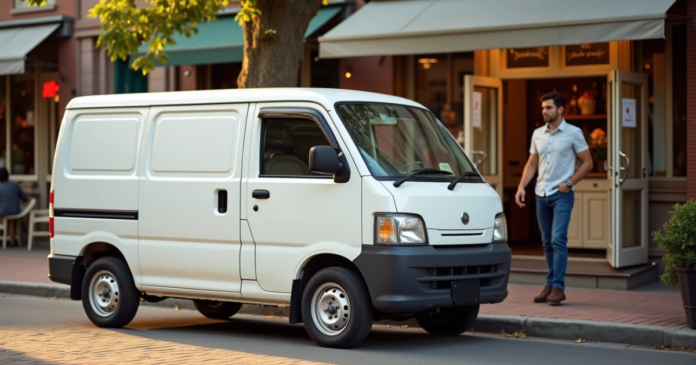

Operating a full-size commercial vehicle can drain a small business budget quickly, but keibann vans offer a cost-effective alternative that doesn’t sacrifice functionality. These compact Japanese commercial vehicles achieve an impressive 40-50 miles per gallon, significantly outperforming traditional vans while keeping operating costs remarkably low. As a matter of fact, keibann vans are cheaper to buy, maintain, and insure than larger commercial vehicles, making them particularly attractive for startups and growing businesses. This guide explores what keibann vans are, why they excel for small business operations, their real-world applications, and essential considerations before purchasing one for business needs.
Also Read: Konversky
What Is a Keibann Van?
The term keibann comes from Japan, where “kei” translates to “light” and “ban” refers to the van body style. Specifically, keibann vans belong to Japan’s kei-jidosha category, a class of ultra-compact vehicles regulated by strict government standards. These vehicles emerged from practical necessity rather than design trends, making them purpose-built for efficiency and economy.
Origins of Keibann Vans
Post-World War II Japan faced severe economic challenges. Fuel remained scarce, materials were limited, and the government needed affordable transportation solutions for businesses and families. Accordingly, officials created the kei vehicle class to encourage manufacturers to build small, inexpensive, fuel-efficient vehicles. The strategy worked brilliantly. Owners received lower taxes, reduced insurance costs, and easier registration in exchange for choosing these compact vehicles. Automakers responded quickly, and small trucks and vans became economic lifelines for recovering Japanese businesses. Over decades, kei vans evolved with slightly stronger engines and improved interiors, yet the core philosophy persisted: efficiency above all else.
Key Design Features
Japanese regulations strictly limit keibann specifications. Engine size cannot exceed 660cc. Length measures approximately 3.4 meters (11 feet), width stays under 1.48 meters (4.9 feet), and height ranges around 1.8-2 meters. These dimensions make keibann vans shorter than many compact sedans, yet the interior cargo space surprises most first-time users.
The magic lies in deliberate design choices. Keibann vans maximize vertical space while keeping the engine compact. Wheels get pushed outward to the vehicle’s corners. The cabin adopts a box shape to increase storage capacity. This minimalism serves a clear purpose: fitting maximum cargo into minimum exterior dimensions.
Despite the small 660cc engine, these vans deliver adequate performance for their intended use. Typical specifications include 40-64 horsepower, fuel economy of 40-50 miles per gallon, and top speeds between 65-75 MPH. Transmission options include manual or automatic, with drive configurations available in rear-wheel drive or four-wheel drive. The iconic box-shaped design maximizes interior cargo space, and the squared cabin allows for easy loading and unloading. In addition, many models offer customizable interiors with shelves, compartments, or foldable seating, enabling operators to tailor the van to specific business requirements.
How Keibann Vans Differ from Traditional Vans
The contrast between keibann and traditional cargo vans becomes clear when comparing specifications:
| Feature | Keibann Vans | Traditional Cargo Vans |
|---|---|---|
| Engine Size | Under 660cc | 2.0L – 3.5L |
| Fuel Economy | 40–50 MPG | 15–25 MPG |
| Purchase Price | Low | High |
| Cargo Capacity | Moderate | Large |
| Maneuverability | Excellent | Limited |
| Best Use | Urban deliveries | Heavy transport |
Keibann vans cost less to purchase, maintain, and insure than larger commercial vehicles. Their simple mechanics mean fewer repairs, and spare parts remain widely available and affordable. This low ownership cost makes them accessible to startups and small businesses operating on tight budgets.
Why Keibann Vans Are Perfect for Small Businesses
Small businesses face constant pressure to control expenses while maintaining service quality. Keibann vans address this challenge through a combination of low acquisition costs, minimal ongoing expenses, and operational advantages that traditional commercial vehicles cannot match.
Low Operating Costs
Operating a keibann van costs far less than a full-size commercial vehicle. Fuel efficiency, affordable insurance, and low maintenance expenses help small business owners keep monthly costs manageable. For businesses running multiple deliveries per day, these savings quickly add up, freeing resources for other operational needs.
Maintenance costs remain minimal due to straightforward mechanical systems. Keibann vans feature fewer complex electronics than modern large vans, making them easier and cheaper to repair. Replacement parts are widely available and relatively affordable, ensuring that small businesses can maintain consistent operations without breaking the bank. This combination of low fuel usage, simple mechanics, and affordable repairs provides a sustainable operational model for small enterprises, allowing them to allocate funds to other critical areas such as marketing, staffing, or business expansion.
Exceptional Fuel Efficiency
Most keibann models achieve an impressive 40-50 miles per gallon, far exceeding the fuel economy of traditional commercial vans. For delivery services and small businesses, this means substantial savings over time. The Suzuki Every, for instance, reaches average fuel consumption of 20 km/L (approximately 47 mpg) or higher under optimal conditions.
Lower fuel consumption directly reduces operational costs and allows companies to maximize profits, even while offering affordable delivery rates or services to customers. Delivery routes often involve frequent stops, idling, and city driving, which can be expensive with standard commercial vans. Keibann vans excel in these environments due to their smaller engines and lightweight design, which allows them to operate efficiently even in stop-and-go traffic.
Easy City Navigation and Parking
Urban areas present unique challenges for delivery operations. Congested streets, limited parking, and tight turns can make operating a large van frustrating and time-consuming. Keibann vans are built with these challenges in mind. Their compact dimensions allow drivers to navigate narrow lanes and park in areas inaccessible to larger vehicles. This agility reduces delays and enhances operational efficiency, particularly in densely populated urban environments.
Finding parking in city centers can be a challenge. Keibann vans’ small footprint allows drivers to park almost anywhere, even in tight spots that would be impossible for larger vans. This convenience reduces delays and enhances overall business efficiency.
Practical Cargo Space for Daily Operations
Despite their small exterior, keibann vans maximize interior cargo space through clever design. The Suzuki Every can carry up to 350 kg (770 lbs) of payload, a significant capacity relative to its class. Available cargo volume typically ranges from 1.2 to 1.8 cubic meters, sufficient for transporting parcels, tools, equipment, or fresh goods.
Many models offer adjustable shelves or customizable compartments, enabling business owners to tailor the interior to their operational needs. The low load floor makes loading and unloading easier, reducing strain on drivers during repeated deliveries.
Real-World Business Applications
Keibann vans serve diverse business sectors, offering flexibility that extends far beyond simple transportation. Entrepreneurs across industries have discovered creative ways to transform these compact vehicles into mobile operations, from package delivery to specialty services that bring products directly to customers.
Delivery and Last-Mile Logistics
Last-mile delivery operations benefit significantly from keibann vans. This final leg of the supply chain, transporting goods from distribution centers to customers’ doorsteps, often presents the most complex and expensive challenges. Large delivery trucks struggle in dense urban environments where streets are narrow, parking is limited, and traffic is heavy. Keibann vans excel in these conditions, allowing drivers to access locations that larger vehicles cannot reach, enabling faster, more efficient deliveries.
Their compact design reduces operational strain during critical delivery routes. Repeated short trips do not consume excessive fuel, and superior maneuverability minimizes wear and tear on the vehicle. For delivery companies handling multiple stops in urban areas, these advantages translate directly into reduced operational costs and improved productivity. E-commerce growth has pushed retailers and logistics providers to optimize their delivery fleets, with keibann vans providing quick access to urban centers while reducing delivery times.
Mobile Service Businesses
Service-based businesses find keibann vans particularly useful for transporting tools and equipment to job sites. Repair services can carry tools and equipment efficiently, with many entrepreneurs modifying interiors to include compartments for tools and spare parts. Mobile service businesses including auto detailing operations use these vans for equipment transport and route optimization.
The customizable interiors allow operators to tailor the van to specific business needs. Many models offer modular shelving or foldable seats, enabling businesses to adjust space depending on daily requirements. A repair service might add compartments for organized tool storage, creating functional mini workspaces that travel to customers.
Food Trucks and Mobile Vendors
Mobile food businesses represent another strong application for keibann vans. Small catering businesses use them to transport food and supplies to events, while mobile coffee shops benefit from their compact and mobile business setup. The affordable entry point allows food entrepreneurs to test concepts without the substantial capital investment required for traditional restaurants.
Specifically, entrepreneurs have installed counters and storage for ingredients in mobile coffee operations, creating efficient serving stations within the limited space. The compact dimensions provide access to locations and events where larger food trucks cannot operate, opening additional revenue opportunities.
Pet Grooming and Specialty Services
Pet grooming services have successfully adapted keibann vans for mobile operations. These vans can be equipped with cages and water systems necessary for professional grooming services. Mobile grooming businesses transport equipment safely and efficiently to provide doorstep services for pet owners.
The ability to bring services directly to customers eliminates the need for clients to travel, creating convenience that justifies premium pricing. Mobile grooming equipment fits efficiently within the cargo space, and the customizable interior accommodates specialized fixtures required for washing, drying, and grooming pets in a professional mobile environment.
Important Considerations Before Buying
Purchasing a keibann van requires understanding federal import regulations, insurance complexities, and operational limitations that affect business viability.
Legal Requirements and Import Rules
The Imported Vehicle Safety Compliance Act of 1988 prevents importing vehicles that don’t meet U.S. safety standards. However, the 25-year rule provides a critical exemption. Vehicles 25 years old or older bypass Federal Motor Vehicle Safety Standards and EPA emissions compliance requirements. Most keibann vans on U.S. roads date from the late 1990s or earlier due to this regulation.
Importers must clear U.S. Customs, file EPA and DOT exemption forms, and pay import duties of approximately 2.5%. Total landed costs, including shipping and fees, range from $6,000 to $12,000 depending on model and condition. State registration presents additional challenges. Even federally legal vehicles face state-level restrictions, with some jurisdictions limiting or refusing on-road registration. Services like Dirt Legal assist with complicated registration processes in restrictive states.
Insurance and Safety Factors
Insurance companies often hesitate to cover keibann vans, making specialty insurers the preferred option. Classifying the vehicle as a classic car or utility vehicle can facilitate coverage, though state-specific requirements vary. Business owners must provide accurate vehicle information to insurers. Misleading details about mileage, occupation, or parking location could invalidate policies.
Safety limitations warrant serious consideration. Keibann vans lack modern crash safety ratings and often don’t have airbags. Their small size creates disadvantages in collisions with full-size vehicles. Interstate highway bans exist nationwide because these vans struggle above 65-70 mph. They suit rural roads, city driving, and secondary highways but not high-speed interstate travel.
Maintenance and Parts Availability
Keibann vans feature simple engineering that reduces maintenance complexity. Specialty parts like electrical components or CV joints require ordering from Japan, though shipping adds time and cost. Simple items including fluids, belts, and filters are available domestically. Parts remain relatively affordable despite international sourcing.
Understanding the Limitations
Keibann vans excel in specific applications but face clear operational boundaries. Small engines and lightweight construction make them unsuitable for long-distance highway travel or heavy loads. Businesses requiring interstate deliveries or large-scale logistics will find these vans insufficient. Speed limitations and collision vulnerability necessitate safety protocols including highway avoidance and moderate speeds.
Choosing the Right Keibann Van for Your Business
Selecting the right model requires matching specific business requirements to each keibann van’s strengths.
Popular Models to Consider
The Suzuki Every stands out for cargo flexibility and reliability, featuring a spacious interior relative to its class and widespread availability on the used market. The 2WD model code is DE51V, while the 4WD version carries the DF51V designation. This model suits businesses prioritizing versatile cargo arrangements and dependable daily operations.
The Honda Acty excels in durability and compact urban routing. Known for reliable engine performance, this model handles frequent short trips efficiently, making it ideal for delivery services operating in dense city environments. The Acty offers strong parts support and modification options.
Meanwhile, the Daihatsu Hijet appeals to affordability-focused operations and small delivery businesses. Its lightweight construction and easy maintenance make it perfect for startups or budget-conscious entrepreneurs. The V-S120V and GF-S220G represent 2WD models, while V-S130V and GF-S230G designate 4WD versions.
Evaluating Your Cargo Needs
Businesses operating exclusively in urban areas benefit from compact vans with superior maneuverability. For rural or semi-urban applications, models with 4WD capabilities provide better versatility. Over 80% of keibann vans imported into the U.S. are 4WD models, making all-wheel or four-wheel drive configurations preferable for American business use.
Operational environment matters significantly. Consider typical delivery routes, terrain conditions, and access requirements when selecting drive configurations.
Budget and Purchase Options
Keibann vans are well-known for their affordability, though pricing varies based on model and specifications. Determining budget before starting the search helps narrow available options. Businesses should evaluate total ownership costs including maintenance, parts availability, and fuel consumption rather than purchase price alone.
Conclusion
Keibann vans represent a smart investment for small businesses seeking affordable, efficient commercial transportation. Their exceptional fuel economy, low operating costs, and urban maneuverability make them ideal for delivery services, mobile businesses, and specialty operations.
All things considered, these compact vehicles aren’t perfect for every situation. Business owners must navigate import regulations, understand safety limitations, and accept restricted highway use. However, for urban-focused operations prioritizing cost efficiency over cargo volume, keibann vans deliver outstanding value.
Before purchasing, entrepreneurs should carefully research state registration requirements, insurance options, and parts availability. The right keibann van can significantly reduce operational expenses while maintaining reliable service for growing businesses.
Also Read: Tech Giants Envision Future Beyond Smartphones
FAQs
Q1. What exactly is a keibann van and where does it come from?
A keibann van is a compact Japanese commercial vehicle where “kei” means “light” and “ban” refers to the van body style. These vehicles were created in post-World War II Japan as an affordable, fuel-efficient transportation solution for businesses. They belong to Japan’s kei-jidosha category and are strictly regulated by government standards, with engine sizes limited to 660cc and specific dimension requirements.
Q2. How fuel-efficient are keibann vans compared to regular commercial vans?
Keibann vans achieve an impressive 40-50 miles per gallon, significantly outperforming traditional cargo vans that typically get 15-25 MPG. This exceptional fuel efficiency translates to substantial cost savings for businesses, especially those making multiple daily deliveries or operating in stop-and-go city traffic conditions.
Q3. Can I legally import and drive a keibann van in the United States?
Yes, but only if the vehicle is at least 25 years old. The 25-year rule allows vehicles to bypass Federal Motor Vehicle Safety Standards and EPA emissions requirements. You’ll need to clear U.S. Customs, file EPA and DOT exemption forms, and pay approximately 2.5% import duties. However, state registration requirements vary, and some states may restrict on-road use.
Q4. What types of businesses benefit most from using keibann vans?
Keibann vans are ideal for last-mile delivery services, mobile repair businesses, food vendors, pet grooming services, and any urban-focused operation requiring frequent stops. Their compact size excels in dense city environments where parking is limited and streets are narrow, making them perfect for businesses that prioritize maneuverability and fuel efficiency over large cargo capacity.
Q5. What are the main limitations I should know about before buying a keibann van?
Keibann vans have several important limitations: they lack modern safety features like airbags, cannot legally travel on interstate highways due to speed restrictions (typically 65-70 mph maximum), have limited cargo capacity compared to full-size vans, and may be difficult to insure through standard providers. Additionally, some specialty parts must be ordered from Japan, which can add time and cost to repairs.