
Quick Summary
- Industrial immersion heaters push heat directly into the fluid, hitting efficiency rates above 95%.
- Traditional systems, think steam, forced air, and furnaces, typically land somewhere between 60% and 85%.
- Your application, the fluid type, operating temperature, and process demands should drive the call.
- Tempsens builds application-specific immersion heater solutions with the engineering validation to back them.
At some point, every facility manager asks the same question. Not out loud, maybe. But it’s there: is this heating system actually doing its job, or is it quietly bleeding money?
That question has gotten a lot more urgent. Energy costs are up. Regulators are pushing harder on efficiency targets. And the old reasoning, ‘the boiler works fine, why change it,’ doesn’t hold up the way it once did.
So let’s talk about an immersion heater. Specifically, how they compare to the traditional systems most facilities are still running.
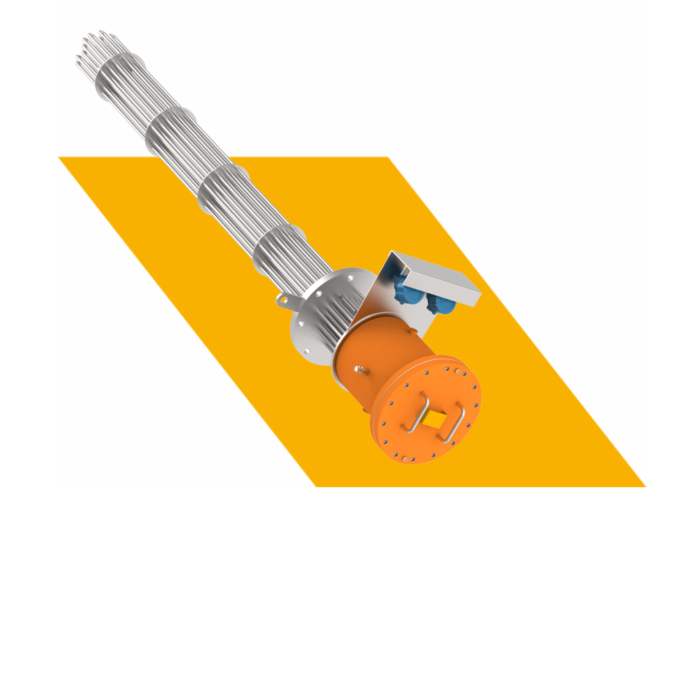
An immersion heater places the heating element directly inside the fluid. No walls, no pipes, no air gaps to cross. Heat goes straight into the medium. That’s the core difference, and it’s what drives most of the performance gap this post will cover.
This isn’t a pitch. It’s a comparison, done straight, with the numbers that actually help you decide.
Breaking Down the Performance Numbers
1. Thermal Efficiency
This one is the big one. Thermal efficiency is how much of your input energy actually becomes useful heat. Get this wrong, and you’re burning money with nothing to show for it.
Why does an immersion heater win here? Because there’s nowhere for the heat to escape. No flue gases venting energy out of the roof. No radiant loss through furnace walls. No heat is bleeding off through the ductwork before it reaches the fluid. Traditional steam and forced-air systems routinely lose 15% to 40% of the heat they generate before it does anything useful.
2. Temperature Control
Modern immersion heaters pair well with digital PID controllers and SCADA systems. You get temperature accuracy to within half a degree, sometimes better. For chemical processing, pharma, or food production, that’s not a nice-to-have. It’s what keeps your product consistent and your reject rates down.
Traditional steam and hot-oil systems lag. Temperature overshoots of 5 to 10 degrees happen regularly in systems that aren’t perfectly tuned. That inconsistency costs you in yield, quality, and sometimes compliance.
3. Maintenance
An immersion heater is a simple piece of kit. A resistive element inside a corrosion-resistant sheath, such as Incoloy, titanium, or stainless steel, connected via a flange or thread. The failure modes are limited. Mostly, it’s element burnout from dry-running or fouling, and both are preventable.
Compare that to a traditional boiler setup: burners, heat exchangers, expansion tanks, relief valves, flue systems, and pumps. More moving parts means more scheduled maintenance, more unplanned downtime, and more budget going to parts and labour that don’t add any value to your process.
Where Each System Actually Wins
Immersion heaters are the right call when:
- You’re heating fluids in tanks, vessels, or pipelines and need it done efficiently.
- Your process needs tight temperature tolerances. We’re talking ±1°C or tighter.
- The installation is remote or hard to access. Low maintenance matters here.
- Combustion risk rules out gas-fired or open-flame equipment.
- You’re building from scratch, and there’s no existing steam or gas infrastructure to work around.
Traditional systems still make sense when:
- You need to heat large open floor areas. Forced air and radiant systems do that well.
- Your boiler is fully depreciated and still performing. Replacing working equipment has a cost, too.
- A single steam loop needs to feed multiple zones across your facility simultaneously.
- You’re running furnace applications above 800°C. That’s outside the range where most immersion heaters operate.
Here’s the honest version: for most industrial liquid-heating and process-heating work, the immersion heater wins on the numbers. But ‘most’ isn’t ‘all.’ Application context still decides the call.
Conclusion
This isn’t about old versus new. It’s about what the data says for your specific situation.
For industrial liquid-heating and process-temperature work, the immersion heater consistently comes out ahead: better efficiency, tighter control, lower maintenance, and a cost position that improves significantly over time. The higher upfront cost is real, but it’s a known number you can model. It’s not an open-ended risk.
Regulatory pressure isn’t easing. Energy costs aren’t coming down. The longer a facility waits to address an underperforming heating setup, the more it costs to catch up.
Tempsens has been building industrial heating solutions long enough to know that the engineering details matter as much as the product itself. Their immersion heater designs are validated for demanding process environments, and their team works directly with facility managers and engineers through specification, supply, and post-installation support. If you’re seriously evaluating your heating infrastructure, it’s worth getting them involved early.