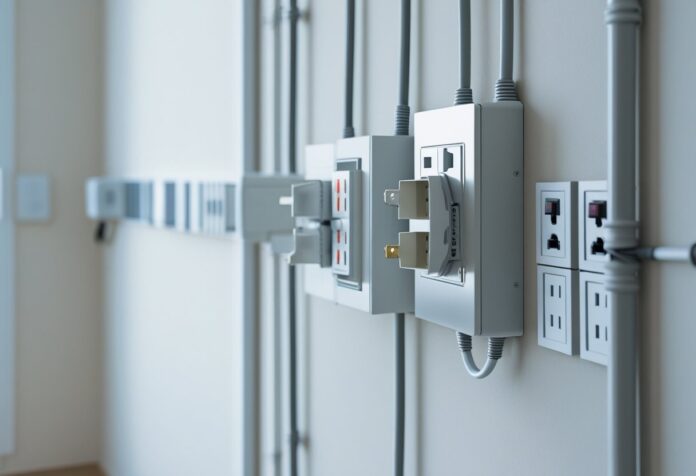

Power loss in certain rooms can feel confusing because the rest of the home may still work normally. One bedroom may lose lights, a hallway outlet may stop working, or several fixtures on one side of the house may go dead at once. This kind of problem can come from a tripped breaker, loose wiring, an overloaded circuit, a damaged outlet, a failed switch, or a GFCI device that has shut power off downstream. Electrical services help by safely tracing the path of power and identifying the actual point of failure before the issue spreads.
Power Loss Clues
- Tracing the Affected Area First
Electrical services often begin by mapping which rooms, outlets, switches, and fixtures have lost power. This step matters because a room may look like the only affected area, but the circuit may also serve a hallway, closet, bathroom, garage outlet, or outdoor receptacle. An electrician can ask when the outage occurred, what was being used at the time, and whether the lights flickered before the power failed. These details help separate a simple breaker trip from a wiring problem hidden behind walls. The electrician may test outlets, switches, light boxes, and nearby devices to determine where the voltage ends. This process avoids random replacement of outlets or switches that may not be the cause. By following the circuit in order, electrical services can determine whether the issue begins at the panel, at a junction point, with a failed device, or with a loose connection feeding the room.
- Checking Breakers, GFCI Devices, and AFCI Protection
Many room power-loss issues begin at the electrical panel or a protective device. A breaker may trip when a circuit is overloaded, when a device fails, or when a wire fault is detected. Some rooms may also be protected by GFCI or AFCI devices that cut power when they sense unsafe conditions. A bathroom, kitchen, basement, garage, or outdoor outlet may shut off power to other outlets farther down the same circuit. A homeowner searching for an electrician in Lansdowne may need help when resetting a breaker does not restore power, or when the same circuit keeps tripping. Electrical services include testing breakers, checking panel connections, confirming that protective devices are working correctly, and determining whether a downstream outlet has lost power one to a tripped device elsewhere. This careful approach helps restore power without bypassing safety protections designed to prevent shock, overheating, or fire.
- Finding Loose Wiring and Failed Devices
Power loss in certain rooms can happen when wiring becomes loose at an outlet, switch, light fixture, or junction box. Over time, repeated use, heat, vibration, aging materials, or previous repair work can weaken a connection. When that connection opens, everything beyond that point may lose power. Electrical services help by safely shutting off the circuit, removing device covers, and checking wire terminals, splices, grounding, and signs of heat damage. A burned outlet, melted insulation, dark marks, a buzzing sound, or a loose backstab connection can reveal where the circuit failed. Sometimes the problem is not the visible outlet in the dark room but another device earlier in the circuit. That is why testing each point matters. Replacing a damaged outlet or tightening an approved connection can restore power, but the electrician also checks why the failure happened so the same issue does not return.
- Repairing the Circuit and Testing the Result
After the fault is found, electrical services focus on restoring the circuit safely. This may involve replacing a worn outlet, repairing a loose splice, installing a new switch, correcting a damaged section of wire, replacing a faulty breaker, or reconnecting a device in accordance with code. The electrician also checks whether the circuit is being overloaded by space heaters, window AC units, computers, chargers, or other devices that may have contributed to the outage. Once repairs are complete, the circuit is tested again under normal use. Lights, outlets, and switches are checked to confirm that power has returned and that voltage remains steady. The electrician may also explain which outlets are on the same circuit and what loads should be avoided. This helps homeowners understand the room’s electrical limits rather than treating the repair as just a reset or a one-time fix.
Restoring Safe Power Room by Room
Power loss in certain rooms should be handled carefully because the cause may be hidden behind a working panel, a tripped device, or a damaged connection inside a wall box. Electrical services help by tracing the affected circuit, testing breakers and outlets, checking protective devices, identifying loose wiring, and safely repairing the fault. This process restores power while also reducing the risk of repeated outages, overheating, or damaged devices. When the cause is found early, the home can return to normal use with steadier lighting, safer outlets, and fewer surprises from rooms that suddenly go dark.