
When an environmental regulator arrives at your facility, they aren’t looking for excuses. They are looking for documented, measurable compliance. Regulatory bodies are cracking down on industrial wastewater discharge, and the financial stakes have never been higher for facility managers. If your operation handles materials that produce non-emulsified hydrocarbons, a reactive approach to wastewater management is a massive liability.
The costs of falling out of compliance are rising fast. The EPA’s 2025 inflation adjustment raised the maximum civil penalty for Clean Water Act violations to $68,445 per day. Those daily fines accumulate rapidly during an extended investigation, easily threatening your operational budget and your company’s bottom line. You simply cannot afford to wait for an audit to test your system’s reliability.
The True Cost of Failing an EPA Audit
What exactly happens when your facility fails to properly manage non-emulsified hydrocarbons? The immediate answer is usually a swift and expensive federal intervention. Regulators have little patience for negligence, and the financial hits come in several destructive waves.
The baseline fines alone are enough to derail an annual budget. A Stanford Law School study found that the average federal penalty for Clean Water Act violations is $186,042. However, direct monetary fines are only part of the nightmare scenario for a plant manager.
When an inspector finds a serious compliance breach, they hold the authority to force an immediate operational shutdown. Halting production means missing client deadlines, breaking contracts, and burning through labor costs with zero output. This creates a cascading effect that damages your reputation and erodes stakeholder trust for years to come.
Navigating SPCC Rules and Clean Water Act Standards
To protect your facility, you need to understand the specific regulatory targets you must hit. The EPA’s Clean Water Act establishes strict guidelines for any wastewater discharged into navigable waters or municipal treatment facilities. You cannot rely on guesswork to meet these federal standards.
The primary industry benchmark is highly specific. Oil/water separators discharging to surface water drains are generally required to achieve a discharge concentration of less than 15 mg/L of oil. Hitting this target consistently requires an engineered approach to fluid dynamics.
Achieving this sub-15 mg/L standard comes down to targeting and effectively removing non-emulsified hydrocarbons. These free-floating oils are the core mechanic separators address. High-performance systems use specialized coalescing media to force these small oil droplets to collide, grow larger, and float to the surface for skimming. If your system cannot reliably execute this process during peak flow times, you are actively risking a violation.
How to Evaluate Your Facility and Choose the Right Separator
Finding the right oil water separators is a methodical, step-by-step evaluation process for facility managers and engineers. You must map the technical capabilities of a separator directly to your physical layout and daily wastewater output.
A one-size-fits-all approach fails every time in industrial wastewater management. Separating technology must be highly categorized and site-specific to guarantee compliance. Slapping a standard tank into a complex production line is a guaranteed path to failure.
To make the right choice, you need to evaluate your operation across three primary criteria: fluid dynamics, physical site constraints, and material integrity. Taking the time to properly assess these areas guarantees you select a system built to pass an audit.
Step 1: Matching Fluid Dynamics and Flow Rates
The first technical question you must answer is: How do I determine my facility’s required flow rate capacity? Separator systems handle ranges anywhere from 0 to 5000 GPM, and sizing your unit correctly is non-negotiable. You need to calculate not just your average daily flow, but your absolute peak flow during heavy washdowns or storm events.
If you undersize your system, the water moves too quickly through the tank. The oil droplets won’t have enough time to rise to the surface, causing polluted water to bypass the coalescing media and discharge straight into the environment.
You also need to understand the operational differences between pump feed and gravity flow systems. This mechanism heavily impacts your separator selection and internal design requirements.
| Feed Mechanism | Operational Characteristics | Separator Impact |
|---|---|---|
| Pump Feed | Uses mechanical pumps to push wastewater into the unit. | Pumps agitate the water and shear oil droplets into smaller pieces. Requires advanced coalescing media to capture tiny oil particles. |
| Gravity Flow | Relies on natural elevation drops to move water into the unit. | Gentler on the fluid, keeping oil droplets larger and easier to separate. Generally requires less aggressive internal baffling. |
Selecting the wrong feed compatibility leads to system failure and subsequent compliance breaches. If you feed a standard gravity-designed separator with a high-shear pump, the system will fail to capture the emulsified-like droplets, sending your discharge numbers well above the 15 mg/L limit.
Step 2: Assessing Physical Site Constraints and Installation Grade
Once you nail down your flow rates, you have to look at the physical realities of your plant. How do physical site constraints dictate the choice between above-grade, flush-with-grade, and below-grade separator models? Every facility has unique spatial limitations, traffic patterns, and elevation changes that rule out certain configurations.
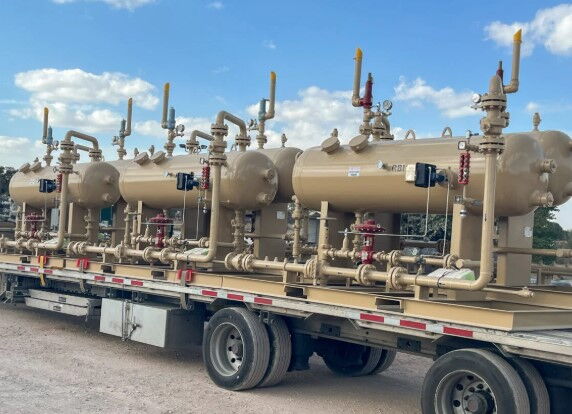
Above-grade units are highly accessible for maintenance and are typically matched with pump feed applications where wastewater is pushed up into the tank. These often come in round or square configurations depending on your floor space. If you lack indoor square footage, you might look outside. Flush-with-grade fiberglass units are excellent for designated gravity flow areas, catching runoff from wash pads without requiring deep excavation.
For facilities with heavy vehicle traffic or extreme space limitations, heavy-duty below-grade units are the answer. These are designed for deep burial or drive-over conditions, hiding the footprint while doing the heavy lifting out of sight.
When planning your installation, you must also keep the EPA’s Spill Prevention, Control, and Countermeasure (SPCC) rule in mind. EPA SPCC guidelines mandate that oil/water separators used for secondary containment or oil recovery are subject to strict capacity and design specifications. Your site constraints can never compromise these mandated capacity requirements.
Step 3: Prioritizing Structural Integrity and Material Quality
The final piece of the puzzle involves the actual construction of the unit. What structural and material qualities should you look for to ensure long-term integrity and performance? A separator is a major capital investment, and it needs to withstand harsh industrial environments for decades.
Heavy-duty construction prevents the leaks and system failures that immediately trigger EPA investigations. If you process highly corrosive fluids or install the unit in aggressive soil conditions, standard carbon steel might degrade quickly. In these cases, you need high-grade stainless steel, robust fiberglass, or specialized interior epoxy coatings to protect the tank’s structural integrity.
Investing in performance-proven, high-quality materials is a proactive measure that pays off. Skimping on materials might save a fraction of the budget upfront, but it guarantees future operational downtime when the unit cracks or rusts through. Do it right the first time to secure a lasting compliance solution.
Conclusion
Preventing severe regulatory fines requires matching specific separator technology to your facility’s unique fluid dynamics and physical constraints. Slapping a generic tank onto a complex wastewater stream is a gamble you will eventually lose.
Addressing wastewater management proactively is the most reliable way to safeguard your operation from unpredictable regulatory scrutiny. By carefully calculating your flow rates, assessing your feed mechanisms, and choosing the right installation grade and materials, you build a fortress against compliance breaches.