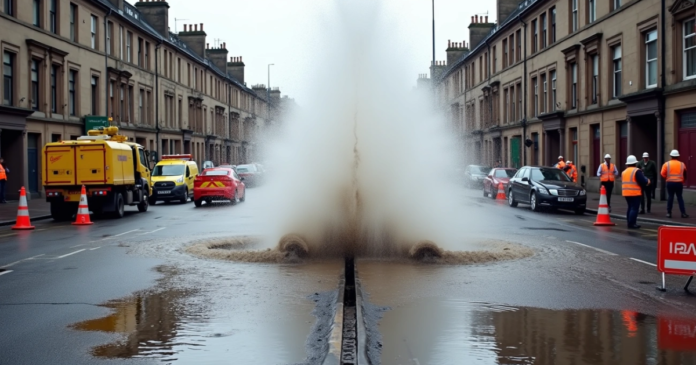

The glasgow water main break shettleston road incident on May 29, 2025, sent water surging across the carriageway and disrupted daily life for thousands of residents. A ruptured pipe beneath the busy thoroughfare triggered immediate street flooding, road closures, and a complete loss of water supply across the G32 postcode area. Emergency crews mobilized quickly to isolate the damaged section while residents faced sputtering taps, discolored water, and reduced pressure. Moreover, businesses were forced to close operations, and traffic congestion paralyzed commutes throughout the area. This article examines what caused the glasgow water main break shettleston road, how repair teams restored service, and the broader implications for aging urban infrastructure across Glasgow.
Also Read: EasyJet Flight U2238 Emergency Landing Newcastle
What Happened During the Shettleston Road Water Main Break
Timeline of the Burst Pipe Emergency
Around 8:30 AM on the morning of the incident, residents along Shettleston Road began noticing unusual activity beneath the street surface. Local residents described hearing loud cracking sounds before water began gushing across the street. Within minutes, the underground water main pipe failed at a significant section, forcing water through cracks in the road surface near the junction with St Mark Street. The eruption created hazardous conditions as water quickly spread across the carriageway and surrounding pavements.
Scottish Water workers arrived as rush hour approached, confronting a burst pipe that had erupted along one of Glasgow’s major transport corridors. Emergency teams straightaway traced the issue to the failed main and began assessing the extent of the damage. Heavy machinery arrived to excavate the damaged section, revealing that the break was more extensive than initially expected.
Immediate Flooding and Road Closures
Water spilled onto the roadway, affecting both traffic and the surrounding water network. The visible flooding covered parts of the carriageway and sidewalks, with water pooling along the street. Authorities temporarily closed sections of the road to protect pedestrians and drivers from the hazardous conditions.
The junction of Shettleston Road at Hart Street faced immediate closure due to the flooding caused by the burst water main. Glasgow City Council confirmed the closure and advised road users to avoid the area and consider alternative routes. Accordingly, road barriers and traffic cones were deployed to prevent accidents near the flooded zone.
Emergency Crews Respond to the Scene
Scottish Water activated its emergency utility response protocol once the break was confirmed. Teams worked to isolate the burst as quickly as possible to minimize the impact of flooding in the area. Engineers began assessing the required repair while investigating options for valve operations on the water network to restore and maintain supplies for as many affected customers as possible.
The water firm made arrangements for traffic management to be put in place on Shettleston Road to ensure the safety of the public and repair teams during the operation. Emergency crews worked around the clock to minimize water loss and restore service.
Why Did the Water Main Break on Shettleston Road
Aging Underground Infrastructure Reaches Breaking Point
Multiple factors contributed to the glasgow water main break shettleston road incident, with deteriorating infrastructure at the core of the problem. Cast iron pipes installed before the 1930s often rusted from the inside out, causing leaks and structural weaknesses. In fact, about one-fifth of water pipes in urban systems were installed before 1931 and nearly all will reach the end of their useful lives in the next 15 years. These aging mains are responsible for close to half of all water main leaks.
Failures often occur when aging water pipes deteriorate due to corrosion, leading to breakage or leakage under external mechanical loadings or soil movement. Older metal pipes are subject to corrosion and natural wear, with exposure to chemicals in the soil and water accelerating this process and weakening pipe walls. Cast iron mains are more brittle and prone to cracking compared to newer ductile iron alternatives.
Weather and Pressure Changes Stress the System
Temperature fluctuations directly influenced the condition of underground water infrastructure at Shettleston Road. When temperatures drop, the ground freezes and expands, exerting pressure on underground pipes and leading to breaks. Similarly, during thaw periods, shifting soil damages pipes as water molecules shrink and the ground shifts.
Pipes weakened by freezing conditions can crack or burst during the transition from cold to warm weather. Ground movement occurs when temperatures warm back up after a cold spell, triggering additional main breaks. Increased rainfall due to changing weather patterns leads to soil saturation, putting stress on buried pipelines.
Ground Movement and Construction Activities
Ground movement caused by natural phenomena or human activity shifts pipes, often resulting in breaks at connections and joints. Construction and excavation activities near pipes cause accidental damage, puncturing or dislodging pipes and causing immediate leaks. Soil can become unevenly compacted, putting pressure on pipes and leading to structural damage.
How Hundreds of Residents Lost Water Supply
G32 Postcode Area Faces Complete Outage
Engineers warned residents in the G32 postcode that they would experience issues. Scottish Water confirmed the problem affected the Shettleston, Carmyle, Tollcross, and Mount Vernon areas. Many households experienced issues ranging from discolored water to a complete temporary outage. Some residents experienced complete loss of water pressure, while others reported reduced flow or discolored water. These interruptions made everyday activities such as cooking, cleaning, and hygiene more difficult. Families were encouraged to store water, limit usage, and follow instructions regarding boiling water until supply stabilized.
Businesses Forced to Close Operations
Local cafés, salons, and shops experienced temporary closures due to the lack of water supply. Businesses that rely heavily on water, such as restaurants and laundries, were particularly affected. Businesses, particularly cafés, restaurants, salons, and healthcare providers, faced immediate operational challenges. Consequently, some businesses reported temporary losses. Because roads were closed, fewer people visited shops and restaurants nearby.
Traffic Chaos Disrupts Daily Commutes
Large sections of Shettleston Road were closed while repair crews investigated the damaged pipe. Authorities rerouted vehicles through nearby streets to reduce congestion. These closures created significant Shettleston Road traffic disruption, especially during peak commuting hours. Several bus routes operated by First Bus Glasgow had to be diverted during the incident. Services such as routes 2, 46, and 60 were redirected to alternate streets until repairs were completed. Commuters traveling through the East End of Glasgow faced extended travel times.
Community Members Share Resources and Support
Despite these inconveniences, community members supported each other during the recovery period. Local residents demonstrated remarkable resilience. Neighbors shared resources, and businesses adapted quickly once water service returned. The local community showed strong resilience. Neighbors helped each other access bottled water, and many businesses adapted quickly to reduced capacity.
Repair Teams Work to Restore Water Service
Engineers Isolate the Damaged Pipe Section
Repair crews closed necessary valves to stop water loss and isolate the broken section from the rest of the main. Valves were closed gradually to protect the system from abrupt changes in pressure and flow. Initially, the water outage affected a wider area until engineers successfully isolated the break. Once isolated, teams worked to keep water flowing to the rest of the system to minimize customer impact.
Excavation and Replacement Process Begins
Crews cleared debris, set up safety equipment, and began excavating the main, with most pipes buried 3 to 10 feet underground. Excess water around the damaged pipe was pumped out before repair work could proceed. Excavation took additional time because other buried utilities were located close by. After unearthing the main, engineers determined the extent of damage and began replacing the damaged section. Generally, repair crews completed the work in 8 to 12 hours.
Water Quality Testing Confirms Safe Supply
Following repairs, the new pipe underwent testing to ensure it was fit for service and disinfected to protect public health. Crews opened nearby hydrants to flush air and debris from the pipe. Customer lines were reconnected to the main, and valves were carefully reopened so water could flow through and build pressure to normal levels.
Conclusion
The glasgow water main break shettleston road incident highlighted the urgent challenges facing aging urban infrastructure. Deteriorating pipes, weather fluctuations, and ground movement combined to disrupt water service for hundreds of residents across the G32 postcode area. Indeed, repair teams demonstrated efficiency by isolating the damage, excavating the broken section, and restoring safe water supply. As a result, this event serves as a reminder that proactive infrastructure investment remains essential for preventing future disruptions.
Also Read: M6 Walsall Birmingham Lanes Closure
FAQs
Q1. How long does it typically take to restore water service after a main break?
Most water main repairs are completed within 8 to 12 hours. The timeline depends on factors such as the extent of damage, depth of the pipe (typically 3 to 10 feet underground), proximity to other utilities, and the need for excavation and replacement of the damaged section.
Q2. What should residents do if they experience water supply issues during a main break?
Residents should store water for essential needs, limit water usage where possible, and follow any boiling water instructions until supply stabilizes. It’s advisable to check for updates from your water provider regarding the expected restoration time and any safety precautions.
Q3. Is it safe to drink water immediately after service is restored following a main break?
After repairs, the new pipe undergoes testing and disinfection to protect public health. Crews flush nearby hydrants to clear air and debris from the system before reconnecting customer lines. Water quality testing confirms the supply is safe before full service resumes.
Q4. Why do water mains break more frequently during temperature changes?
Temperature fluctuations cause ground freezing and expansion, which exerts pressure on underground pipes. During thaw periods, shifting soil can damage weakened pipes. The transition from cold to warm weather is particularly problematic, as pipes stressed by freezing conditions may crack or burst when temperatures rise.
Q5. How does aging infrastructure contribute to water main failures?
Older pipes, particularly cast iron mains installed before the 1930s, deteriorate due to corrosion from the inside out. These aging pipes are responsible for nearly half of all water main leaks. Exposure to chemicals in soil and water accelerates corrosion, weakening pipe walls and making them more brittle and prone to cracking under pressure.