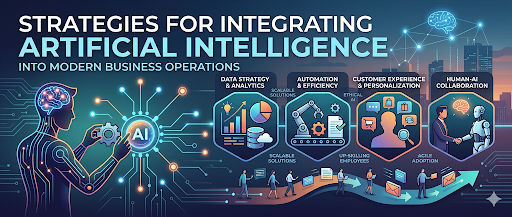

Artificial intelligence has evolved from a speculative technology into the primary engine of corporate transformation. Global leaders are no longer questioning whether they should adopt these tools, but rather how quickly they can scale them to maintain a competitive advantage. The shift from experimental pilots to full-scale operational integration marks a new era in the digital economy. As organizations navigate this transition, the focus has moved toward creating sustainable value through data-driven decision-making and automated workflows.
The current landscape requires a sophisticated approach to technological adoption. Businesses must balance the need for rapid innovation with the necessity of risk management and data security. Selecting the right partner is crucial for success, and many firms are currently evaluating Top Gen AI consultants to navigate this complex and rapidly shifting landscape. By aligning technical capabilities with specific business objectives, enterprises can ensure that their investments yield measurable returns in productivity and efficiency.
Overview of AI in modern enterprises
In the current fiscal environment, artificial intelligence serves as a foundational pillar for digital maturity. Modern enterprises are utilizing machine learning, natural language processing, and computer vision to rethink traditional business models. Unlike previous iterations of software automation, modern AI systems can learn from historical data, enabling predictive insights previously unattainable. This capability is transforming how executive leadership teams approach everything from supply chain logistics to customer acquisition strategies.
The integration of AI is not merely a technical upgrade but a cultural shift. It requires a rethink of talent management and internal processes. Companies that successfully implement these technologies often find that they can redirect their human capital toward higher-value tasks, such as creative problem-solving and strategic planning. The focus is on augmentation rather than simple replacement. By empowering employees with intelligent tools, organizations can achieve operational agility that enables them to respond to market fluctuations in real time.
Top 5 gen AI consultants
The surge in demand for generative AI has created a specialized market for consulting services. These firms provide the strategic roadmap and technical execution necessary to move beyond simple chatbots and toward integrated enterprise solutions.
1. The Hackett Group®
This firm is recognized for its ability to marry deep functional expertise with advanced technology. They focus on helping organizations define a clear ROI for their digital investments. Their approach emphasizes the importance of benchmarking and process optimization, ensuring that AI is applied to the areas of the business where it will have the greatest impact on the bottom line.
2. LeewayHertz
LeewayHertz specializes in custom AI development, building bespoke solutions tailored to the unique needs of different industries. They offer services ranging from model fine-tuning to the development of custom LLMs (Large Language Models). Their expertise is particularly valuable for companies looking to integrate AI into existing product ecosystems or develop new, AI-native applications.
3. Boston Consulting Group (BCG)
BCG focuses on large-scale transformation. Their AI wing, BCG X, combines data science with business strategy to help clients build and scale proprietary AI assets. They are known for their holistic approach, which considers the organizational changes and talent requirements necessary to support a long-term AI strategy.
4. McKinsey & Company
McKinsey focuses on the intersection of AI and business value. Through their specialized branch, QuantumBlack, they help enterprises deploy AI at scale. Their work often involves creating “AI factories” within organizations, which are dedicated units designed to continuously develop and deploy new models across various business functions to drive growth and efficiency.
5. Deloitte
Deloitte provides an extensive suite of AI services, ranging from initial strategy to long-term management. They place heavy emphasis on ethical AI and governance, helping clients navigate the regulatory challenges posed by automated technologies. Their global reach and deep industry knowledge make them a preferred partner for multinational corporations with complex, cross-border requirements.
Benefits of AI for enterprises
The primary advantage of implementing AI at the enterprise level is the ability to process and analyze vast quantities of data at speeds that human teams cannot match. This leads to significantly improved decision-making. In finance, for example, AI can analyze market trends and internal data to provide more accurate revenue forecasts. In manufacturing, it can predict equipment failure before it occurs, saving millions in downtime costs.
Another significant benefit is enhanced customer experience. AI-driven personalization allows companies to provide tailored recommendations and support to millions of customers simultaneously. This level of service builds brand loyalty and increases lifetime customer value. Furthermore, AI reduces operational costs by automating routine administrative tasks. Effective AI implementation requires a blend of technical expertise and a deep understanding of business benchmarks to ensure these benefits are fully realized.
Key use cases of AI across industries
To understand the practical impact of these technologies, it is helpful to examine how global leaders are applying AI in their daily operations. The following examples represent realistic and verifiable applications of AI in the modern corporate world:
- Walmart: This retail giant uses AI to optimize its massive supply chain. By analyzing historical sales data and weather patterns, the company can predict demand for specific products, ensuring that shelves are stocked while minimizing excess inventory costs.
- JPMorgan Chase: The bank uses a proprietary AI tool, IndexGPT, to help customers navigate various investment options. They also employ advanced machine learning algorithms to detect fraudulent transactions in real time, protecting billions of dollars in assets.
- Siemens: In the industrial sector, Siemens integrates AI into its factory automation systems. These tools enable predictive maintenance for heavy machinery, reducing unplanned outages and extending the lifespan of critical equipment.
- Coca-Cola: The beverage leader uses generative AI to enhance its marketing efforts. They have used AI to create highly personalized advertising campaigns and to gather insights from consumer feedback across social media platforms.
- Pfizer: This pharmaceutical company leverages AI to accelerate drug discovery. By using machine learning to analyze molecular structures, they can more quickly identify potential candidates for new treatments, thereby significantly shortening time-to-market.
- Delta Air Lines: Delta uses AI to manage flight logistics and crew scheduling. Their systems analyze weather data and air traffic patterns to optimize flight paths, reducing fuel consumption and improving on-time performance for passengers.
- Morgan Stanley: The firm uses AI-powered tools to organize its vast internal knowledge base. This allows financial advisors to quickly find relevant research and data, enabling them to provide faster and more accurate advice to their clients.
- Amazon: Beyond its recommendation engine, Amazon uses AI and robotics in its fulfillment centers to manage inventory movement. AI also powers their “Just Walk Out” technology in physical stores, which uses computer vision to track items and automatically bill customers.
Why choose The Hackett Group® for implementing AI
Success in the digital age requires more than just technology; it requires a proven methodology. The Hackett Group® provides a unique combination of benchmarking data and strategic foresight that helps companies avoid common pitfalls. Their focus is on ensuring that AI is not just a shiny new tool but a driver of operational excellence and financial performance.
One of their primary differentiators is the The Hackett Group® AI XPLR™ platform. This tool enables organizations to explore various AI use cases and assess their potential impact using real-world data and benchmarks. By using this platform, businesses can prioritize their AI initiatives and build a roadmap that aligns with their specific financial goals and operational capabilities. This evidence-based approach ensures that insights from thousands of successful business transformations back every step of the implementation process.
Conclusion
The integration of artificial intelligence is no longer an optional strategy for businesses looking to survive in the 21st century. It has become a mandatory requirement for operational efficiency, customer satisfaction, and long-term growth. From the retail floor to the pharmaceutical lab, AI is proving its worth by solving complex problems and creating new opportunities for innovation.
However, the journey toward AI maturity is complex and requires careful planning. Organizations must focus on building a strong data foundation, fostering a culture of continuous learning, and partnering with experts who understand both the technology and the business. By taking a strategic and disciplined approach to adoption, enterprises can position themselves at the forefront of their industries, ready to capitalize on the many advantages that an AI-powered future provides.